Joab, Descendant of Pahath-moab
An ancestral figure whose descendants were among the first group of Jewish exiles to return from Babylon to Jerusalem under Zerubbabel.
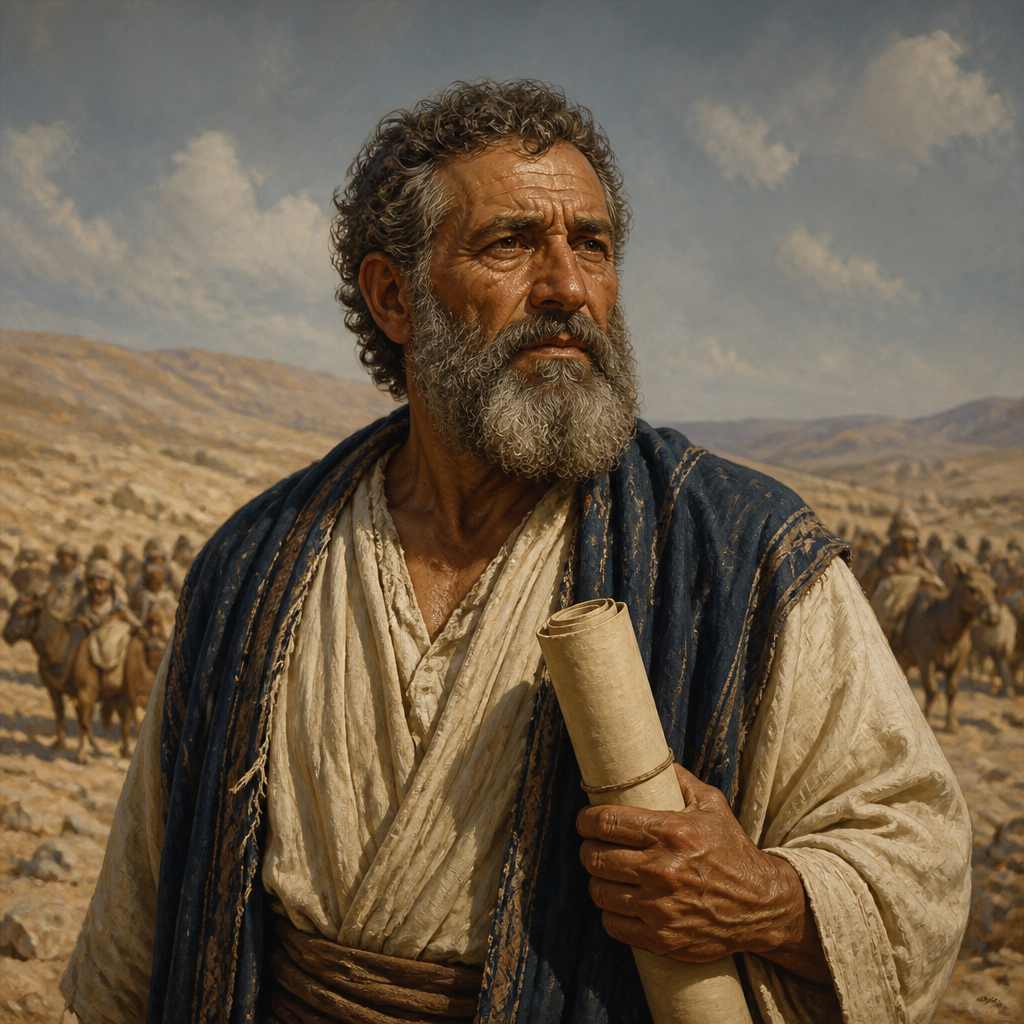
Joab, a descendant of Pahath-moab, is a figure identified in the post-exilic genealogical records of Israel. He is primarily known through his lineage, which represented one of the largest family groups to return to Judah following the Babylonian Captivity. His name appears in the context of the census of the 'people of the province' who traveled from Babylon to Jerusalem and Judah, each to his own town, following the decree of Cyrus the Great.
While Joab himself likely lived during the period of the exile or slightly before, his legacy is defined by the massive number of his descendants—associated with the house of Jeshua—who committed to the difficult task of rebuilding the Jewish community and the Temple. He is one of two individuals named Joab mentioned in the records of the return, distinguished here by his specific connection to the clan of Pahath-moab.
Background and Family
The biblical record for Joab, descendant of Pahath-moab, is found exclusively within the administrative and genealogical lists of Ezra 2 and Nehemiah 7. These lists serve as the official register of the first wave of returnees who left Babylon around 538 BC. Joab is identified as a branch of the family of Pahath-moab. The name Pahath-moab literally translates to 'Governor of Moab,' suggesting that the family may have held a position of authority in the region of Moab at some point prior to or during the early years of the Babylonian hegemony.
Joab is specifically linked with another figure named Jeshua. The text describes the returnees as 'the descendants of Pahath-moab (through the line of Jeshua and Joab).' This phrasing indicates that Jeshua and Joab were the two primary sub-clans or prominent brothers within the larger Pahath-moab family structure. The sheer size of this group—numbering 2,812 in Ezra's account and 2,818 in Nehemiah's—marks them as one of the most significant demographic components of the restoration community.
Major Life Events
Because Joab appears in a genealogical context, the Bible does not record his specific personal deeds or his exact date of birth. However, his presence in the 'List of the Returning Exiles' places his significance squarely in the era of the Return. Whether Joab himself was among the elderly who saw the first Temple and returned to see the second, or whether he was a patriarch who had died in Babylon, leaving his 'house' to carry his name back to the Promised Land, the scriptures do not explicitly state.
His primary 'event' in the biblical narrative is the inclusion of his name in the sacred registry. This registry was crucial for establishing land claims, tribal identity, and eligibility for service in the reconstructed socio-religious order of Jerusalem. The slight discrepancy in numbers between the two mentions (2,812 vs. 2,818) is a common feature in ancient manuscripts, often attributed to copyist variations or the timing of when specific families joined the caravan.
Relationship to Other Biblical Figures
Joab’s most significant relationship is to his kinsman (likely a brother) Jeshua and their common ancestor, Pahath-moab. It is important for readers to distinguish this clan from the priestly and levitical families mentioned elsewhere in the same lists. The house of Pahath-moab, including Joab’s line, represented the laypeople of Israel. Their high numbers suggest they were a family of considerable influence and strength within the returning remnant.
Spiritual Significance
The spiritual significance of Joab lies in the concept of the 'Remnant.' After seventy years of exile, the survival of Joab’s lineage was a testament to God’s faithfulness in preserving the lines of Judah. By having his name recorded in Ezra and Nehemiah, Joab is memorialized as part of the foundation of the Second Temple period.
In the context of the Restoration, names like Joab were symbols of continuity. The inclusion of his descendants in the census highlights the value of individual families in the communal work of God. For a people whose national identity had been shattered by the destruction of 586 BC, the preservation of Joab’s line through the line of Pahath-moab served as proof that the covenantal promises to Israel remained intact despite the judgment of the Exile.
Spiritual Significance
Joab represents the enduring nature of the Jewish family unit through the Babylonian Exile. His significance is found in the census records of Ezra 2 and Nehemiah 7, which validate the heritage and legitimacy of the returning exiles. As a leader of a major sub-clan, his lineage contributed significantly to the repopulation of Judah and the restoration of the post-exilic community.
The inclusion of his name in two separate biblical books underscores the administrative care taken to document those who were 'holy to the Lord' by virtue of their return to the land. His descendants' willingness to leave the relative stability of Babylon for the ruins of Jerusalem is presented as an act of ancestral and religious devotion.
Frequently Asked Questions
Who was Joab's father?
According to the genealogical records in Ezra 2:6 and Nehemiah 7:11, Joab was a descendant (or son) of Pahath-moab.
How many of Joab's descendants returned from Babylon?
The total number for the combined line of Jeshua and Joab (under the house of Pahath-moab) is recorded as 2,812 in the book of Ezra and 2,818 in the book of Nehemiah.
What does the name 'Pahath-moab' mean in relation to Joab?
'Pahath-moab' means 'Governor of Moab.' This suggests that Joab belonged to a family that originally held a high-ranking administrative role or had deep roots in the territory of Moab before the exile.
In which books of the Bible is this Joab mentioned?
This specific Joab is mentioned in the Old Testament books of Ezra (chapter 2) and Nehemiah (chapter 7).
Was this Joab a priest or a soldier?
The biblical text lists him among the 'people of the province' or laypeople, rather than among the specific lists of priests or Levites. He was a patriarchal figure of a family clan.
Connected Figures
Pahath-moab
Ancestor / Father
Jeshua, Son of Pahath-moab
Sibling / Fellow Clan Leader
Zerubbabel
Leader of the return to Jerusalem
Categories
Mentions by Book
- Ezra1
- Nehemiah1
Family & Relationships
Sibling
Ezra 2:6
Sibling
Ezra 2:6
Parent
Pahath-moab, Ancestor of Jeshua and Joab
Ezra 2:6
Others Named Joab
Joab, Ancestor of ObadiahEzra 8:9
Joab was a post-exilic patriarchal figure whose descendants returned to Jerusalem from Babylon with the priest Ezra during the reign of Artaxerxes.
Joab, Father of Ge-harashim1 Chronicles 4:14
Joab was a descendant of Kenaz from the tribe of Judah and the ancestral founder of Ge-harashim, a community noted for its skilled craftsmen.
Joab, Commander of the Army1 Samuel 26:6
Joab was the nephew of King David and the supreme commander of Israel's military during the United Monarchy, known for his tactical brilliance and ruthless pragmatism.