Joab, Father of Ge-harashim
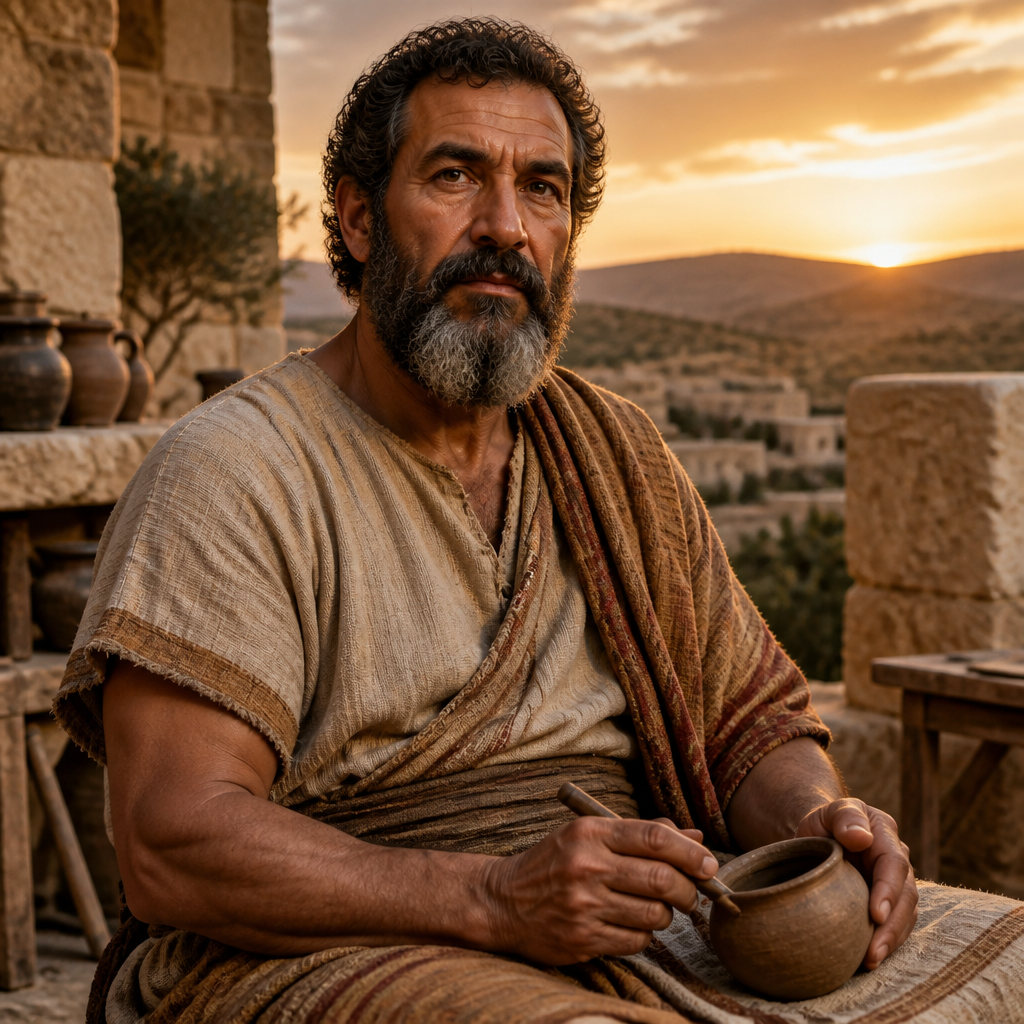
Joab was a descendant of Kenaz from the tribe of Judah and the ancestral founder of Ge-harashim, a community noted for its skilled craftsmen.
Joab, the son of Seraiah and grandson of Kenaz, is a figure mentioned within the genealogical records of the tribe of Judah during the era of the Divided Monarchy. He is distinct from other men of the same name, serving as a patriarchal figure for a specific lineage and location. His primary contribution to the biblical record is his role as the 'father' or founder of a community known as Ge-harashim.
His placement in the chronicles of Judah emphasizes the importance of craftsmanship and skilled labor within the tribal identity. While many individuals in these lists are noted for military or political roles, Joab is associated with the socio-economic development of his people, establishing a valley that would become synonymous with the artisan trade.
Background and Family
Joab appears in the genealogical records of 1 Chronicles 4, a section specifically dedicated to the lineage of Judah. He is identified as the son of Seraiah and the grandson of Kenaz. His family line places him within the broader framework of the Othnielite or Kenizzite clans of Judah. These families were significant in the early tribal history of Israel, often associated with the settlement of the southern regions of the Promised Land.
Seraiah was the father of Joab, the father of those living in Ge-harashim, which was given this name because its people were craftsmen. (1 Chronicles 4:14)
Major Life Events
The biblical text does not provide a narrative account of Joab's life, as his mention is strictly genealogical. However, his defining act was the establishment or leadership of the community at Ge-harashim. The name Ge-harashim translates to 'Valley of Craftsmen.' In this context, Joab is described as the 'father' of the inhabitants, a term that in biblical Hebrew often denotes a founder, chief, or the original settler who established the primary industry of a region.
Relationship to Other Biblical Figures
Joab is the son of Seraiah. Through his grandfather Kenaz, he is linked to the broader Kenizzite family, which includes famous figures from earlier Israelite history such as Caleb and Othniel. His relative Meonothai is also mentioned in the immediate context as the father of Ophrah. This positioning suggests that Joab was part of a stable, established lineage within Judah that contributed significantly to the infrastructure of the kingdom.
Spiritual Significance
The inclusion of Joab in the sacred record serves to sanctify the work of the hands. By specifically noting that he founded a community of craftsmen (charashim), the Chronicler acknowledges that the prosperity and physical beauty of the nation were built upon the skills of artisans. In the biblical worldview, the ability to work with stone, wood, and metal was often viewed as a gift from God (similar to Bezalel in Exodus). Joab represents the integration of tribal identity with professional excellence, demonstrating that the preservation of the community relied as much on its builders as its leaders.
Spiritual Significance
Joab's significance lies in his identification as the founder of the 'Valley of Craftsmen.' In the context of 1 Chronicles, which was written to encourage the returning exiles by reminding them of their heritage, Joab serves as a reminder of the historical importance of skilled labor and the building of the nation's infrastructure. He highlights the role of the Kenizzite clan within the tribe of Judah and their contribution to the specialized industries of the region.
The mention of Ge-harashim also points to the geographic diversity of Judah's inheritance. Joab’s legacy was not one of warfare or prophecy, but of industry and the physical shaping of the land, ensuring that the people of Judah had the necessary skills to maintain their cities and culture.
Frequently Asked Questions
Who was the father of this Joab?
He was the son of Seraiah, a descendant of Kenaz from the tribe of Judah.
What does the name Ge-harashim mean?
It means 'Valley of Craftsmen' or 'Valley of Artisans,' referring to the industry of the people Joab led.
Is this the same Joab who was David's general?
No. This Joab is a member of the tribe of Judah mentioned in the genealogies of 1 Chronicles 4, distinct from the military commander of the United Monarchy.
What was Joab's occupation?
The Bible identifies him as the 'father' or founder of a community of craftsmen, suggesting he was a leader of artisans.
Connected Figures
Categories
Mentions by Book
- 1 Chronicles1
Family & Relationships
Parent
1 Chronicles 4:13
Others Named Joab
Joab, Ancestor of ObadiahEzra 8:9
Joab was a post-exilic patriarchal figure whose descendants returned to Jerusalem from Babylon with the priest Ezra during the reign of Artaxerxes.
Joab, Descendant of Pahath-moabEzra 2:6
An ancestral figure whose descendants were among the first group of Jewish exiles to return from Babylon to Jerusalem under Zerubbabel.
Joab, Commander of the Army1 Samuel 26:6
Joab was the nephew of King David and the supreme commander of Israel's military during the United Monarchy, known for his tactical brilliance and ruthless pragmatism.