Henadad, Patriarch of the Levites
Henadad was a prominent Levite patriarch whose descendants played a crucial role in the reconstruction of the Second Temple following the Babylonian exile.
Henadad was a significant figure among the Levites who returned to Jerusalem from the Babylonian captivity. While his personal biography is not detailed in the biblical text, his legacy is defined by the service of his sons and grandsons. He established a priestly house that was instrumental in the physical and spiritual restoration of Israel during the eras of Zerubbabel and Nehemiah.
His family is consistently linked with other major Levite houses, such as those of Jeshua and Kadmiel. Together, these families formed the administrative and supervisory backbone of the Levite order in the early days of the Post-Exilic Period. Henadad’s primary contribution to the biblical narrative is the provision of a lineage dedicated to the oversight of the Temple and the preservation of the covenant through the signing of the solemn pledge under Nehemiah.
Background and Family
Henadad appears in the biblical record as a patriarch of the tribe of Levi during the era of the return from exile. The biblical text does not provide his specific parentage or his personal history during the Babylonian captivity; however, the status of his descendants suggests he was a man of significant standing within the Levitical hierarchy. His name, which likely means "favor of Hadad" or "grace of the beloved," points to a lineage that maintained its identity and religious vocation even while in a foreign land. By the time of the return under Zerubbabel, the "sons of Henadad" had emerged as one of the three primary Levitical families responsible for the service of the house of God.
Major Life Events
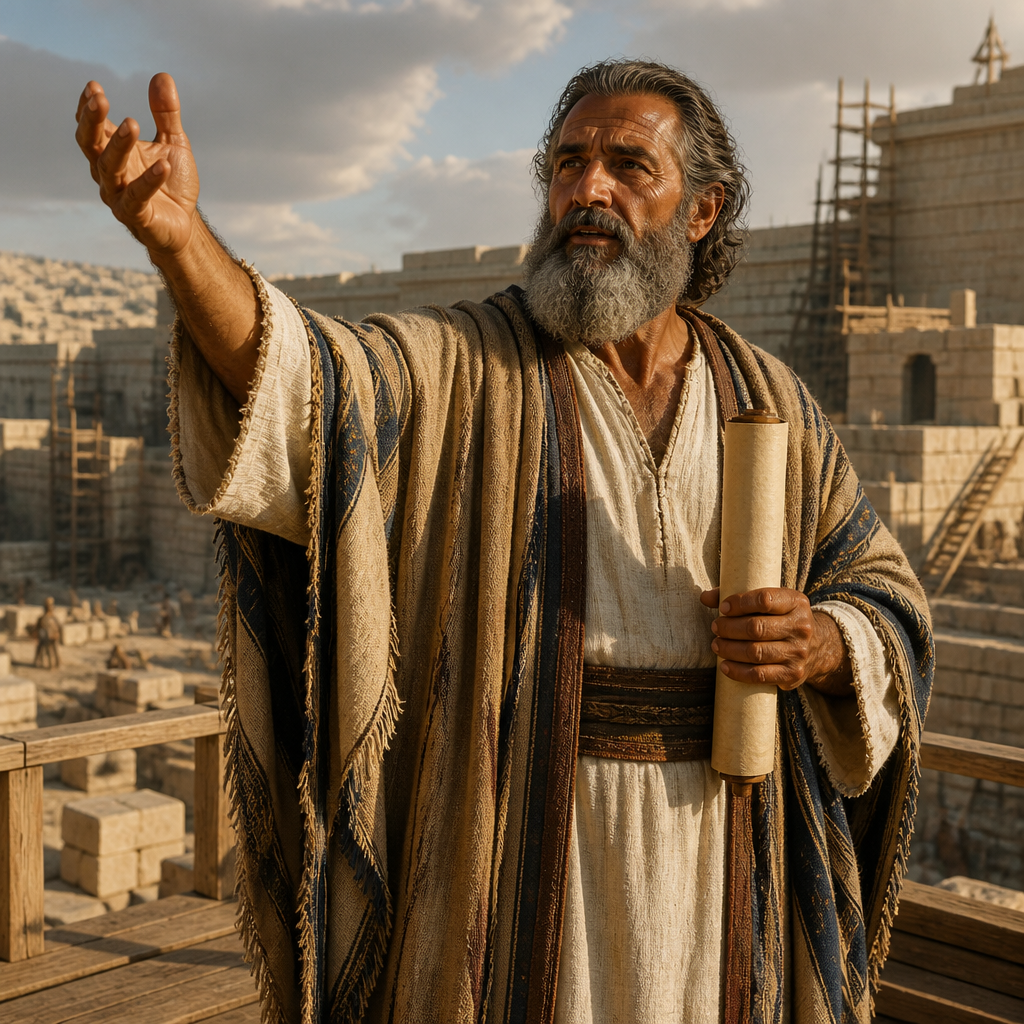
The most significant mention of Henadad occurs during the laying of the foundation of the Second Temple in approximately 536 BC. According to Ezra 3:9, when the work on the house of God began, the family of Henadad stood as a unified front with their fellow Levites. The text notes that the sons of Henadad, along with their sons and brothers, joined with the families of Jeshua and Kadmiel to "supervise those working on the house of God." This indicates that the Henadadites were not merely laborers but were appointed as foremen or overseers, ensuring that the construction adhered to the required sacred standards.
Decades later, during the time of Nehemiah's reforms (c. 444 BC), the house of Henadad remained prominent. In Nehemiah 10:9, the family is again listed among the Levites who participated in the sealing of the covenant. While Henadad himself was likely deceased by this time, his name continued to serve as the identifying marker for his house. The mention of "Binnui of the sons of Henadad" highlights the continued commitment of this lineage to the spiritual governance of Jerusalem.
Relationship to Other Biblical Figures
Henadad is almost exclusively mentioned in connection with two other Levite families: the sons of Jeshua and the sons of Kadmiel. This triad of families appears to have formed the core of the Levitical leadership in the post-exilic community. In the administrative lists of Ezra and Nehemiah, the sons of Henadad are cited as partners in the work of supervision, suggesting a close-knit professional and spiritual relationship between these houses. They worked under the civil leadership of Zerubbabel and the high priestly leadership of Jeshua son of Jozadak.
Spiritual Significance
The spiritual significance of Henadad lies in the continuity of the Levitical service. In the wake of the destruction of Solomon’s Temple and the subsequent seventy-year exile, there was a significant risk that the specific duties and lineages of the Levites would be lost. Henadad represents the preservation of this sacred calling. By leading his family to return to the ruins of Jerusalem and dedicate themselves to the arduous task of rebuilding the Temple, he helped ensure that the worship of Yahweh could resume in accordance with the Law of Moses. The inclusion of his name in the genealogical records of Ezra and Nehemiah serves as a testament to the importance of faithful lineage and the administrative organization required to sustain a community of faith.
Spiritual Significance
Henadad is significant as the founder of a Levitical house that provided essential oversight during the reconstruction of the Second Temple. His descendants represented a dedicated workforce that prioritized the restoration of the dwelling place of God over their own personal comfort in the post-exilic era. In the broader context of Ezra and Nehemiah, Henadad’s family serves as a model of collective service, illustrating how organized Levitical leadership was vital for the religious stability of the returning remnant. The survival of his name in the record emphasizes that God honors those who dedicate their households to His service across multiple generations.
Frequently Asked Questions
Who was Henadad in the Bible?
What role did the sons of Henadad play in Jerusalem?
Is Henadad mentioned in the book of Nehemiah?
Which tribe did Henadad belong to?
Why is Henadad listed with Jeshua and Kadmiel?
Connected Figures
Jeshua
Levitical peer and co-supervisor
Kadmiel
Levitical peer and co-supervisor
Binnui
Descendant (son or grandson)
Categories
Mentions by Book
- Ezra1
- Nehemiah1
Others Named Henadad
Henadad, Father of BavvaiNehemiah 3:18
Henadad was a man of the post-exilic period whose son, Bavvai, served as a ruler and a contributor to the reconstruction of Jerusalem's walls.
Henadad, Father of BinnuiNehemiah 3:24
Henadad was a man of the post-exilic period whose son, Binnui, participated in the rebuilding of the Jerusalem wall under Nehemiah.