Henadad, Father of Binnui
Who was Henadad, Father of Binnui, in the Bible?
Henadad was a man of the post-exilic period whose son, Binnui, participated in the rebuilding of the Jerusalem wall under Nehemiah.
This is one of 2 people named Henadad in the Bible. See all 2 →
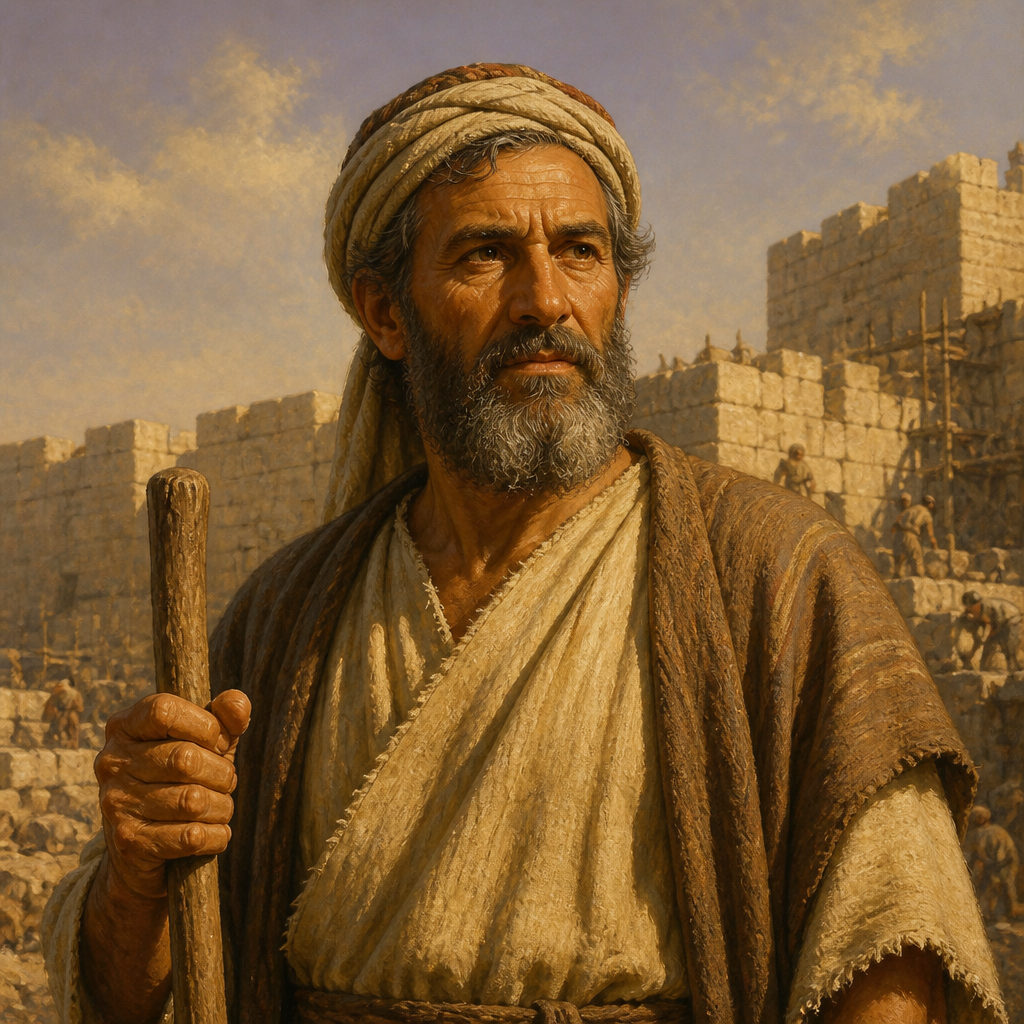
Henadad is a figure mentioned in the context of the Jewish return from the Babylonian exile during the fifth century BC. He is identified specifically as the father of Binnui, a man who contributed manual labor and resources to the restoration of Jerusalem’s defenses. Henadad lived during a pivotal era of Jewish history, characterized by the reconstruction of the Judean identity and the physical restoration of the holy city under the governorship of Nehemiah.
While Henadad himself is not explicitly listed as a laborer on the wall, his identity serves as a genealogical marker for his son, Binnui. This indicates that Henadad was a head of a household or a recognized figure within the community of returnees. His presence in the biblical record, though brief, highlights the collaborative nature of the restoration project, where families worked in unison to secure the city’s future.
Background and Family
Henadad appears in the genealogical and labor records of the post-exilic community in Jerusalem. His era, the fifth century BC, followed the decrees of Persian kings that allowed the Jewish people to return to their ancestral homeland after seventy years of captivity in Babylon. During this time, the social structure of Israel was heavily dependent on family lineage to determine land rights, religious duties, and social standing.
Henadad is recorded as the father of Binnui. The biblical text does not provide specific details regarding Henadad’s own occupation or his specific tribe. However, he is associated with the efforts of the returnees who resided in or near Jerusalem. Because his son was assigned a specific section of the wall to repair, it is evident that Henadad belonged to a family of sufficient standing and commitment to the restoration of the Jewish state.
Major Life Events
The primary mention of Henadad occurs in the context of the third chapter of the Book of Nehemiah. This chapter provides a meticulous list of the individuals and families who repaired various sections of the Jerusalem wall. According to Nehemiah 3:24, Binnui, the son of Henadad, took responsibility for a specific portion of the wall.
"After him, Binnui son of Henadad repaired another section, from the house of Azariah to the angle and the corner,"
While the text focuses on Binnui’s labor, it identifies him through his father, Henadad. This suggests that Henadad was the patriarch of this specific branch of the family during the time of the reconstruction. The section repaired by Henadad’s son was strategically significant, located near the house of Azariah and involving a corner or "angle" of the wall, implying a task that required structural precision.
Relationship to Other Biblical Figures
Henadad’s primary biblical relationship is with his son, Binnui. Through this connection, Henadad is linked to the wider community of builders mentioned in Nehemiah 3, including Azariah (whose house served as a landmark for Binnui’s work). Henadad’s family worked alongside other prominent families of the return, contributing to a unified national effort under the leadership of Nehemiah and the high priest Eliashib.
Spiritual Significance
The inclusion of Henadad in the biblical text, despite the brevity of the mention, underscores the importance of the individual and the family in the divine plan for restoration. In the post-exilic period, being named in the official records of the wall-building was a mark of honor and faithfulness to the Covenant. Henadad represents the generation of fathers who raised sons committed to the physical and spiritual defense of Jerusalem. His name is preserved as part of the permanent record of those who helped transition Israel from a state of ruin to a state of rebuilt security.
Henadad serves as a genealogical link in the records of the post-exilic restoration. His significance lies in his role as a patriarch whose descendant, Binnui, actively participated in the high-stakes physical reconstruction of Jerusalem. This highlights the intergenerational commitment required to fulfill the prophetic vision of a restored Zion.
The mention of Henadad also reflects the meticulous nature of the Hebrew records during the time of Nehemiah. By documenting specific fathers and sons, the text affirms that the rebuilding of the wall was not merely a government project, but a grassroots movement of families dedicated to their heritage and God’s promises.
Frequently Asked Questions
Who was Henadad?
Henadad was a man who lived during the post-exilic period and is known for being the father of Binnui, one of the workers who rebuilt the walls of Jerusalem.
What did Henadad’s son do?
His son, Binnui, repaired a section of the Jerusalem wall from the house of Azariah to the 'angle' or corner of the wall.
Which book of the Bible mentions Henadad?
Henadad is mentioned in the Book of Nehemiah, specifically in chapter 3, verse 24.
What era did Henadad live in?
He lived during the Post-Exilic Period (Exile and Return) in the 5th century BC.
What is the meaning of the name Henadad?
The name Henadad is generally understood to mean 'favor of Hadad' or 'grace of the beloved' in Hebrew.
Family & Relationships
 Henadad, Father of BinnuiThis page
Children
 Binnui, Son of HenadadSonNehemiah 3:18–24Stated
Connected Figures
Family
Son · Nehemiah 3:18–24
A laborer and descendant of Henadad who participated in the reconstruction of the Jerusalem wall under Nehemiah's leadership.
Exile and ReturnFirst: Nehemiah 3:247 versesRestorer / Laborer
Categories
Mentions by Book
- Nehemiah7
Scripture References
All 7 indexed verses, in canonical order, from the Berean Standard Bible.
Nehemiah · 7
- Nehemiah 3:18
Next to him, their countrymen made repairs under Binnui son of Henadad, ruler of the other half-district of Keilah.
Cited as evidence on a family card; added so References, Key Verses and Mentions by Book share one index.
- Nehemiah 3:19Partial
And next to him, Ezer son of Jeshua, ruler of Mizpah, repaired another section opposite the ascent to the armory, near the angle in the wall.
Cited as evidence on a family card; added so References, Key Verses and Mentions by Book share one index.
- Nehemiah 3:20Partial
Next to him, Baruch son of Zabbai diligently repaired another section, from the angle to the doorway of the house of Eliashib the high priest.
Cited as evidence on a family card; added so References, Key Verses and Mentions by Book share one index.
- Nehemiah 3:21Partial
Next to him, Meremoth son of Uriah, the son of Hakkoz, repaired another section, from the doorway of the house of Eliashib to the end of the house.
Cited as evidence on a family card; added so References, Key Verses and Mentions by Book share one index.
- Nehemiah 3:22Partial
And next to him, the priests from the surrounding area made repairs.
Cited as evidence on a family card; added so References, Key Verses and Mentions by Book share one index.
- Nehemiah 3:23Partial
Beyond them, Benjamin and Hasshub made repairs in front of their house, and next to them, Azariah son of Maaseiah, the son of Ananiah, made repairs beside his house.
Cited as evidence on a family card; added so References, Key Verses and Mentions by Book share one index.
- Nehemiah 3:24
After him, Binnui son of Henadad repaired another section, from the house of Azariah to the angle and the corner,
Others Named Henadad
Compare all 2 bearers →Henadad, Patriarch of the LevitesEzra 3:9
Henadad was a prominent Levite patriarch whose descendants played a crucial role in the reconstruction of the Second Temple following the Babylonian exile.