Binnui, Son of Henadad
Who was Binnui, Son of Henadad, in the Bible?
A laborer and descendant of Henadad who participated in the reconstruction of the Jerusalem wall under Nehemiah's leadership.
This is one of 4 people named Binnui in the Bible. See all 4 →
Binnui, the son of Henadad, was a Jewish figure who lived during the Post-Exilic Period. He is identified in the biblical record as one of the dedicated individuals who answered the call of Nehemiah to restore the defenses of Jerusalem. Following the return of the Jewish exiles from Babylon, the city's walls remained in a state of ruin, leaving the inhabitants vulnerable to surrounding adversaries. Binnui was among those who took personal responsibility for a specific portion of the wall's reconstruction.
His contribution is noted within the context of the organized labor effort where various families and individuals were assigned sections of the fortifications. Binnui’s work was localized near the eastern section of the city, highlighting his commitment to the communal safety and spiritual restoration of the Jewish people in their ancestral capital. While his appearance in the biblical text is brief, it serves as a testament to the collaborative nature of the restoration efforts in the 5th century BC.
Background and Family
Binnui is identified specifically as the son of Henadad. The name Henadad is associated with a prominent family of Levites who were active during the return from the Babylonian exile, though Binnui’s specific tribal affiliation is not explicitly stated in the immediate context of his work on the wall. He lived during the mid-5th century BC, a pivotal era when the Jewish community was struggling to re-establish its identity and security in the province of Yehud under Persian oversight. The record of his lineage serves to distinguish him within the community of returnees who were tasked with the monumental labor of rebuilding the city of David.
Major Life Events
The primary historical record of Binnui, son of Henadad, is found in the third chapter of the Book of Nehemiah. This chapter provides a meticulous list of the builders and the specific sections of the wall they were assigned to repair. Binnui is credited with repairing a significant section of the wall that extended "from the house of Azariah to the angle and the corner" (Nehemiah 3:24).
This specific location—near the "angle" or turning point of the wall—was often a point of strategic importance, requiring careful construction to ensure the structural integrity of the fortifications. His work followed the section repaired by Azariah and preceded the sections handled by other laborers. The text notes that he repaired "another section," suggesting either a secondary effort by his family group or a distinction between his specific labor and that of his neighbors.
Relationship to Other Biblical Figures
Binnui worked in close proximity to Azariah, another contributor to the wall project. The collaborative nature of Nehemiah’s project meant that Binnui’s efforts were part of a larger, synchronized movement involving priests, rulers, and common citizens. His father, Henadad, represents a family name that appears in other restoration contexts, though Binnui is the specific individual highlighted for this particular architectural feat.
Spiritual Significance
Binnui’s presence in the biblical narrative underscores the theme of communal faithfulness. By participating in the physical rebuilding of Jerusalem, Binnui was participating in a spiritual act of reclaiming the city dedicated to God. In the theology of the Post-Exilic Period, the physical wall was not merely a military defense but a boundary that marked the holy city as distinct from the surrounding pagan nations. Binnui’s willingness to labor on a specific, perhaps difficult, corner of the wall reflects the biblical principle of individual contribution to the collective work of the Kingdom of God. His name is preserved in the canon as a permanent record of his service during a time of great national vulnerability.
Binnui, son of Henadad, represents the grassroots effort required to restore the Jewish community after the trauma of the Babylonian exile. His specific mention in the detailed log of Nehemiah 3 highlights the importance of individual accountability in communal service. By repairing a corner and an 'angle' of the wall, Binnui contributed to the structural integrity of the city’s defense, symbolizing the necessity of every member of the community fulfilling their specific role for the success of the whole.
His inclusion in the text also validates the historical reality of the restoration period. The specificity of his work location—from the house of Azariah to the corner—provides archaeological and topographical weight to the biblical account of 5th-century BC Jerusalem.
Frequently Asked Questions
What section of the Jerusalem wall did Binnui repair?
Binnui repaired the section from the house of Azariah to the angle and the corner of the wall.
Who was Binnui's father?
Binnui was the son of Henadad.
In which book of the Bible is this Binnui mentioned?
He is mentioned in the Book of Nehemiah, specifically in chapter 3, verse 24.
During what historical period did Binnui live?
He lived during the Post-Exilic Period, specifically during the time of Nehemiah in the 5th century BC.
What was the purpose of the work Binnui performed?
He was part of the effort to rebuild the walls of Jerusalem to provide security and restore the dignity of the Jewish people after the Babylonian exile.
Family & Relationships
Parents
 Henadad, Father of BinnuiFatherNehemiah 3:18–24Stated
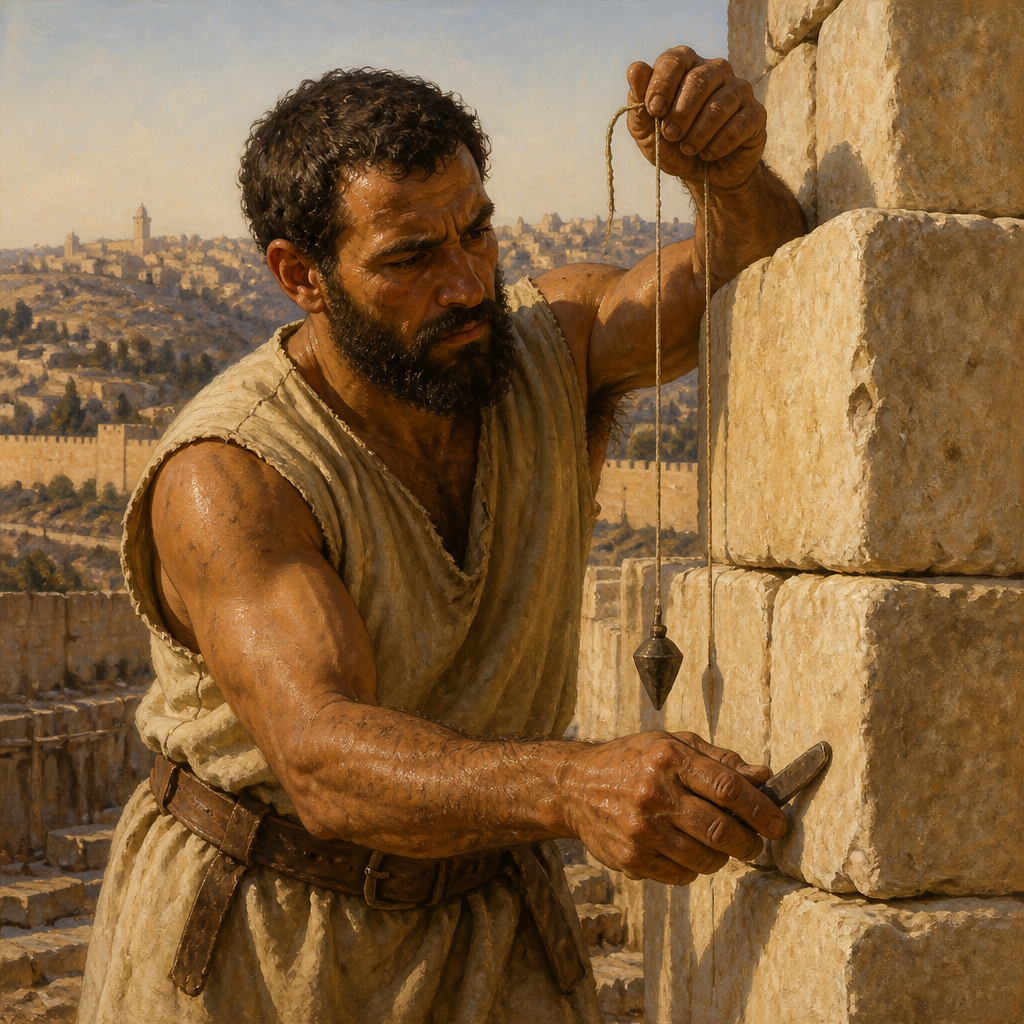 Binnui, Son of HenadadThis page
Connected Figures
Family
Father · Nehemiah 3:18–24
Henadad was a man of the post-exilic period whose son, Binnui, participated in the rebuilding of the Jerusalem wall under Nehemiah.
Categories
Mentions by Book
- Nehemiah7
Scripture References
All 7 indexed verses, in canonical order, from the Berean Standard Bible.
Nehemiah · 7
- Nehemiah 3:18
Next to him, their countrymen made repairs under Binnui son of Henadad, ruler of the other half-district of Keilah.
Cited as evidence on a family card; added so References, Key Verses and Mentions by Book share one index.
- Nehemiah 3:19Partial
And next to him, Ezer son of Jeshua, ruler of Mizpah, repaired another section opposite the ascent to the armory, near the angle in the wall.
Cited as evidence on a family card; added so References, Key Verses and Mentions by Book share one index.
- Nehemiah 3:20Partial
Next to him, Baruch son of Zabbai diligently repaired another section, from the angle to the doorway of the house of Eliashib the high priest.
Cited as evidence on a family card; added so References, Key Verses and Mentions by Book share one index.
- Nehemiah 3:21Partial
Next to him, Meremoth son of Uriah, the son of Hakkoz, repaired another section, from the doorway of the house of Eliashib to the end of the house.
Cited as evidence on a family card; added so References, Key Verses and Mentions by Book share one index.
- Nehemiah 3:22Partial
And next to him, the priests from the surrounding area made repairs.
Cited as evidence on a family card; added so References, Key Verses and Mentions by Book share one index.
- Nehemiah 3:23Partial
Beyond them, Benjamin and Hasshub made repairs in front of their house, and next to them, Azariah son of Maaseiah, the son of Ananiah, made repairs beside his house.
Cited as evidence on a family card; added so References, Key Verses and Mentions by Book share one index.
- Nehemiah 3:24
After him, Binnui son of Henadad repaired another section, from the house of Azariah to the angle and the corner,
Others Named Binnui
Compare all 4 bearers →Binnui, Father of NoadiahEzra 8:33
A Levite during the post-exilic return to Jerusalem whose son, Noadiah, assisted in the critical task of accounting for the temple's gold and silver.
Binnui, Ancestor of ShimeiEzra 10:38
A man of Israel during the post-exilic period whose descendant, Shimei, was identified in the census of those who had married foreign women.
Binnui, Son of Pahath-moabEzra 10:30
A descendant of Pahath-moab who participated in the post-exilic reformation by putting away his foreign wife in Jerusalem.