Henadad, Father of Bavvai
Henadad was a man of the post-exilic period whose son, Bavvai, served as a ruler and a contributor to the reconstruction of Jerusalem's walls.
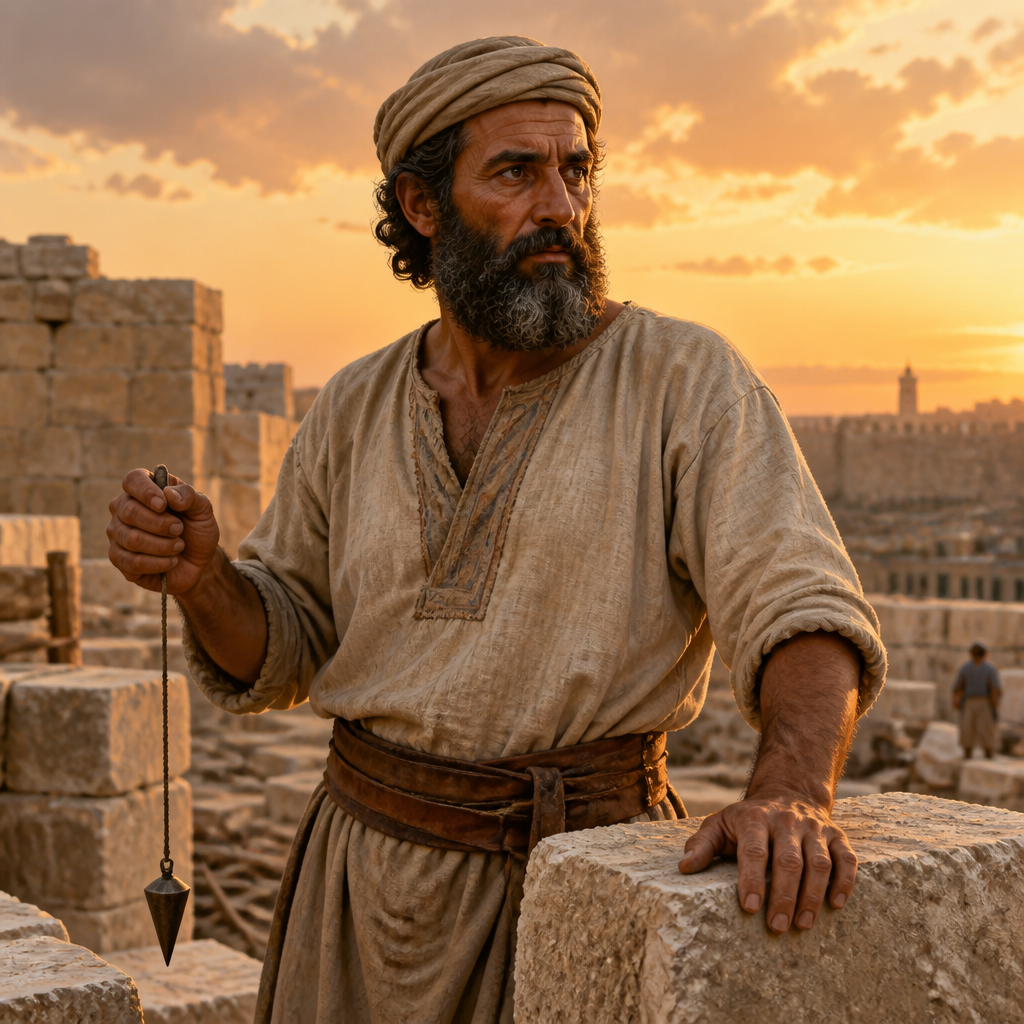
Henadad is a figure mentioned in the biblical record of the Post-Exilic Period, specifically during the governance of Nehemiah in the 5th century BC. While Henadad himself is not credited with physical labor on the walls of Jerusalem in the surviving text, his identity is preserved through the genealogical identification of his son, Bavvai.
His life is situated within the era of the Return from Exile, a time when Jewish families were repatriating to Judea from Babylon to restore their religious and civic identity. Henadad represents the patriarchal foundation of a family that held significant administrative authority in the region of Keilah, a town located in the lowlands of Judah.
Background and Family
Henadad appears in the genealogical records of Nehemiah 3, a chapter meticulously documenting the individuals and families who participated in the reconstruction of Jerusalem's fortifications around 444 BC. While his specific tribe is not explicitly stated in Nehemiah 3:18, his associations and the location of his family's influence suggest he was a member of the tribe of Judah or perhaps associated with the Levites who were active in the restoration efforts. He is primarily defined by his relationship to his son, Bavvai, who is identified as the "son of Henadad."
Major Life Events
The biblical text does not record the personal actions or specific deeds of Henadad. Instead, he serves as a point of reference for the social standing of his son. The mention of Henadad in the context of the wall's reconstruction implies that he was the head of a household that remained intact through the Babylonian exile and successfully transitioned back to the land of Israel.
His son, Bavvai, is described as the "ruler of the other half-district of Keilah." This indicates that Henadad’s family had attained a position of significant local leadership. In the administrative structure of post-exilic Judah, districts were often split, and the fact that Henadad’s son governed one of these portions speaks to the family's prominence and reliability under the Persian administration.
Relationship to Other Biblical Figures
Henadad’s primary relationship in the biblical narrative is with his son, Bavvai. Under the direction of Nehemiah and the high priest Eliashib, Bavvai led a group of "countrymen" or "brothers" to repair a section of the Jerusalem wall. This effort was coordinated alongside other regional leaders, such as Binnui and the residents of Keilah. The inclusion of Henadad’s name ensures that the legal and social lineage of the ruler of Keilah was properly validated within the community of the returnees.
Spiritual Significance
Though Henadad is a minor figure, his inclusion in the "Wall Builders' List" signifies the importance of legacy and the collective effort of the Jewish remnant. In the biblical theology of the Post-Exilic Period, the reconstruction of Jerusalem was not merely a construction project but a spiritual act of reclaiming the Promised Land. Henadad represents the generation that preserved the names and identities of their fathers during the long years of captivity in Babylon, ensuring that when the time for restoration arrived, his descendants were ready to take their place as leaders and builders in the service of God.
Spiritual Significance
Henadad serves as a vital genealogical link in the post-exilic record, establishing the legitimacy of his son Bavvai’s leadership. His presence in the text underscores the administrative organization of the returning exiles and the importance of family heritage in the restoration of Israel.
Frequently Asked Questions
What did Henadad do to help build the wall of Jerusalem?
The Bible does not record Henadad performing physical labor; rather, it identifies him as the father of Bavvai, who was the ruler of a district and a leader in the repair work.
Where did Henadad’s family live?
His son Bavvai is identified as the ruler of half the district of Keilah, suggesting the family was based in or had authority over that region of Judah.
In which book of the Bible is this Henadad mentioned?
He is mentioned exclusively in the book of Nehemiah, specifically in chapter 3, verse 18.
What is the meaning of the name Henadad?
The name Henadad (חֵנָדָד) is of Hebrew origin, often interpreted to mean 'Favor of Hadad' or 'Grace of the Beloved'.
Connected Figures
Bavvai
Son
Nehemiah
Governor during his son's service
Categories
Mentions by Book
- Nehemiah1
Family & Relationships
Child
Nehemiah 3:18
Others Named Henadad
Henadad, Patriarch of the LevitesEzra 3:9
Henadad was a prominent Levite patriarch whose descendants played a crucial role in the reconstruction of the Second Temple following the Babylonian exile.
Henadad, Father of BinnuiNehemiah 3:24
Henadad was a man of the post-exilic period whose son, Binnui, participated in the rebuilding of the Jerusalem wall under Nehemiah.