Hanani, Brother of Nehemiah
The biological brother of Nehemiah who brought news of Jerusalem’s distress to Susa and was later appointed as a governor of the city.
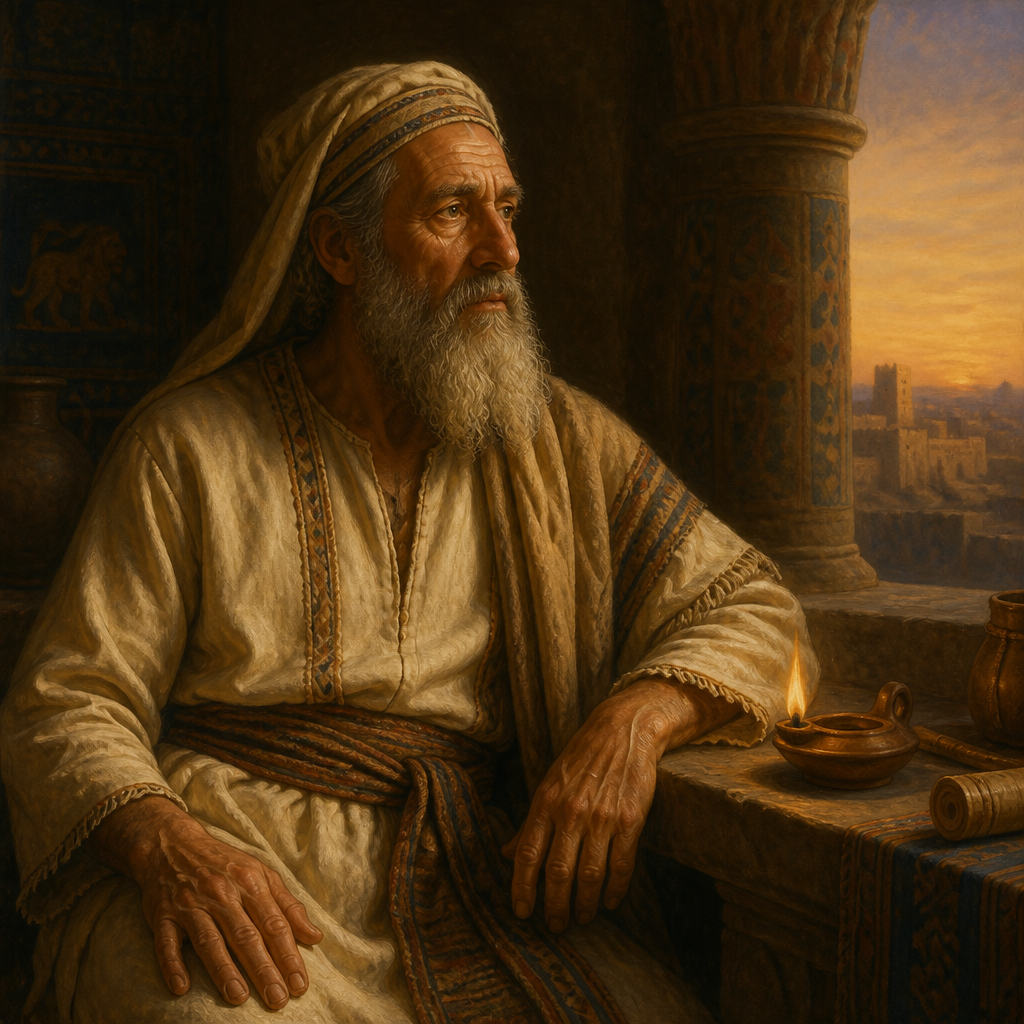
Hanani was a Jewish official and the biological brother of Nehemiah, the prominent cupbearer to King Artaxerxes I and later Governor of Judah. Living during the mid-5th century BC, Hanani serves as a pivotal catalyst in the biblical narrative of the restoration of Jerusalem. He is first introduced as a traveler returning from Judah to the Persian winter capital of Susa, where his firsthand report of the city's ruin moved Nehemiah to intercession and action.
Beyond his role as an informant, Hanani was recognized for his personal integrity and spiritual depth. Following the successful reconstruction of Jerusalem's walls, he was entrusted with the administrative oversight of the city. His appointment was not merely a result of his familial connection to the governor but was explicitly based on his reputation as a faithful man who possessed a profound fear of God.
Background and Family
Hanani was the son of Hacaliah and the brother of Nehemiah. While his specific tribe is not mentioned in the text of Nehemiah, his heritage is firmly rooted in the Jewish remnant that had returned to the land of Judah following the Babylonian exile. The biblical record indicates that while his brother Nehemiah held a high-ranking position in the Persian court at Susa, Hanani was active on the ground in Judah, maintaining a connection with the struggling community of returnees.
Major Life Events
The Report to Susa
In the month of Chislev, in the twentieth year of King Artaxerxes' reign (c. 445 BC), Hanani arrived in Susa accompanied by men from Judah. This meeting, recorded in Nehemiah 1, marks a turning point in the post-exilic history of Israel. Nehemiah questioned Hanani regarding the welfare of the Jewish remnant and the state of Jerusalem. Hanani’s response was stark and sobering:
"The remnant there in the province who survived the captivity are in great trouble and disgrace. The wall of Jerusalem is broken down, and its gates have been burned with fire." (Nehemiah 1:3)
This eyewitness testimony triggered Nehemiah’s season of fasting and prayer, eventually leading to the royal decree that authorized the rebuilding of Jerusalem’s fortifications.
Leadership in Jerusalem
After the walls were miraculously completed in fifty-two days, Nehemiah reorganized the city's administration to ensure its long-term security. In Nehemiah 7:2, Hanani is appointed as one of the primary leaders over Jerusalem, serving alongside Hananiah, the commander of the citadel. Nehemiah’s choice of Hanani was predicated on his character: he is described as a "faithful man" who "feared God more than most." This high commendation suggests that Hanani was a man of exceptional piety and reliability during a period of intense political and military pressure.
Relationship to Other Biblical Figures
Hanani’s primary relationship is with his brother, Nehemiah. The text presents them as a unified front in the effort to restore the Jewish state. While Nehemiah provided the political vision and royal authorization, Hanani provided the essential intelligence and local leadership. There is no recorded tension between the brothers; rather, Hanani appears as a trusted confidant and a reliable deputy whom Nehemiah could depend upon when the governor's duties required delegation.
Spiritual Significance
Hanani represents the essential role of the "messenger" and the "faithful administrator" in the work of God. Although his appearances in the text are brief, he is the spark that ignites Nehemiah’s mission. His spiritual significance lies in the biblical assessment of his character—his "fear of God" was the qualifying metric for his secular authority. In the context of the Return from Exile, Hanani exemplifies the quiet, steadfast leadership necessary to transition a community from a state of ruin to one of ordered, God-fearing stability.
Spiritual Significance
Hanani is significant as the catalyst for the rebuilding of Jerusalem's walls. His willingness to speak the hard truth about the city's condition moved Nehemiah to action. Furthermore, his appointment as a leader in Jerusalem highlights the biblical principle that leadership should be granted based on faithfulness and the fear of God rather than mere administrative skill or nepotism.
Frequently Asked Questions
Was Hanani actually Nehemiah's biological brother?
Yes, Nehemiah 1:2 and 7:2 explicitly refer to him as 'one of my brothers' and 'my brother,' and Nehemiah 1:1 identifies both as sons of Hacaliah.
What news did Hanani bring to Nehemiah?
He reported that the survivors in Judah were in great trouble and that the walls of Jerusalem remained broken and the gates burned.
What position did Hanani hold in Jerusalem?
He was put in charge of Jerusalem (a role similar to a city governor or administrator) after the walls were rebuilt.
Why did Nehemiah choose Hanani for leadership?
Nehemiah chose him because he was a faithful man and feared God more than most people did.
Connected Figures
Categories
Mentions by Book
- Nehemiah2
Family & Relationships
Sibling
Nehemiah 1:2
Parent
Nehemiah 1:1
Sibling
Nehemiah 1:1
Others Named Hanani
Hanani, Post-Exilic Descendant of ImmerEzra 10:20
A descendant of Immer mentioned in the book of Ezra during the post-exilic return to Jerusalem.
Hanani, Musician of the Post-Exilic PeriodNehemiah 12:36
Hanani was a musician and associate of Ezra the scribe who participated in the dedication of the rebuilt walls of Jerusalem in the 5th century BC.
Hanani, Seer of the Divided Monarchy1 Kings 16:1
A prophet and seer in the southern kingdom of Judah who famously rebuked King Asa and fathered the prophet Jehu.
Hanani, Musician of the Divided Monarchy1 Chronicles 25:4
A Levite musician and son of Heman the Singer who served in the temple under King David's organized worship system.