Nehemiah, Governor of Judah
A Jewish leader and governor who spearheaded the reconstruction of Jerusalem's walls and religious reforms during the Persian return from exile.
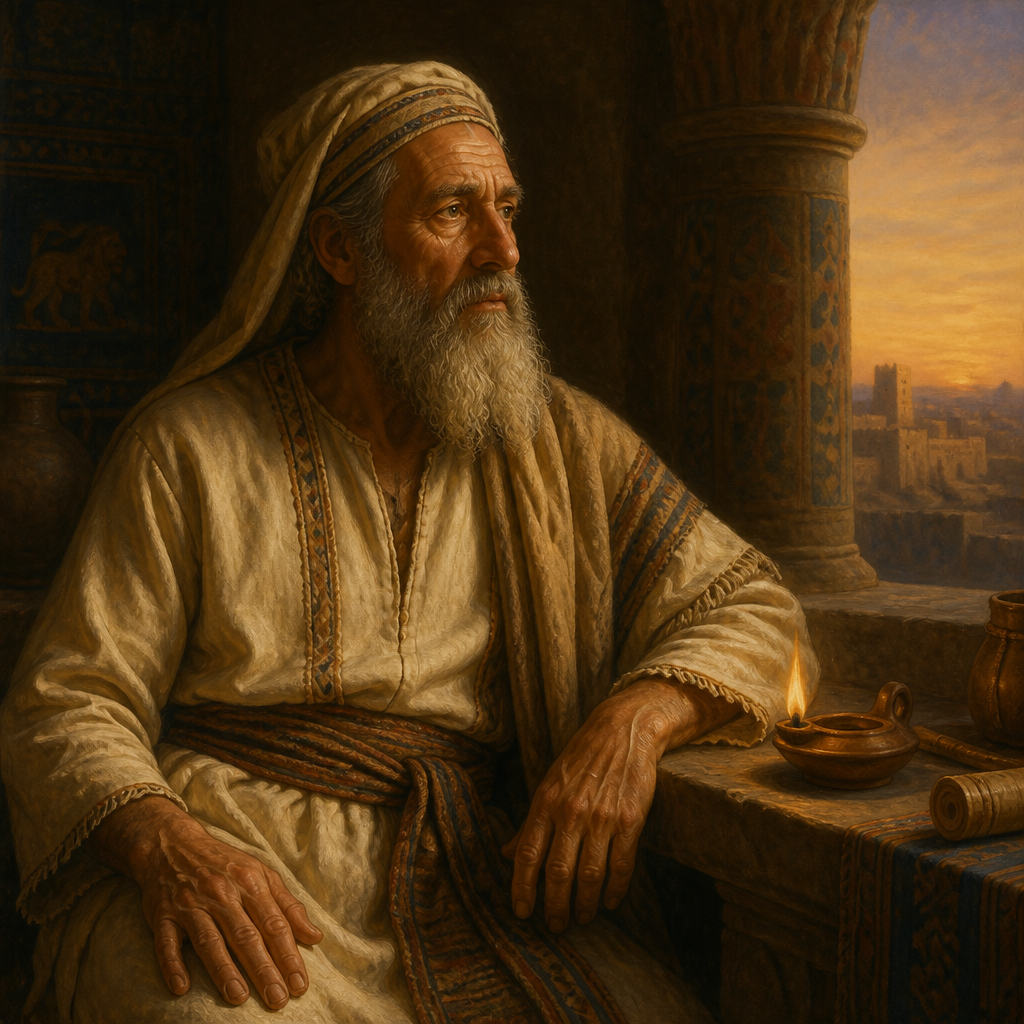
Nehemiah, the son of Hacaliah, was a central figure in the Post-Exilic history of Israel, serving as the governor of Judah under the Persian Empire. His narrative begins in the citadel of Susa, where he served in a high-ranking position before receiving news of the desolate state of Jerusalem. His leadership was defined by a transition from personal grief to organized action, resulting in his appointment as governor and his arrival in the holy city to oversee its physical and spiritual restoration.
Working alongside contemporary figures like Ezra the priest and Zerubbabel, Nehemiah played a vital role in stabilizing the Jewish community following the Babylonian captivity. His tenure was marked by the rigorous enforcement of the Mosaic Law, the establishment of administrative order, and the defense of the city against surrounding adversaries. His name, meaning 'Yahweh has comforted,' reflects his role in providing stability and hope to the returned exiles.
Background and Family
Nehemiah is identified specifically as the son of Hacaliah (Nehemiah 1:1, 10:1). While his specific tribe is not explicitly mentioned in the biblical text, his deep concern for the city of Jerusalem and the sanctity of the Temple suggests a lineage deeply rooted in the religious and civic life of Judah. He had a brother named Hanani (Nehemiah 1:2), who brought him the initial report of Jerusalem’s distress. Nehemiah’s background in the Persian court at Susa indicates that he was a man of significant influence and integrity, trusted by the imperial authorities.
Major Life Events
The biblical record of Nehemiah’s life focuses primarily on his service as the governor (tirshatha) of the province of Judah. According to Nehemiah 1:1, his active leadership began in the twentieth year of a Persian king (historically identified as Artaxerxes I), in the month of Chislev. Upon learning that the walls of Jerusalem were broken and its gates burned, he sought and received permission to return and rebuild.
One of the defining moments of his career was the public reading and explanation of the Law. In Nehemiah 8:9, Nehemiah stood with Ezra the priest and the Levites to instruct the people. As the people wept upon hearing the commands they had neglected, Nehemiah exhorted them to joy, declaring the day holy to the LORD and commanding them to feast and share with those who had nothing prepared.
Nehemiah was also a signatory to the formal covenant or 'sealed document' mentioned in Nehemiah 10:1. This document was a binding agreement by the leaders, Levites, and priests to walk in God's Law. His administration was characterized by the systematic organization of the community, ensuring that daily portions were provided for the singers, gatekeepers, and Levites, thereby maintaining the functionality of the Second Temple (Nehemiah 12:47).
Relationship to Other Biblical Figures
Nehemiah’s ministry was deeply intertwined with that of Ezra the priest and scribe. The two functioned as the dual pillars of the restoration: Nehemiah provided the political and administrative leadership, while Ezra provided the spiritual and instructional oversight. They appear together at the great assembly in Nehemiah 8, working in harmony to redirect the hearts of the people toward the Torah.
He is also mentioned in the context of the high priest Joiakim (son of Jeshua) and the earlier leader Zerubbabel. Nehemiah 12:47 places Nehemiah in the same tradition of leadership as Zerubbabel, highlighting their shared responsibility in establishing the tithes and portions for the Temple workers. His brother Hanani served as a catalyst for his mission, providing the intelligence necessary for Nehemiah to petition the Persian king.
Spiritual Significance
Nehemiah is presented as a model of the 'praying leader.' His actions are consistently preceded by petition to God, and he viewed his administrative work as a sacred duty. He represents the biblical ideal of the 'servant-leader' who uses secular authority to further divine purposes. His insistence on the holiness of the Sabbath and the purity of the community reflected a commitment to ensuring that the mistakes of the pre-exilic era—which led to the initial destruction of Jerusalem—would not be repeated. His legacy is one of restoration, proving that the physical rebuilding of a nation must be accompanied by a spiritual return to the Word of God.
Spiritual Significance
Nehemiah serves as the primary administrative architect of the post-exilic Jewish state. His role was crucial in transitioning the community from a group of displaced refugees into a structured, self-governing province centered around the Law of Moses. He demonstrated that civil leadership is a form of ministry, emphasizing that the physical security of God's people (symbolized by the walls) and their spiritual integrity (symbolized by the Law) are inseparable.
Theologically, Nehemiah represents God’s faithfulness to His covenant during the 'Exile and Return' era. His efforts ensured the survival of the Jewish remnant, which was necessary for the eventual fulfillment of messianic prophecies. His collaboration with Ezra established a template for Jewish life—centered on the synagogue and the study of the Law—that would persist for centuries.
Frequently Asked Questions
Who was Nehemiah's father?
Nehemiah was the son of Hacaliah, as stated in Nehemiah 1:1 and 10:1.
What title did Nehemiah hold in Jerusalem?
He served as the governor, a role that gave him administrative and political authority over the province of Judah under Persian rule.
Who was Nehemiah's brother?
Nehemiah had a brother named Hanani, who informed him about the dilapidated state of Jerusalem's walls.
How did Nehemiah interact with Ezra?
Nehemiah and Ezra worked together to lead the people; Nehemiah provided the administrative and governing support while Ezra focused on teaching the Law of God.
What was Nehemiah's response to the people weeping over the Law?
He told them not to mourn or weep because the day was holy to the LORD, and he encouraged them to find strength in the joy of the LORD.
Connected Figures
Ezra
Contemporary priest and scribe
Hacaliah
Father
Hanani
Sibling
Zerubbabel
Preceding leader mentioned alongside him
Categories
Mentions by Book
- Nehemiah5
Family & Relationships
Sibling
Nehemiah 1:1
Parent
Nehemiah 1:1
Sibling
Nehemiah 1:2
Others Named Nehemiah
Nehemiah, Son of AzbukNehemiah 3:16
A Jewish official and ruler of half the district of Beth-zur who participated in the reconstruction of Jerusalem's walls under Persian rule.
Nehemiah, Exile in the Company of ZerubbabelEzra 2:2
A prominent leader and Israelite exile who returned from Babylon to Jerusalem alongside Zerubbabel and Jeshua during the first wave of restoration.