Hacaliah
Who was Hacaliah in the Bible?
The father of Nehemiah, the governor of Judah who oversaw the rebuilding of Jerusalem's walls during the Persian period.
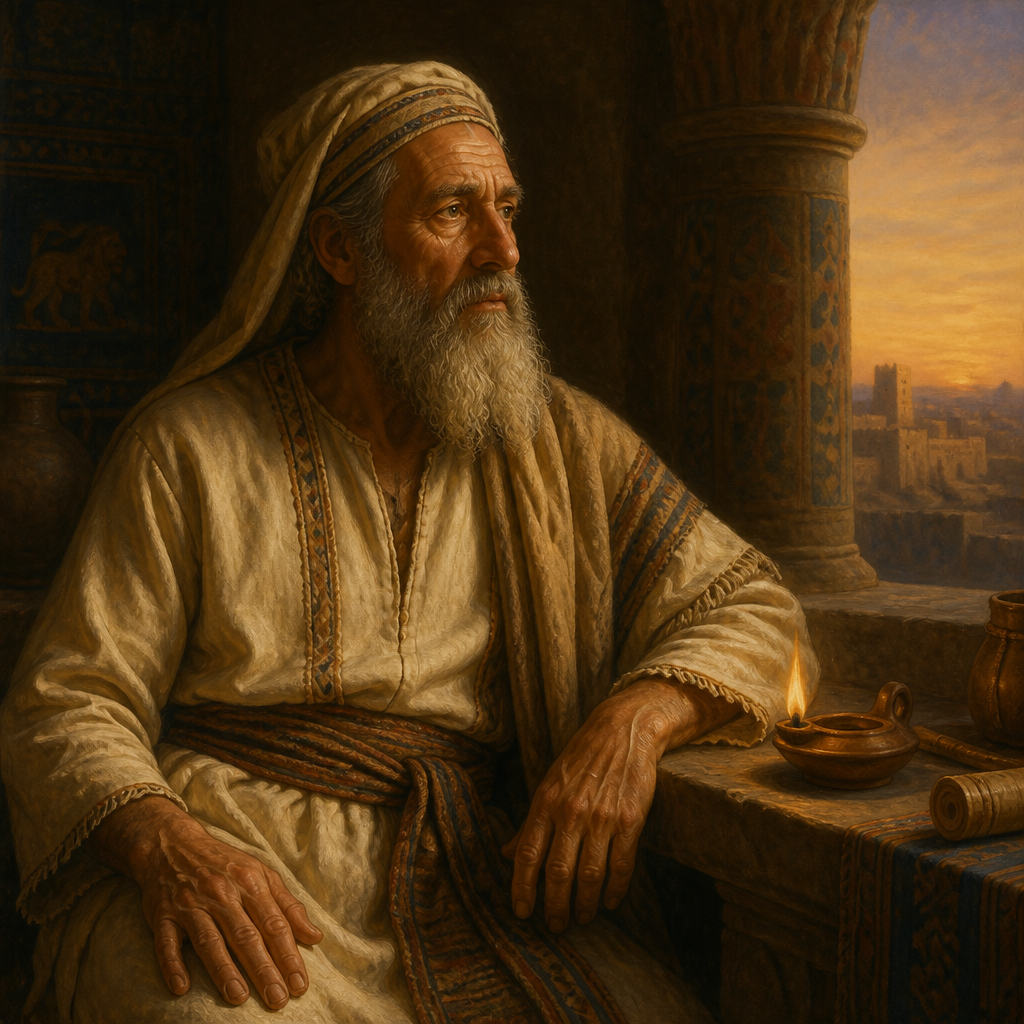
Hacaliah is a figure mentioned in the Old Testament as the father of Nehemiah, the central figure and author of the Book of Nehemiah. His name, which may translate from Hebrew as 'Whom Yahweh enlightens' or 'Wait for Yahweh,' appears within the context of the Jewish return from the Babylonian exile during the 5th century BC.
While the biblical record does not provide biographical details concerning Hacaliah’s own life, profession, or specific location, his significance is established through his offspring. As the father of Nehemiah, a high-ranking official in the Persian court of Artaxerxes I, and Hanani, another figure involved in the restoration of Jerusalem, Hacaliah represents the generation of Jews who maintained their heritage while living in the Persian diaspora.
Background and Family
Hacaliah appears in the biblical record specifically during the period of the Persian Empire's hegemony over the ancient Near East. This era, often called the Post-Exilic or Persian Period, saw many Jews living in the administrative centers of Persia, such as Susa, while others returned to the province of Yehud (Judah) to rebuild the temple and the city of Jerusalem.
Though Hacaliah’s own tribe is not explicitly stated in the Masoretic Text, some scholars infer a connection to the tribe of Judah based on Nehemiah’s deep concern for the city of Jerusalem and his eventual appointment as its governor. Hacaliah is recorded as having at least two sons: Nehemiah and Hanani. Nehemiah describes himself as the "son of Hacaliah" in the very first verse of his memoir (Nehemiah 1:1), establishing his lineage as a primary identifier of his personhood and authority.
Major Life Events
There are no specific life events recorded for Hacaliah in the biblical text. His existence is used primarily as a genealogical marker to distinguish Nehemiah from other men of the same name. From the biblical mentions, we can deduce that Hacaliah lived during the mid-to-late 5th century BC. Given that his son Nehemiah served as the cupbearer to King Artaxerxes I in Susa, it is probable that Hacaliah resided in or near the Persian capital during his adult life.
He is mentioned a second time in Nehemiah 10:1, which records the sealing of a solemn covenant by the Jewish leaders. Nehemiah is identified here as "Nehemiah the governor, son of Hacaliah," reinforcing the importance of this patronymic in official Jewish documentation of the time.
Relationship to Other Biblical Figures
Hacaliah is most famously the father of Nehemiah. Nehemiah’s career—transitioning from a royal cupbearer to the rebuilder of Jerusalem's walls and a religious reformer—is the focal point of the book that bears his name. The mention of Hacaliah at the outset of the book (Nehemiah 1:1) and again at a pivotal moment of covenant-signing (Nehemiah 10:1) suggests that Hacaliah was a man of sufficient standing that his name served as a legitimate and recognized credential for his son.
Hacaliah is also the father of Hanani, whom Nehemiah refers to as "one of my brothers" in Nehemiah 1:2. Hanani was instrumental in bringing the report of Jerusalem’s dilapidated state to Nehemiah in Susa, which catalyzed the events leading to the city's restoration. Thus, Hacaliah’s household was central to the political and spiritual revival of the Jewish people in the 5th century BC.
Spiritual Significance
The spiritual significance of Hacaliah lies in the continuity of the Jewish faith during the diaspora. Although he remains a background figure, his name serves as a bridge between the generations that endured the exile and those who participated in the restoration of the Promised Land. In the biblical narrative, the naming of a father serves to root a leader in a specific community and tradition. By being identified as the son of Hacaliah, Nehemiah is presented not as a self-made Persian official, but as a member of the covenant people of Israel. Hacaliah’s legacy is ultimately found in the faithfulness and leadership of his children, who prioritized the restoration of the holy city and the observance of the Law of Moses.
Hacaliah’s theological importance is rooted in the biblical emphasis on lineage and the preservation of identity in exile. While he performed no recorded miracles and gave no recorded speeches, his inclusion in the text validates the pedigree of Nehemiah, one of the most significant leaders of the Post-Exilic period. His name stands as a testament to the families who remained identifiable as Jews even while serving in the halls of foreign empires.
In the broader context of the Old Testament, Hacaliah represents the 'quiet' generation—those who lived faithfully between the trauma of the destruction of Jerusalem and the triumph of its rebuilding. His presence in the text ensures that Nehemiah’s reforms are viewed through the lens of a historical and familial connection to the God of Israel.
Frequently Asked Questions
Who was Hacaliah in the Bible?
Hacaliah was the father of Nehemiah, the famous governor of Judah who rebuilt the walls of Jerusalem after the Babylonian exile.
What does the name Hacaliah mean?
The name Hacaliah is Hebrew and is generally understood to mean 'Whom Yahweh enlightens' or 'Wait for Yahweh.'
Did Hacaliah ever visit Jerusalem?
The Bible does not record Hacaliah visiting Jerusalem. While his sons Nehemiah and Hanani were active there, Hacaliah is only mentioned as a father, and it is possible he remained in the Persian city of Susa.
In which books of the Bible is Hacaliah mentioned?
Hacaliah is mentioned exclusively in the Book of Nehemiah, specifically in Nehemiah 1:1 and Nehemiah 10:1.
What tribe did Hacaliah belong to?
The Bible does not explicitly state Hacaliah's tribe, though many scholars believe he was of the tribe of Judah given his sons' leadership roles in Jerusalem.
Family & Relationships
 HacaliahThis page
Children
 Hanani, Brother of NehemiahSonNehemiah 1:1
Inferred
No verse names Hanani and Hacaliah together; the father link is carried from the surrounding genealogy and is not stated in Scripture.Evidence: Nehemiah 1:1
 Nehemiah, Governor of JudahSonNehemiah 1:1Stated
Connected Figures
Family
Son · Nehemiah 1:1
The biological brother of Nehemiah who brought news of Jerusalem’s distress to Susa and was later appointed as a governor of the city.
Exile and ReturnFirst: Nehemiah 1:28 versesLeader of Jerusalem, Messenger
Son · Nehemiah 1:1
A Jewish leader and governor who spearheaded the reconstruction of Jerusalem's walls and religious reforms during the Persian return from exile.
Exile and ReturnFirst: Nehemiah 1:111 versesGovernor of Judah
Categories
Mentions by Book
- Nehemiah3
Scripture References
All 3 indexed verses, in canonical order, from the Berean Standard Bible.
Nehemiah · 3
- Nehemiah 1:1
These are the words of Nehemiah son of Hacaliah: In the month of Chislev, in the twentieth year, while I was in the citadel of Susa,
- Nehemiah 1:2Partial
Hanani, one of my brothers, arrived with men from Judah. So I questioned them about the remnant of the Jews who had survived the exile, and also about Jerusalem.
Cited as evidence on a family card; added so References, Key Verses and Mentions by Book share one index.
- Nehemiah 10:1
Now these were the ones who sealed the document: Nehemiah the governor, son of Hacaliah, and also Zedekiah,