Haman
Who was Haman in the Bible?
A high-ranking Persian official under King Xerxes who orchestrated a failed genocidal plot against the Jewish people during the post-exilic period.
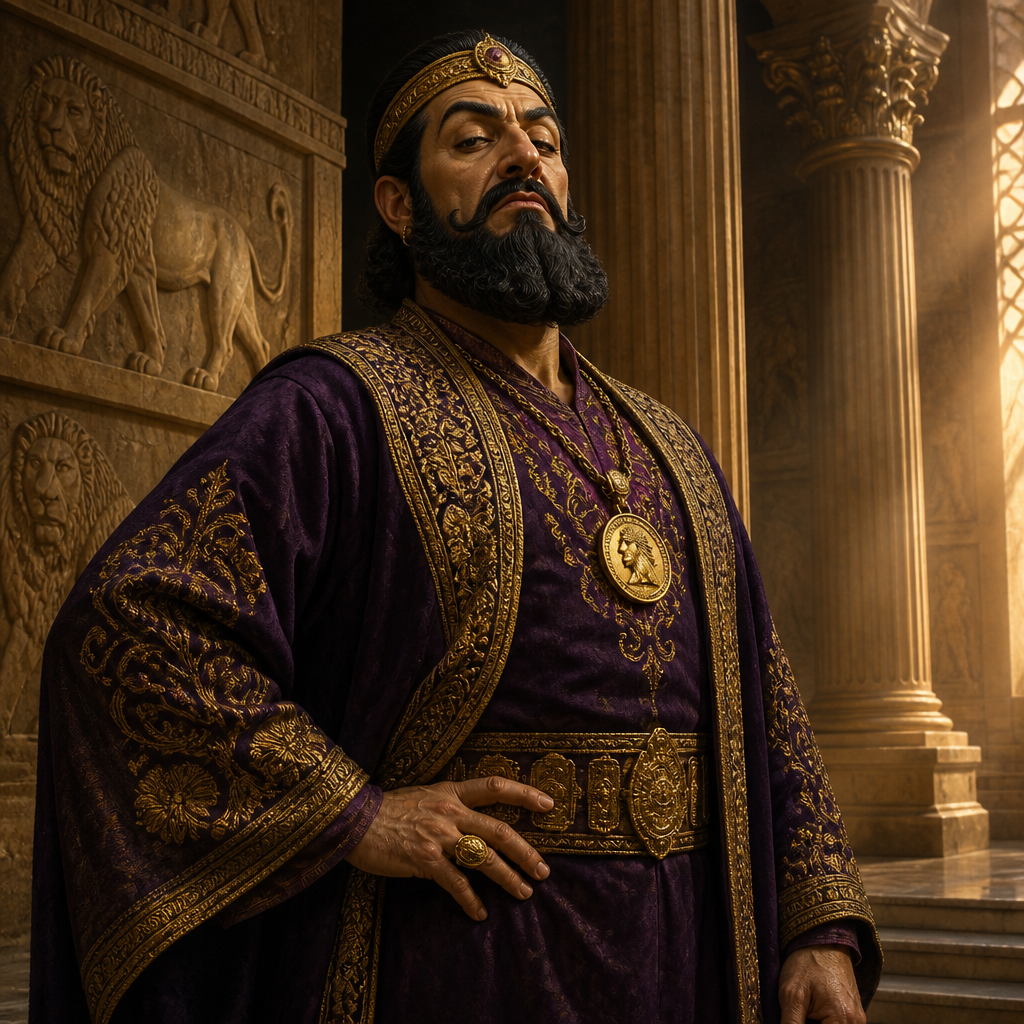
Haman, the son of Hammedatha the Agagite, served as the primary antagonist in the Book of Esther. Occupying a position of supreme authority directly beneath King Xerxes (Xerxes), Haman was elevated above all other princes in the Persian Empire. His narrative is defined by an intense personal vendetta against Mordecai the Jew, which escalated into a state-sanctioned decree to exterminate all Jews residing within the 127 provinces of the empire.
Historically situated during the Exile and Return era, Haman represents the archetypal adversary of the Jewish people. His lineage as an Agagite suggests a connection to the ancient Amalekites, traditional enemies of Israel. His downfall was eventually brought about by the intervention of Queen Esther and Mordecai, leading to his execution and the institution of the Jewish festival of Purim, which commemorates the deliverance of the Jews from his schemes.
Background and Family
Haman is introduced in the biblical record as the son of Hammedatha the Agagite (Esther 3:1). The designation "Agagite" is significant to biblical scholars, as it likely links Haman to Agag, the king of the Amalekites whom King Saul failed to fully destroy generations earlier. This ancestral friction provides a historical backdrop for Haman's immediate hostility toward the Jewish people.
Haman was a man of significant household stature and wealth. He was married to Zeresh, who acted as a close advisor to him, and together they had ten sons: Parshandatha, Dalphon, Aspatha, Poratha, Adalia, Aridatha, Parmashta, Arisai, Aridai, and Vaizatha. Haman was notably prideful of his large family and his immense riches, viewing them as evidence of his superior status within the Persian court (Esther 5:11).
Major Life Events
The Rise to Power and the Conflict with Mordecai
King Xerxes promoted Haman to a position of unrivaled authority among the Persian officials. By royal decree, all servants at the king's gate were required to bow and pay homage to Haman. However, Mordecai, a Jewish official, refused to comply with this command. When Haman became aware of this defiance, he was filled with rage. Rather than targeting Mordecai alone, Haman sought to destroy the entirety of Mordecai’s people. To determine the most auspicious time for this genocide, Haman cast the Pur (the lot), which fell on the thirteenth day of the twelfth month, Adar (Esther 3:7).
The Genocidal Edict
Haman used his influence to manipulate King Xerxes, arguing that a certain "scattered and dispersed" people held laws different from the rest of the empire and did not obey the king’s mandates. He offered ten thousand talents of silver to the royal treasury to fund the destruction. Xerxes granted Haman his signet ring, effectively giving him the authority to write and seal the decree of extermination in the king's name. The edict caused great confusion and mourning throughout Susa and the provinces.
The Turn of Fortune
Haman’s arrogance reached its peak when he was invited by Queen Esther to two private banquets with the king. Believing he was being uniquely honored, Haman complained to his wife and friends that his joy was tarnished by the sight of Mordecai still sitting at the king's gate. On the advice of Zeresh, Haman constructed a gallows fifty cubits high specifically for Mordecai's execution (Esther 5:14).
In a dramatic irony, the king, suffering from insomnia, discovered through royal records that Mordecai had previously saved his life from an assassination plot. The king asked Haman what should be done for a man the king wished to honor. Haman, assuming the king meant him, suggested a public display of royal robes and a parade. The king then commanded Haman to perform these very honors for Mordecai. This public humiliation signaled the beginning of Haman's collapse.
Execution and Aftermath
At Esther’s second banquet, she revealed her Jewish identity and identified Haman as the "adversary and enemy" who sought to destroy her people. Terrified, Haman pleaded for his life, but the king, seeing Haman falling upon the queen's couch, accused him of assaulting her. Upon learning of the gallows Haman had built for Mordecai, Xerxes ordered Haman to be hanged on them. Following Haman's death, his ten sons were also executed, and his estate was given to Queen Esther (Esther 8:1).
Relationship to Other Biblical Figures
Haman’s primary relationship is one of antagonistic rivalry with Mordecai. Their conflict serves as the catalyst for the entire plot of the Book of Esther. Haman also shares a complex relationship with King Xerxes, characterized by manipulation and the abuse of delegated power. His relationship with Queen Esther is one of hidden enmity; he unaware of her ethnicity until the moment of his condemnation. Within his own household, Haman relied heavily on his wife Zeresh, whose counsel ultimately led to the construction of the instrument of his own death.
Spiritual Significance
In the biblical narrative, Haman serves as a personification of pride and the existential threat of antisemitism. His story illustrates the concept of lex talionis (the law of retaliation), where the wicked fall into the very pit they dig for others. Haman's casting of the "Pur" (lot) was intended to leave the fate of the Jews to chance or pagan deities, but the subsequent events demonstrate the biblical theme of divine providence—God’s invisible hand directing history to preserve His people even when He is not explicitly named. The festival of Purim remains a lasting testimony to the failure of Haman’s attempt to circumvent God’s covenantal protection of Israel.
Haman is theologically significant as the 'Anti-Exodus' figure; whereas Pharaoh sought to enslave, Haman sought total annihilation. He represents the recurring biblical theme of the 'enemy of the Jews' (Esther 3:10) and the ultimate futility of human pride against divine purposes. His descent from Agag links the Esther narrative to the broader biblical trajectory of the conflict between Israel and Amalek, portraying him as the final major biblical manifestation of that ancient enmity.
The reversal of Haman's fortunes serves as a literary and spiritual paradigm for 'peripety'—a sudden reversal of circumstances. His story reinforces the promise that no weapon formed against the covenant people shall prosper, and his death on his own gallows provides a vivid illustration of the self-destructive nature of evil.
Frequently Asked Questions
What does 'Agagite' mean in relation to Haman?
It signifies that Haman was likely a descendant of Agag, the king of the Amalekites. This identifies him with a nation that was a perpetual enemy of Israel since the time of the Exodus.
Why did Haman want to kill all the Jews?
His motivation was sparked by Mordecai's refusal to bow to him. Haman felt this personal slight was so great that he sought to punish not just Mordecai, but his entire ethnic group.
How did Haman die?
Haman was hanged (or impaled) on the 75-foot-tall (50 cubits) gallows he had originally built for the execution of Mordecai.
What happened to Haman's family?
Haman's ten sons were killed by the Jews during the armed defense permitted by the king's second decree, and their bodies were subsequently hanged on gallows.
What is the 'Pur' that Haman cast?
'Pur' is the Persian word for 'lot.' Haman cast lots to determine the specific day and month that he believed would be most favorable for the destruction of the Jewish people.
Family & Relationships
Connected Figures
Family
Father · Esther 3:1
Hammedatha was the father of Haman the Agagite, the primary antagonist of the book of Esther during the Persian Exile.
Exile and ReturnFirst: Esther 3:15 versesFather of a high Persian official

Wife · Esther 6:13
The wife of Haman the Agagite who advised the construction of a gallows for Mordecai and later prophesied her husband's downfall.

Son · Esther 9:7–10
Adalia was one of the ten sons of Haman the Agagite, executed by the Jews during the events of Purim in Shushan.
Exile and ReturnFirst: Esther 9:85 versesSon of Haman

Son · Esther 9:7–10
One of the ten sons of Haman the Agagite, executed by the Jews in Susa during the events of Purim.
Exile and ReturnFirst: Esther 9:95 versesSon of a Persian official

Son · Esther 9:7–10
Aridatha was one of the ten sons of Haman the Agagite, executed during the Jewish defense in Susa as recorded in the Book of Esther.

Son · Esther 9:7–10
Arisai was one of the ten sons of Haman the Agagite, executed by the Jews in Susa during the events recorded in the Book of Esther.
Exile and ReturnFirst: Esther 9:95 versesSon of a Persian official

Son · Esther 9:7–10
Aspatha was one of the ten sons of Haman the Agagite, executed during the Jewish defense in Shushan as recorded in the Book of Esther.
Exile and ReturnFirst: Esther 9:75 versesPrince of the Agagites

Son · Esther 9:7–10
Dalphon was one of the ten sons of Haman the Agagite, executed by the Jews in Susa following his father's failed genocidal plot against them during the reign of King Xerxes.
Exile and ReturnFirst: Esther 9:75 versesSon of a Persian official

Son · Esther 9:7–10
Parmashta was one of the ten sons of Haman the Agagite, executed during the events of Purim in Susa.
Exile and ReturnFirst: Esther 9:95 versesPersian Nobleman

Son · Esther 9:7–10
The eldest son of Haman the Agagite, executed along with his brothers during the Jewish defense in Susa during the reign of King Ahasuerus.
Exile and ReturnFirst: Esther 9:75 versesSon of a High Official

Son · Esther 9:7–10
Poratha was one of the ten sons of Haman the Agagite, executed during the events of the Jewish defense against their enemies in the Persian capital of Susa.
Son · Esther 9:7–10
Vaizatha was the youngest son of Haman the Agagite, executed alongside his brothers during the Jewish defense in Susa following the failure of Haman's genocidal plot.
Exile and ReturnFirst: Esther 9:95 versesPersian Noble
Categories
Mentions by Book
- Esther48
Scripture References
All 48 indexed verses, in canonical order, from the Berean Standard Bible.
- Esther 3:1
After these events, King Xerxes honored Haman son of Hammedatha, the Agagite, elevating him to a position above all the princes who were with him.
- Esther 3:2
All the royal servants at the king’s gate bowed down and paid homage to Haman, because the king had commanded that this be done for him. But Mordecai would not bow down or pay homage.
- Esther 3:4
Day after day they warned him, but he would not comply. So they reported it to Haman to see whether Mordecai’s behavior would be tolerated, since he had told them he was a Jew.
- Esther 3:5Partial
When Haman saw that Mordecai would not bow down or pay him homage, he was filled with rage.
- Esther 3:6
And when he learned the identity of Mordecai’s people, he scorned the notion of laying hands on Mordecai alone. Instead, he sought to destroy all of Mordecai’s people, the Jews, throughout the kingdom of Xerxes.
- Esther 3:7
In the twelfth year of King Xerxes, in the first month, the month of Nisan, the Pur (that is, the lot) was cast before Haman to determine a day and month. And the lot fell on the twelfth month, the month of Adar.
- Esther 3:8
Then Haman informed King Xerxes, “There is a certain people scattered and dispersed among the peoples of every province of your kingdom. Their laws are different from everyone else’s, and they do not obey the king’s laws. So it is not in the king’s best interest to tolerate them.
- Esther 3:10
So the king removed the signet ring from his finger and gave it to Haman son of Hammedatha, the Agagite, the enemy of the Jews.
- Esther 3:11
“Keep your money,” said the king to Haman. “These people are given to you to do with them as you please.”
- Esther 3:12
On the thirteenth day of the first month, the royal scribes were summoned and the order was written exactly as Haman commanded the royal satraps, the governors of each province, and the officials of each people, in the script of each province and the language of every people. It was written in the name of King Xerxes and sealed with the royal signet ring.
- Esther 3:15
The couriers left, spurred on by the king’s command, and the edict was issued in the citadel of Susa. Then the king and Haman sat down to drink, but the city of Susa was in confusion.
- Esther 4:7
and Mordecai told him all that had happened to him, including the exact amount of money that Haman had promised to pay into the royal treasury in order to destroy the Jews.
- Esther 5:4
“If it pleases the king,” Esther replied, “may the king and Haman come today to the banquet I have prepared for the king.”
- Esther 5:5Partial
“Hurry,” commanded the king, “and bring Haman, so we can do as Esther has requested.” So the king and Haman went to the banquet that Esther had prepared.
- Esther 5:8
If I have found favor in the sight of the king, and if it pleases the king to grant my petition and fulfill my request, may the king and Haman come tomorrow to the banquet I will prepare for them. Then I will answer the king’s question.”
- Esther 5:9Partial
That day Haman went out full of joy and glad of heart. At the king’s gate, however, he saw Mordecai, who did not rise or tremble in fear at his presence. And Haman was filled with rage toward Mordecai.
- Esther 5:10
Nevertheless, Haman restrained himself and went home. And calling for his friends and his wife Zeresh,
- Esther 5:11
Haman recounted to them his glorious wealth, his many sons, and all the ways the king had honored and promoted him over the other officials and servants.
- Esther 5:12
“What is more,” Haman added, “Queen Esther invited no one but me to join the king at the banquet she prepared, and I am invited back tomorrow along with the king.
- Esther 5:14
His wife Zeresh and all his friends told him, “Have them build a gallows fifty cubits high, and ask the king in the morning to have Mordecai hanged on it. Then go to the banquet with the king and enjoy yourself.” The advice pleased Haman, and he had the gallows constructed.
- Esther 6:4
“Who is in the court?” the king asked. Now Haman had just entered the outer court of the palace to ask the king to hang Mordecai on the gallows he had prepared for him.
- Esther 6:5
So the king’s attendants answered him, “Haman is there, standing in the court.” “Bring him in,” ordered the king.
- Esther 6:6Partial
Haman entered, and the king asked him, “What should be done for the man whom the king is delighted to honor?” Now Haman thought to himself, “Whom would the king be delighted to honor more than me?”
- Esther 6:7
And Haman told the king, “For the man whom the king is delighted to honor,
- Esther 6:10
“Hurry,” said the king to Haman, “and do just as you proposed. Take the robe and the horse to Mordecai the Jew, who is sitting at the king’s gate. Do not neglect anything that you have suggested.”
- Esther 6:11
So Haman took the robe and the horse, arrayed Mordecai, and paraded him through the city square, crying out before him, “This is what is done for the man whom the king is delighted to honor!”
- Esther 6:12
Then Mordecai returned to the king’s gate. But Haman rushed home, with his head covered in grief.
- Esther 6:13
Haman told his wife Zeresh and all his friends everything that had happened. His advisers and his wife Zeresh said to him, “Since Mordecai, before whom your downfall has begun, is Jewish, you will not prevail against him—for surely you will fall before him.”
- Esther 6:14
While they were still speaking with Haman, the king’s eunuchs arrived and rushed him to the banquet that Esther had prepared.
- Esther 7:1
So the king and Haman went to dine with Esther the queen,
- Esther 7:6Partial
Esther replied, “The adversary and enemy is this wicked man—Haman!” And Haman stood in terror before the king and queen.
- Esther 7:7
In his fury, the king arose from drinking his wine and went to the palace garden, while Haman stayed behind to beg Queen Esther for his life, for he realized that the king was planning a terrible fate for him.
- Esther 7:8Partial
Just as the king returned from the palace garden to the banquet hall, Haman was falling on the couch where Esther was reclining. The king exclaimed, “Would he actually assault the queen while I am in the palace?” As soon as the words had left the king’s mouth, they covered Haman’s face.
- Esther 7:9Partial
Then Harbonah, one of the eunuchs attending the king, said: “There is a gallows fifty cubits high at Haman’s house. He had it built for Mordecai, who gave the report that saved the king.” “Hang him on it!” declared the king.
- Esther 7:10
So they hanged Haman on the gallows he had prepared for Mordecai. Then the fury of the king subsided.
- Esther 8:1
That same day King Xerxes awarded Queen Esther the estate of Haman, the enemy of the Jews. And Mordecai entered the king’s presence because Esther had revealed his relation to her.
- Esther 8:2Partial
The king removed the signet ring he had recovered from Haman and presented it to Mordecai. And Esther appointed Mordecai over the estate of Haman.
- Esther 8:3
And once again, Esther addressed the king. She fell at his feet weeping and begged him to revoke the evil scheme of Haman the Agagite, which he had devised against the Jews.
- Esther 8:5
“If it pleases the king,” she said, “and if I have found favor in his sight, and the matter seems proper to the king, and I am pleasing in his sight, may an order be written to revoke the letters that the scheming Haman son of Hammedatha, the Agagite, wrote to destroy the Jews in all the king’s provinces.
- Esther 8:7
So King Xerxes said to Esther the Queen and Mordecai the Jew, “Behold, I have given Haman’s estate to Esther, and he was hanged on the gallows because he attacked the Jews.
- Esther 9:7Partial
including Parshandatha, Dalphon, Aspatha,
Cited as evidence on a family card; added so References, Key Verses and Mentions by Book share one index.
- Esther 9:8Partial
Poratha, Adalia, Aridatha,
Cited as evidence on a family card; added so References, Key Verses and Mentions by Book share one index.
- Esther 9:9Partial
Parmashta, Arisai, Aridai, and Vaizatha.
Cited as evidence on a family card; added so References, Key Verses and Mentions by Book share one index.
- Esther 9:10
They killed these ten sons of Haman son of Hammedatha, the enemy of the Jews, but they did not lay a hand on the plunder.
- Esther 9:12
who said to Queen Esther, “In the citadel of Susa the Jews have killed and destroyed five hundred men, including Haman’s ten sons. What have they done in the rest of the royal provinces? Now what is your petition? It will be given to you. And what further do you request? It will be fulfilled.”
- Esther 9:13
Esther replied, “If it pleases the king, may the Jews in Susa also have tomorrow to carry out today’s edict, and may the bodies of Haman’s ten sons be hanged on the gallows.”
- Esther 9:14
So the king commanded that this be done. An edict was issued in Susa, and they hanged the ten sons of Haman.
- Esther 9:24
For Haman son of Hammedatha, the Agagite, the enemy of all the Jews, had plotted against the Jews to destroy them and had cast the Pur (that is, the lot) to crush and destroy them.