Elioenai, Son of Neariah
Who was Elioenai, Son of Neariah, in the Bible?
A descendant of King David through the line of Zerubbabel, known for his large family of seven sons during the era of the Exile and Return.
This is one of 6 people named Elioenai in the Bible. See all 6 →
Elioenai was a member of the royal house of Judah during the period of the Exile and Return, specifically identified as a descendant of the Davidic line. His lineage is meticulously recorded in the genealogical records of 1 Chronicles, which serve to preserve the messianic bloodline and the continuity of the tribe of Judah. He was the son of Neariah and a prominent figure within his immediate family structure, evidenced by the specific mention of his three siblings and his seven sons.
While the biblical record does not attribute specific deeds or prophecies to Elioenai, his inclusion in the chronicler's record is significant for establishing the post-exilic identity of the Davidic dynasty. As a grandson of Shemaiah and a great-grandson of Shecaniah, Elioenai represents the ongoing fulfillment of the covenantal promises regarding the house of David during a time of significant political and social transition in Israel's history.
Background and Family
Elioenai appears in the genealogical records of the tribe of Judah, specifically within the lineage of the kings of Israel. According to 1 Chronicles 3:23, he was one of the three sons of Neariah. His brothers are identified as Hizkiah and Azrikam. This branch of the family tree is particularly noteworthy because it traces back to Zerubbabel, the governor of Judah who led the first wave of captives back from Babylon and oversaw the rebuilding of the Temple.
Elioenai’s place in this genealogy highlights the survival of the Davidic line. The text emphasizes his fatherhood, listing seven sons in 1 Chronicles 3:24: Hodaviah, Eliashib, Pelaiah, Akkub, Johanan, Delaiah, and Anani. The number seven often carries a sense of completeness or divine blessing in biblical literature, suggesting that Elioenai’s household was viewed as a significant and flourishing branch of the royal family.
Major Life Events
The biblical text does not record specific biographical events for Elioenai beyond his birth and his role as a father. During the era of the Exile and Return, especially in the later stages approaching and during the Persian period, the focus of the biblical record often shifts from narrative action to genealogical preservation. Elioenai represents a generation that maintained the cultural and religious heritage of the Judean people under foreign hegemony.
His life would have been characterized by the responsibilities of a Judean nobleman. As a descendant of David, he likely held a position of respect within the community, contributing to the social stability of the tribe of Judah as they navigated life after the initial return from exile. The preservation of his name and the names of his seven sons indicates his importance in the eyes of the chronicler who sought to document every link in the chain leading from the ancient kings to the contemporary post-exilic community.
Relationship to Other Biblical Figures
Elioenai is inextricably linked to the house of David. His father, Neariah, was a son of Shemaiah, who was himself a descendant of the royal line. Through this lineage, Elioenai is related to the great kings of Judah’s past, including Josiah and Solomon. His seven sons—Hodaviah, Eliashib, Pelaiah, Akkub, Johanan, Delaiah, and Anani—are the last generation mentioned in this specific section of the Davidic genealogy in 1 Chronicles, making them the "final" representatives of the line in that specific literary context.
Spiritual Significance
The spiritual significance of Elioenai lies in his role as a placeholder for the promise of God. The Davidic Covenant (2 Samuel 7) promised that a descendant of David would always sit upon the throne. While the physical monarchy had been suspended by the Babylonian conquest, genealogies like Elioenai’s proved that the bloodline remained intact.
"The sons of Neariah: Elioenai, Hizkiah, and Azrikam—three in all. The sons of Elioenai: Hodaviah, Eliashib, Pelaiah, Akkub, Johanan, Delaiah, and Anani—seven in all." (1 Chronicles 3:23–24)
For the original readers of Chronicles, Elioenai was a sign of hope. His seven sons represented the vitality of a family that God had not forgotten. In a broader theological sense, he is a link in the chain that leads toward the eventual birth of the Messiah, reinforcing the theme of God’s faithfulness to His promises across multiple generations, even when the nation lacked a reigning king.
Elioenai serves as a vital genealogical link in the preservation of the Davidic line during the transition from the late monarchy to the post-exilic period. His presence in 1 Chronicles 3 underscores the continuity of the tribe of Judah and the survival of the house of David despite the upheaval of the Babylonian exile. The detailed listing of his seven sons signifies the perceived blessing of God upon his household and the potential for the restoration of the Davidic throne in the Jewish consciousness.
Theologically, Elioenai represents the 'hidden years' of the messianic line. While he was not a king himself, his existence ensured that the lineage of David remained documented and legally recognized. This meticulous record-keeping was essential for the eventual identification of Jesus Christ as the 'Son of David,' proving that God’s covenantal promises remained active even through individuals who lived relatively quiet lives.
Frequently Asked Questions
Who was Elioenai's father?
Elioenai was the son of Neariah, a descendant of the royal Davidic line.
How many sons did Elioenai have?
Elioenai had seven sons: Hodaviah, Eliashib, Pelaiah, Akkub, Johanan, Delaiah, and Anani.
What tribe did Elioenai belong to?
He belonged to the tribe of Judah, specifically within the lineage of King David.
Where is Elioenai mentioned in the Bible?
Elioenai is mentioned in the genealogical records of 1 Chronicles 3:23–24.
What is the meaning of the name Elioenai?
The name Elioenai generally means 'My eyes are toward God' or 'Toward Jehovah are my eyes' in Hebrew.
Family & Relationships
Parents
 Neariah, Son of ShemaiahFather1 Chronicles 3:23Stated
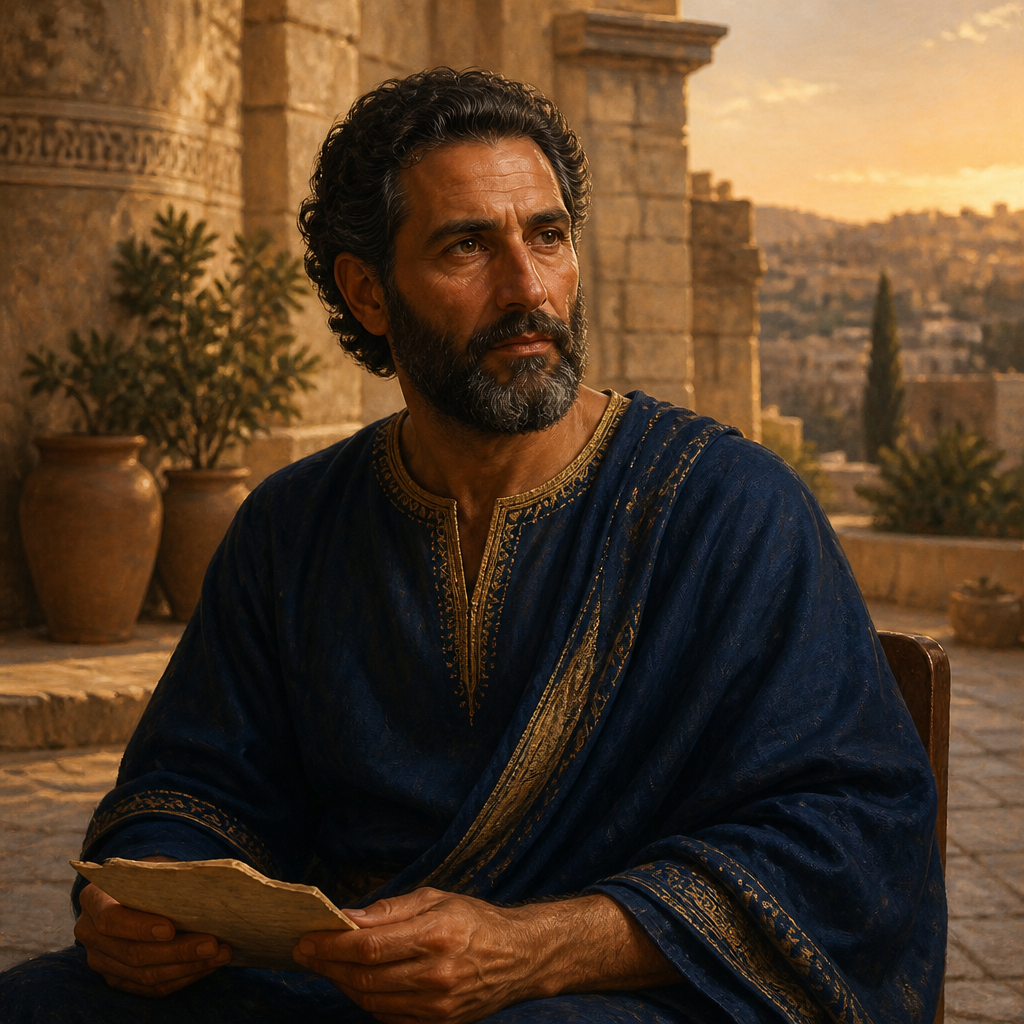 Elioenai, Son of NeariahThis page
 Azrikam, Son of NeariahBrother1 Chronicles 3:23Stated
 HizkiahBrother1 Chronicles 3:23Stated
Children
 Akkub, Son of ElioenaiSon1 Chronicles 3:24Stated
 AnaniSon1 Chronicles 3:24Stated
 Delaiah, Son of ElioenaiSon1 Chronicles 3:24Stated
 Eliashib, Son of ElioenaiSon1 Chronicles 3:24Stated
 Hodaviah, Son of ElioenaiSon1 Chronicles 3:24Stated
 Johanan, Son of ElioenaiSon1 Chronicles 3:24Stated
 Pelaiah, Descendant of DavidSon1 Chronicles 3:24Stated
Connected Figures
Family
Father · 1 Chronicles 3:23
A descendant of the Davidic royal line and the tribe of Judah who lived during the era of the Exile and Return.
Son · 1 Chronicles 3:24
A member of the royal Davidic line of Judah during the Exile and Return and a son of Elioenai.
Son · 1 Chronicles 3:24
A descendant of King David and one of the seven sons of Elioenai, listed in the post-exilic royal genealogy of Judah.
Son · 1 Chronicles 3:24
A descendant of the Davidic royal line through the tribe of Judah, Delaiah was one of the seven sons of Elioenai listed in the post-exilic genealogies of 1 Chronicles.
Son · 1 Chronicles 3:24
Eliashib was a descendant of the royal line of Judah and the son of Elioenai, mentioned in the genealogical records of the Davidic dynasty.
Son · 1 Chronicles 3:24
Hodaviah was a royal descendant of the Davidic line within the Tribe of Judah, listed as the first of seven sons born to Elioenai during the Exile and Return.
Exile and ReturnFirst: 1 Chronicles 3:241 versesRoyal descendantJudah
Son · 1 Chronicles 3:24
A descendant of the royal line of Judah and one of the seven sons of Elioenai listed in the Davidic genealogy.
Son · 1 Chronicles 3:24
A member of the royal Davidic line in Judah, Pelaiah was one of the seven sons of Elioenai listed in the genealogical records of the Exile and Return.
Brother · 1 Chronicles 3:23
Azrikam was a descendant of the royal line of David through the tribe of Judah, identified as one of the three sons of Neariah in the genealogical records of the Exile and Return.
Exile and ReturnFirst: 1 Chronicles 3:231 versesRoyal descendantJudah
Brother · 1 Chronicles 3:23
Hizkiah was a descendant of King David and a member of the post-exilic royal lineage of Judah, mentioned as one of the three sons of Neariah.
Categories
Mentions by Book
- 1 Chronicles2
Scripture References
All 2 indexed verses, in canonical order, from the Berean Standard Bible.
1 Chronicles · 2
- 1 Chronicles 3:23
The sons of Neariah: Elioenai, Hizkiah, and Azrikam—three in all.
- 1 Chronicles 3:24
The sons of Elioenai: Hodaviah, Eliashib, Pelaiah, Akkub, Johanan, Delaiah, and Anani—seven in all.
Others Named Elioenai
Compare all 6 bearers →Elioenai, Musician Priest under NehemiahNehemiah 12:41
A post-exilic priest and trumpeter who participated in the joyful dedication ceremony of the rebuilt walls of Jerusalem under the leadership of Nehemiah.
Elioenai, Leader of Simeon1 Chronicles 4:36
A prominent tribal leader of the Simeonites listed in the genealogical records of 1 Chronicles during the era of the Divided Monarchy.
Elioenai, Son of Becher1 Chronicles 7:8
A Benjamite descendant and son of Becher, recorded in the genealogies of 1 Chronicles during the Egyptian Sojourn and Wilderness era.
Elioenai, Descendant of ZattuEzra 10:27
Elioenai was a descendant of Zattu who returned to Jerusalem from the Babylonian exile and was identified during Ezra's reforms as one who had married a foreign woman.
Elioenai, Descendant of PashhurEzra 10:22
A member of the priestly family of Pashhur who was required to divorce his foreign wife during Ezra's post-exilic reforms.