Neariah, Son of Shemaiah
Who was Neariah, Son of Shemaiah, in the Bible?
A descendant of the Davidic royal line and the tribe of Judah who lived during the era of the Exile and Return.
This is one of 2 people named Neariah in the Bible. See all 2 →
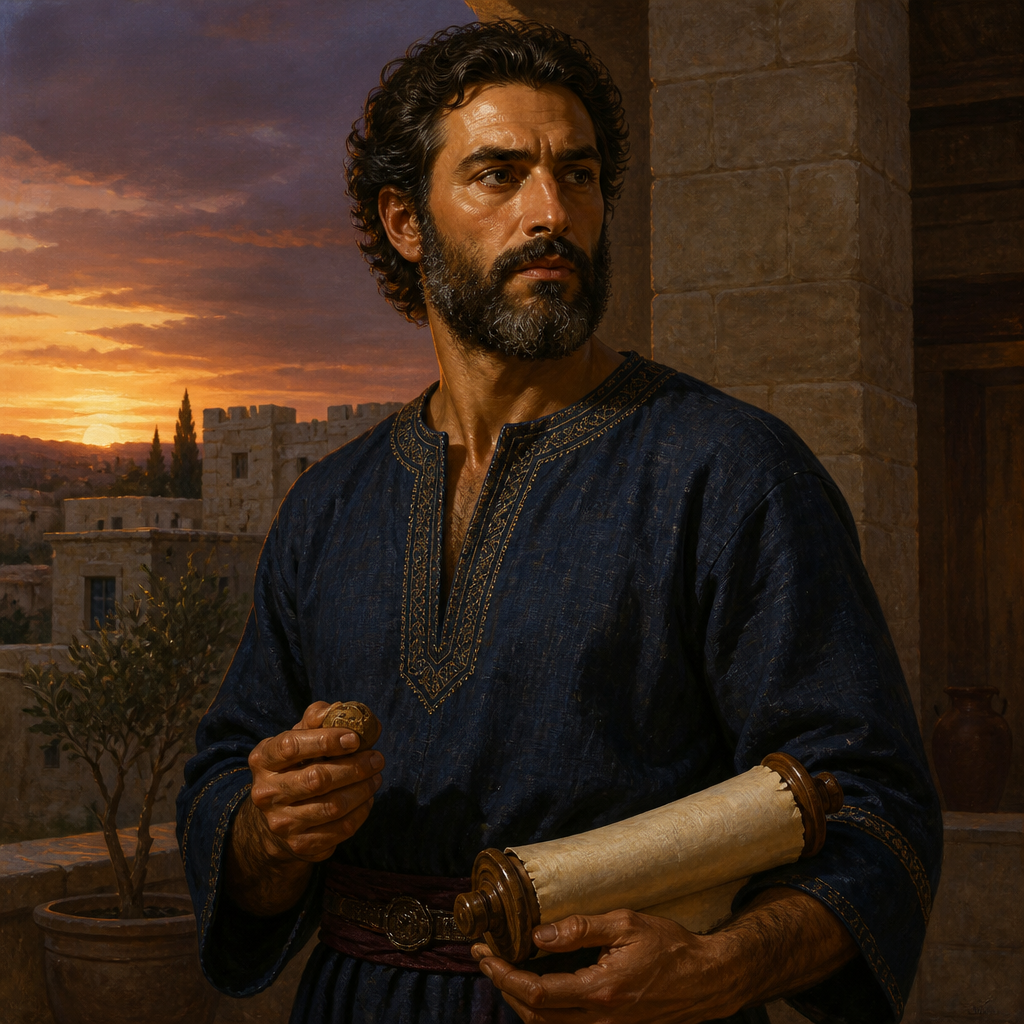
Neariah was a member of the tribe of Judah and a direct descendant of the royal lineage of King David. His life occurred during the complex era of the Exile and Return, a time defined by the political and spiritual separation of the northern kingdom of Israel and the southern kingdom of Judah. As recorded in the genealogical records of the Chronicles, Neariah occupied a significant place in the preservation of the messianic line through the house of David.
While the biblical record regarding Neariah is brief, focusing primarily on his lineage and his own progeny, his inclusion in the sacred text serves to validate the continuity of the covenant promises made to David. He is identified specifically as the son of Shemaiah and a father to three sons, positioning him as a link in the generational chain of Judah’s nobility.
Background and Family
Neariah, whose name in Hebrew (Ne’aryah) likely signifies "servant of the LORD" or "youth of the LORD," emerged from the prominent tribe of Judah. He is situated within the genealogical records found in the opening chapters of 1 Chronicles, a book dedicated largely to establishing the identities and heritages of the people of Israel following their return from exile, though reflecting lineages that spanned the monarchic period.
Neariah was one of the sons of Shemaiah. His family unit was substantial; the text identifies him as one of six siblings. His brothers—Hattush, Igal, Bariah, and Shaphat—are listed alongside him as the descendants of Shecaniah through their father Shemaiah. This placement within the Davidic line highlights the social and religious standing of his household within the community of Judah.
Major Life Events
The biblical narrative provides no specific accounts of Neariah’s individual deeds, military exploits, or political maneuvers. Instead, the "event" of his life, as captured by the Chronicler, is his role as a progenitor. In the ancient Near Eastern context, and specifically within Hebrew culture, the preservation of one’s name through offspring was considered a vital blessing and a duty to the covenant.
Neariah is credited with fathering three sons: Elioenai, Hizkiah, and Azrikam. The text explicitly notes there were "three in all" (1 Chronicles 3:23). This specific enumeration suggests a finalized record of his primary heirs who would carry forward the family name and the tribal responsibilities associated with the house of Shemaiah.
Relationship to Other Biblical Figures
Neariah’s primary relationships are defined by his ancestry. He was the son of Shemaiah, a name that appears frequently in the Old Testament, though this specific Shemaiah is distinguished by his descent from Shecaniah. Through this line, Neariah is connected to the broader Davidic dynasty, which remained the central focus of the Chronicler’s genealogical interests. His brother, Hattush, is a name that also appears in post-exilic contexts, suggesting that Neariah’s immediate family remained influential figures among the leadership of the Jewish people.
Spiritual Significance
The spiritual significance of Neariah lies in his presence within the "Book of Records." For the original readers of 1 Chronicles, these genealogies were not mere lists of names but were proof of God’s faithfulness to the Davidic Covenant. By recording Neariah and his three sons, the text affirms that despite the turmoil of the Exile and Return and the eventual threats of invasion and exile, the specific families chosen by God to lead and represent His people were preserved.
Neariah represents the "quiet" generations of the Bible—those who did not lead armies or write prophecy, but who maintained the biological and cultural continuity of the people of God. His life serves as a testament to the importance of family and heritage in the unfolding plan of redemption that would eventually culminate in the birth of the Messiah from the same tribe of Judah.
Neariah's primary significance is genealogical and covenantal. As a member of the tribe of Judah and a descendant of the Davidic line, his life represents the survival of the royal house during the tumultuous Exile and Return. His inclusion in 1 Chronicles ensures that the lineage of the promised Messiah remains documented and unbroken.
Furthermore, Neariah exemplifies the biblical emphasis on the individual as a steward of a legacy. By recording his sons—Elioenai, Hizkiah, and Azrikam—the Bible highlights the transition of responsibility from one generation to the next, maintaining the structure of the Hebrew social order according to the divine decree.
Frequently Asked Questions
Who was Neariah's father?
Neariah was the son of Shemaiah, as recorded in 1 Chronicles 3:22.
Which tribe did Neariah belong to?
Neariah belonged to the tribe of Judah, the tribe associated with the Davidic kingship.
How many sons did Neariah have?
Neariah had three sons: Elioenai, Hizkiah, and Azrikam (1 Chronicles 3:23).
In which book of the Bible is Neariah mentioned?
Neariah is mentioned in the book of 1 Chronicles, specifically in the genealogical records of chapter 3.
What does the name Neariah mean?
The name Neariah is derived from Hebrew roots meaning 'servant of Yahweh' or 'youth of Yahweh'.
Family & Relationships
Parents
 Shemaiah, Descendant of DavidFather1 Chronicles 3:22
Inferred
1 Chronicles 3:22 lists Shemaiah and Neariah among the descendants of shecaniah, but does not say how the two of them are related.Evidence: 1 Chronicles 3:22
 Neariah, Son of ShemaiahThis page
 BariahBrother1 Chronicles 3:22Stated
 Hattush, Descendant of DavidBrother1 Chronicles 3:22Stated
 Igal, Descendant of DavidBrother1 Chronicles 3:22Stated
 Shaphat, Son of ShemaiahBrother1 Chronicles 3:22Stated
Children
 Azrikam, Son of NeariahSon1 Chronicles 3:23Stated
 Elioenai, Son of NeariahSon1 Chronicles 3:23Stated
 HizkiahSon1 Chronicles 3:23Stated
Connected Figures
Family
Father · 1 Chronicles 3:22
A member of the Davidic royal line and the father of six sons listed in the post-exilic genealogies of Judah.
Son · 1 Chronicles 3:23
Azrikam was a descendant of the royal line of David through the tribe of Judah, identified as one of the three sons of Neariah in the genealogical records of the Exile and Return.
Exile and ReturnFirst: 1 Chronicles 3:231 versesRoyal descendantJudah
Son · 1 Chronicles 3:23
A descendant of King David through the line of Zerubbabel, known for his large family of seven sons during the era of the Exile and Return.
Exile and ReturnFirst: 1 Chronicles 3:232 versesRoyal descendant / NoblemanJudah
Son · 1 Chronicles 3:23
Hizkiah was a descendant of King David and a member of the post-exilic royal lineage of Judah, mentioned as one of the three sons of Neariah.
Brother · 1 Chronicles 3:22
A descendant of King David through the line of Jeconiah and a son of Shemaiah within the tribe of Judah.
Brother · 1 Chronicles 3:22
Hattush was a member of the royal Davidic line through the lineage of Shemaiah, mentioned in the genealogical records of the Tribe of Judah during the Exile and Return.
Exile and ReturnFirst: 1 Chronicles 3:221 versesPrince of the Royal House of DavidJudah
Brother · 1 Chronicles 3:22
Igal was a member of the post-exilic royal line of Judah, identified as a son of Shemaiah and a direct descendant of King David.
Brother · 1 Chronicles 3:22
Shaphat was a descendant of King David through the royal lineage of Solomon, identified as one of the six sons of Shemaiah in the post-exilic genealogical records of Judah.
Categories
Mentions by Book
- 1 Chronicles2
Scripture References
All 2 indexed verses, in canonical order, from the Berean Standard Bible.
1 Chronicles · 2
- 1 Chronicles 3:22
The six descendants of Shecaniah were Shemaiah and his sons: Hattush, Igal, Bariah, Neariah, and Shaphat.
- 1 Chronicles 3:23
The sons of Neariah: Elioenai, Hizkiah, and Azrikam—three in all.
Others Named Neariah
Compare all 2 bearers →Neariah, Simeonite of the Divided Monarchy1 Chronicles 4:42
One of four Simeonite leaders who led five hundred men to Mount Seir to defeat the remaining Amalekites during the era of the Divided Monarchy.