Shelah, Son of Judah
The third son of Judah and a survivor of the early tragedies in Judah's family, Shelah became the progenitor of the Shelanite clan within the tribe of Judah.
Shelah was the third son of the patriarch Judah and his Canaanite wife, Bath-shua. Born at Chezib, he was the younger brother of Er and Onan. Shelah’s life is defined by the complex and often tragic dynamics of Judah’s early household, specifically the premature deaths of his two older brothers and his father’s subsequent fear regarding Shelah’s own survival. Unlike his older brothers, who were struck down by God for their wickedness, Shelah survived to adulthood and fathered a significant branch of the tribe of Judah.
His role in the biblical narrative serves as a catalyst for the story of Tamar, his widowed sister-in-law. When Judah delayed giving Shelah to Tamar in marriage—fearing a third son would die—the resulting conflict led to the unconventional continuation of the Davidic line through Perez and Zerah. Despite being bypassed in the primary messianic lineage, Shelah’s descendants, the Shelanites, remained a distinct and recorded clan through the period of the wilderness wanderings and into the restoration period following the exile.
Background and Family
Shelah was born into a period of transition for the family of Jacob. His father, Judah, had separated himself from his brothers and settled near an Adullamite named Hirah. During this time, Judah married the daughter of a Canaanite man named Shua (referred to as Bath-shua). Shelah was the third son born to this union, following Er and Onan. The biblical text in Genesis 38:5 notes that Judah was at Chezib (likely the same as Achzib) when Shelah was born.
Shelah’s family life was quickly overshadowed by divine judgment. His eldest brother, Er, married a woman named Tamar but was soon put to death by the LORD for his wickedness. In accordance with levirate custom, the second brother, Onan, was expected to provide an heir for his deceased brother through Tamar. However, Onan refused to fulfill his duty and was also put to death. This left Shelah as the sole surviving son of Judah’s first marriage.
Major Life Events
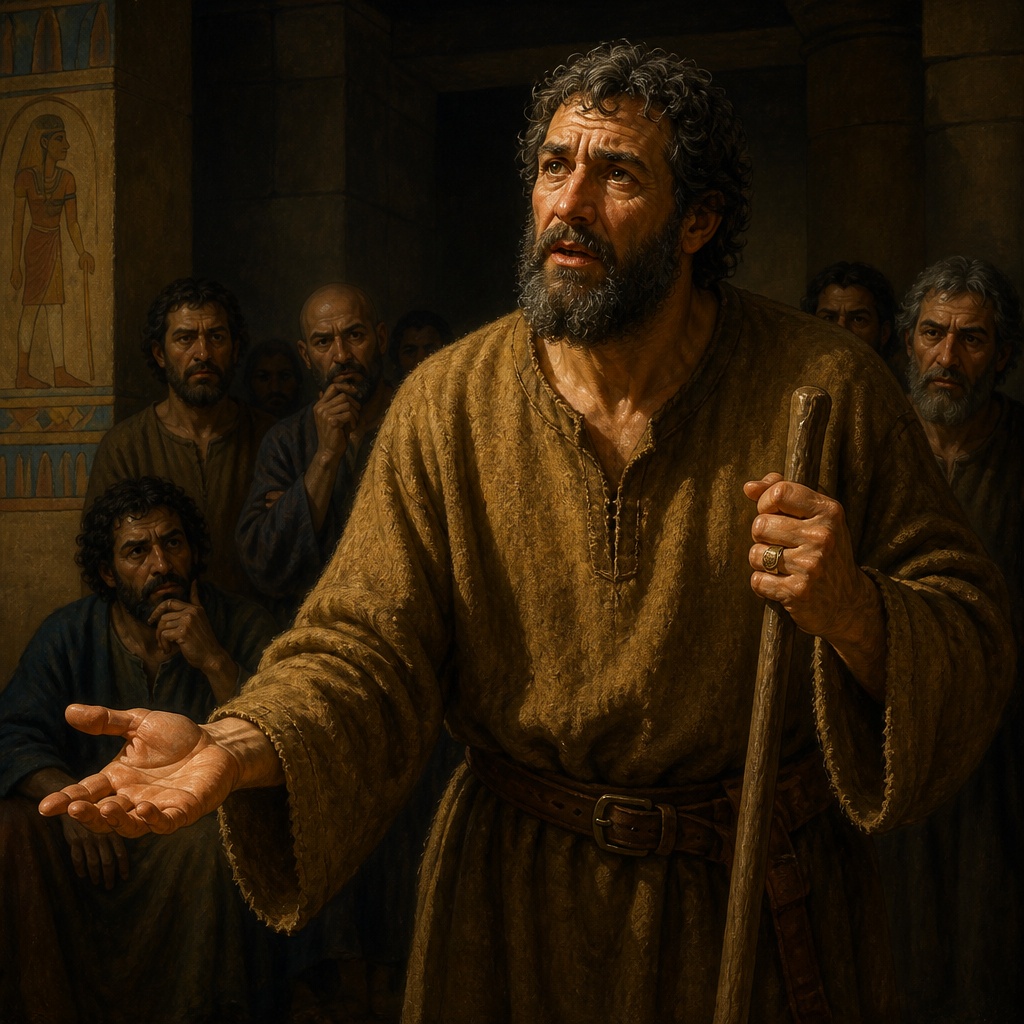
The primary conflict involving Shelah centers on the levirate marriage laws. Following the death of Onan, Judah was obligated to give Shelah to Tamar once the boy reached maturity. However, Genesis 38:11 reveals Judah’s internal fear: "For he thought, 'He may die too, like his brothers.'" Under the guise of waiting for Shelah to grow up, Judah sent Tamar back to her father’s house as a widow.
Years passed, and Shelah reached adulthood, but Judah failed to honor his promise. This neglect prompted Tamar to take matters into her own hands, leading to her encounter with Judah in disguise and the eventual birth of the twins Perez and Zerah. When Judah realized what had happened, he publicly acknowledged his failure, stating, "She is more righteous than I, since I did not give her to my son Shelah" (Genesis 38:26). While Shelah was excluded from the union with Tamar, he went on to have his own family and establish a significant lineage.
Relationship to Other Biblical Figures
Shelah is the ancestor of the Shelanite clan (Numbers 26:20). While the narrative focus of Judah’s line shifts to Perez (the ancestor of King David and Jesus Christ), the Book of 1 Chronicles provides a detailed look at Shelah’s own house. His sons included Er (named after his late uncle), Laadah, and several others. His descendants were notable for their specific vocational contributions, particularly the "clans of the linen workers at Beth-ashbea" and those who were potters or lived in royal service at Netaim and Gederah (1 Chronicles 4:21-23). This suggests that the Shelanites became a guild-oriented branch of the tribe of Judah, specializing in crafts and administrative support for the monarchy.
Spiritual Significance
The story of Shelah highlights the tension between human fear and divine providence. Judah’s attempt to "protect" Shelah by withholding him from Tamar was seen as an act of unrighteousness because it prioritized self-preservation over covenantal duty. Ironically, by trying to save Shelah from a perceived curse, Judah nearly ended his own legacy, which was only preserved through Tamar’s desperate actions.
Shelah himself represents the survival of Judah’s name through the difficult years in Canaan and Egypt. While he is not the progenitor of the royal line, his inclusion in the genealogies of Numbers and 1 Chronicles affirms that every branch of the tribe had a place in the community of Israel. His descendants’ roles as skilled craftsmen indicate that Shelah’s line contributed to the cultural and economic fabric of the nation long after the patriarchal period ended.
Spiritual Significance
Shelah is significant as the founding patriarch of the Shelanites, one of the primary clans of the tribe of Judah. His survival ensured that Judah’s house remained established even after the deaths of his two elder brothers. In the broader biblical narrative, Shelah’s maturity without being given to Tamar serves as the turning point that forces Judah to confront his own lack of faith and integrity, ultimately leading to the birth of Perez and the continuation of the messianic line.
Furthermore, the genealogical records in 1 Chronicles 4 highlight Shelah’s descendants as specialized workers in linen and pottery. This provides a rare glimpse into the socio-economic structure of the tribe of Judah, showing that the legacy of Shelah was one of industriousness and service to the crown, maintaining their distinct identity from the more prominent line of Perez through the centuries.
Frequently Asked Questions
Why didn't Judah let Shelah marry Tamar?
Judah feared that Shelah would die just as his two older brothers, Er and Onan, had died. He viewed the deaths as a bad omen or a result of the marriage itself, rather than the result of his older sons' personal wickedness.
Where was Shelah born?
Shelah was born in a place called Chezib, while his father Judah was living among the Canaanites.
Who were the descendants of Shelah?
His descendants were known as the Shelanites. Specific individuals mentioned as his sons or descendants include Er the father of Lecah, Laadah the father of Mareshah, and various clans of linen workers and potters.
Did Shelah ever have children of his own?
Yes, although he did not marry Tamar, the Bible records that he had several sons and established a large clan that was counted during the census in the wilderness and recorded in the genealogies of Chronicles.
Connected Figures
Judah, Son of Jacob
Father
Tamar
Sister-in-law
Perez
Half-brother
Er, Firstborn of Judah
Brother
Onan
Brother
Categories
Mentions by Book
- Genesis5
- 1 Chronicles2
- Numbers1
Family & Relationships
Child
Genesis 38:5
Child
Genesis 38:5
Child
Genesis 38:5
Child
Genesis 38:5
Child
Genesis 38:5
Sibling
Genesis 38:5
Sibling
Genesis 38:5
Sibling
Genesis 38:5
Sibling
Genesis 38:5
Parent
Genesis 38:2
Sibling
Genesis 38:3
Parent
Genesis 29:35
Sibling
Genesis 38:4
Sibling
Genesis 38:29
Sibling
Genesis 38:30
Others Named Shelah
Shelah, Son of CainanGenesis 10:24
Shelah was an early post-flood patriarch, the father of Eber, and a significant link in the genealogical line connecting Noah to the Messiah.