Laadah
Who was Laadah in the Bible?
A descendant of Judah through Shelah who served as a clan leader and the father of Mareshah during the Egyptian sojourn.
Laadah was a member of the tribe of Judah, specifically belonging to the line of Shelah, the third son of the patriarch Judah. His name appears within the genealogical records of 1 Chronicles, which serve to preserve the lineage of the southern kingdom and its tribal leadership. As a grandson of Judah, Laadah is situated historically within the period of the Israelite sojourn in Egypt.
He is primarily identified as the 'father' of Mareshah. In the context of Hebrew genealogies, this designation often indicates that Laadah was either the literal progenitor of a son named Mareshah or the foundational ancestor of the city or district known by that name. His lineage is further distinguished by its association with the production of fine linen, suggesting his family held a specific socioeconomic role within the early Israelite community.
Background and Family
Laadah was the son of Shelah and the grandson of Judah, the son of Jacob. According to the genealogical records in 1 Chronicles 4:21, his immediate family included his brothers Er, Jokim, Joash, and Saraph. The biblical text notes that Shelah’s lineage survived and flourished, contrasting with the early deaths of Judah’s first two sons, Er (a different Er than Laadah's brother) and Onan. As a descendant of Shelah, Laadah represented a branch of the tribe of Judah that maintained its identity throughout the generations spent in Egypt.
The Lineage of Shelah
The sons of Shelah son of Judah: Er the father of Lecah, Laadah the father of Mareshah and the clans of the linen workers at Beth-ashbea. (1 Chronicles 4:21)
This specific branch of the family is noted for its longevity and its vocational specializations. While the primary line of Judah passed through Perez, the Shelanite line—to which Laadah belonged—formed a significant subset of the tribe.
Relationship to Other Biblical Figures
Laadah is identified as the 'father of Mareshah.' In biblical historiography, the term 'father' (Hebrew: ab) frequently refers to the founder of a town or the head of a clan that settled in a specific geographic area. Mareshah eventually became a prominent city in the Shephelah (the foothills of Judea). The connection between Laadah and Mareshah establishes a historical claim for the tribe of Judah over this territory. Additionally, Laadah is grouped with the 'clans of the linen workers at Beth-ashbea.' This indicates that Laadah’s descendants were skilled artisans, specifically in the weaving of fine linen (būṣ), a luxury commodity in both Egypt and the ancient Near East.
Spiritual Significance
The preservation of Laadah’s name in the post-exilic record of 1 Chronicles highlights the importance of tribal continuity. Though Laadah himself is a minor figure with no recorded dialogue or individual actions, his inclusion serves to validate the heritage of the Judean families who returned from Babylonian captivity centuries later. His life during the Egyptian sojourn demonstrates that even during the years of bondage or quiet growth in Egypt, the tribal structures and vocational guilds of Israel were being formed and maintained under the providence of God.
Laadah represents the vital link between the patriarchal period and the establishment of the Israelite tribal territories. His role as the ancestor of the linen-working clans at Beth-ashbea underscores the diverse economy of the early Israelites, showing that the tribe of Judah was comprised not only of shepherds and warriors but also of skilled craftsmen. The mention of his name ensures that the Shelanite branch of Judah was recognized alongside the more prominent Perezite line, providing a complete picture of Judah's heritage.
Frequently Asked Questions
Who was Laadah's father?
Laadah was the son of Shelah, who was the son of the patriarch Judah.
What city is associated with Laadah?
Laadah is described as the 'father of Mareshah,' a town that later became an important site in the territory of Judah.
What was the occupation of Laadah's descendants?
His descendants were known as clans of linen workers stationed at Beth-ashbea.
In which book of the Bible is Laadah mentioned?
Laadah is mentioned exclusively in the genealogical records of 1 Chronicles, specifically in chapter 4.
Family & Relationships
Parents
 Shelah, Son of JudahFather1 Chronicles 4:21Stated
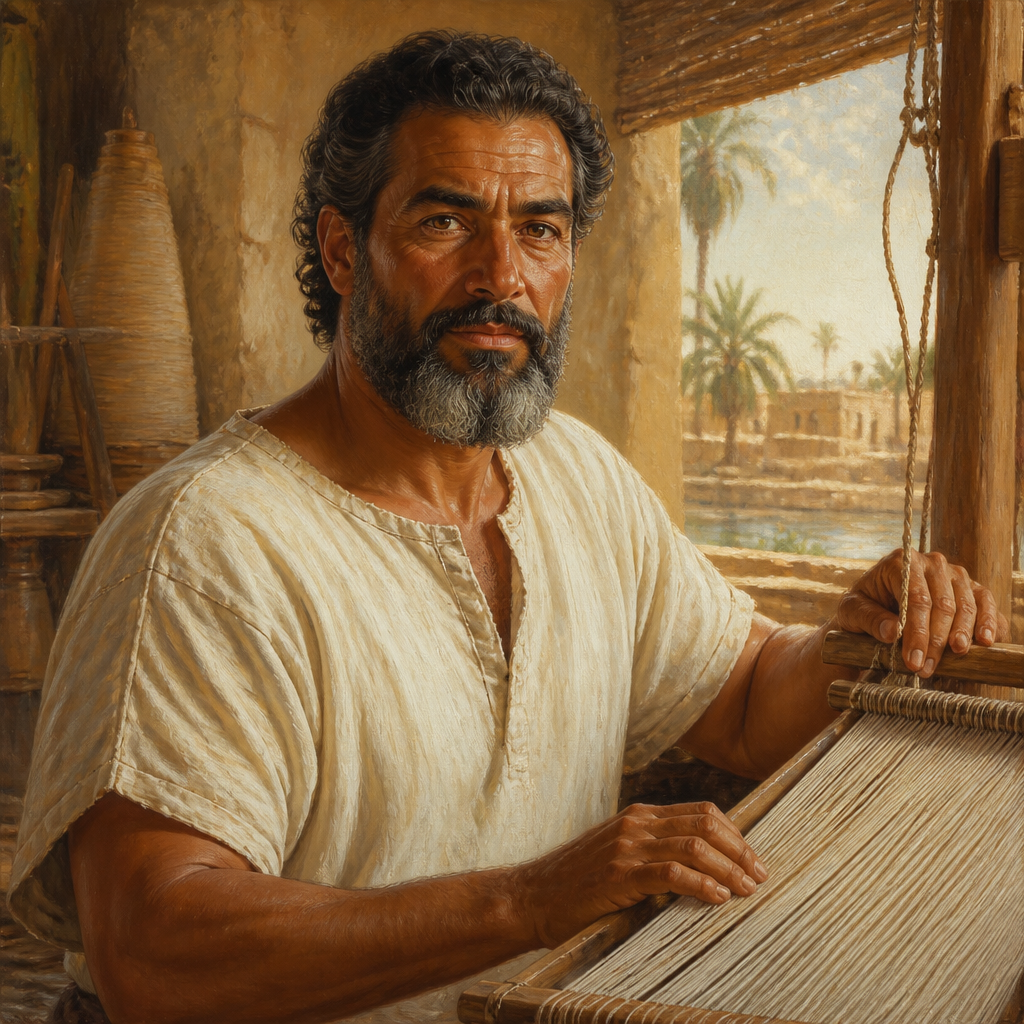 LaadahThis page
 Er, Son of ShelahBrother1 Chronicles 4:21Stated
 Joash, Son of ShelahBrother1 Chronicles 4:21–22Stated
 JokimBrother1 Chronicles 4:21–22Stated
 SaraphBrother1 Chronicles 4:21–22Stated
Children
 Mareshah, Son of LaadahSon1 Chronicles 4:21Stated
Connected Figures
Family
Father · 1 Chronicles 4:21
The third son of Judah and a survivor of the early tragedies in Judah's family, Shelah became the progenitor of the Shelanite clan within the tribe of Judah.
Son · 1 Chronicles 4:21
A descendant of Judah through the line of Shelah, recognized as a patriarch within the genealogical records of the chronicler.
Brother · 1 Chronicles 4:21
Er was a descendant of Judah through his son Shelah and is identified in the genealogies of 1 Chronicles as the father of Lecah.
Brother · 1 Chronicles 4:21–22
A descendant of Judah through Shelah who achieved dominion in the region of Moab during the era of the Egyptian sojourn and early wilderness records.
Egypt and WildernessFirst: 1 Chronicles 4:222 versesRuler in MoabJudah
Brother · 1 Chronicles 4:21–22
A descendant of Judah through the line of Shelah, recognized in the genealogical records of 1 Chronicles for his historical presence in the regions of Moab and Cozeba.
Egypt and WildernessFirst: 1 Chronicles 4:222 versesRuler in MoabJudah
Brother · 1 Chronicles 4:21–22
A descendant of Judah through Shelah who is recorded in ancient genealogies as having exercised dominion or rule within the region of Moab.
Egypt and WildernessFirst: 1 Chronicles 4:222 versesRuler in MoabJudah
Categories
Mentions by Book
- 1 Chronicles2
Scripture References
All 2 indexed verses, in canonical order, from the Berean Standard Bible.
1 Chronicles · 2
- 1 Chronicles 4:21
The sons of Shelah son of Judah: Er the father of Lecah, Laadah the father of Mareshah and the clans of the linen workers at Beth-ashbea,
- 1 Chronicles 4:22Partial
Jokim, the men of Cozeba, and Joash and Saraph, who ruled in Moab and Jashubi-lehem. (These names are from ancient records.)
Cited as evidence on a family card; added so References, Key Verses and Mentions by Book share one index.