Saraph
Who was Saraph in the Bible?
A descendant of Judah through Shelah who is recorded in ancient genealogies as having exercised dominion or rule within the region of Moab.
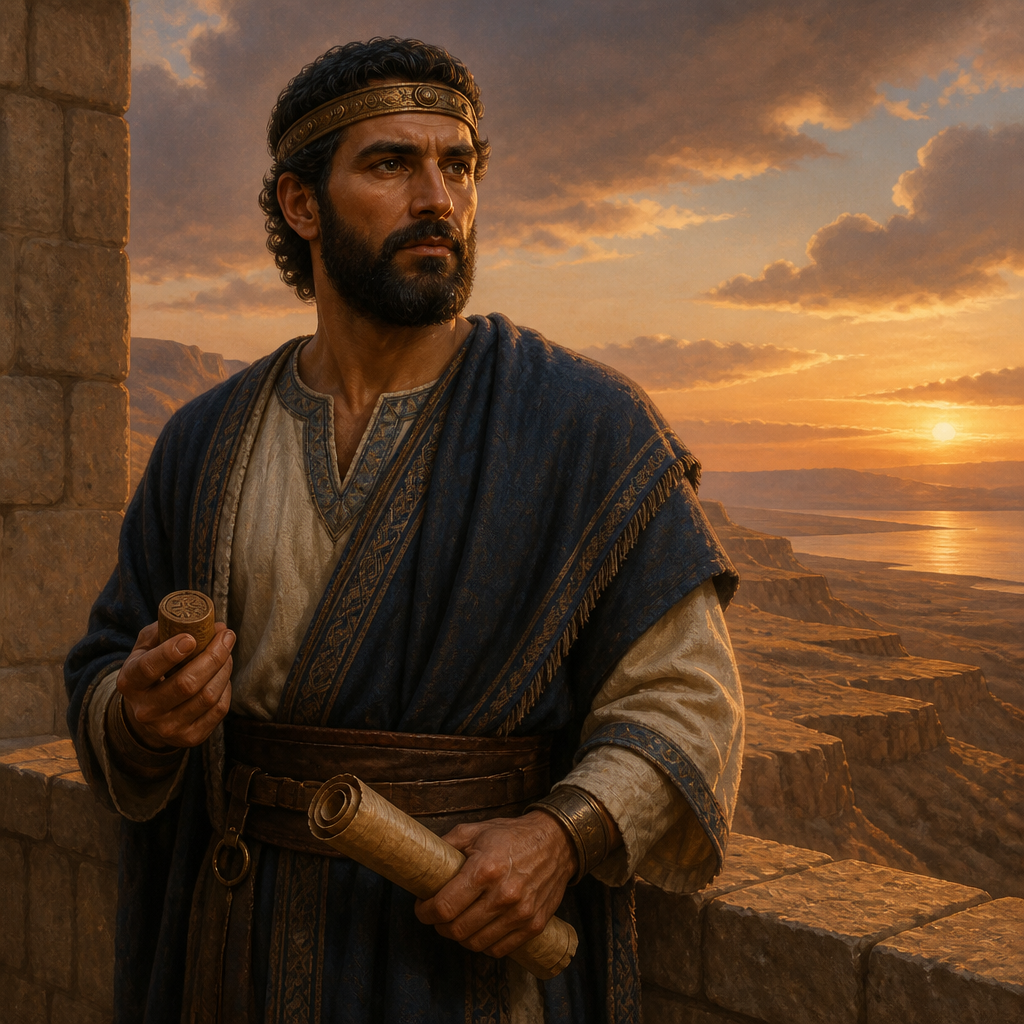
Saraph was a member of the tribe of Judah, specifically belonging to the lineage of Shelah. His name appears within the genealogical records of 1 Chronicles, a section of the Bible dedicated to preserving the ancestral heritage of the tribes of Israel after their return from the Babylonian exile. Saraph is distinguished by his family's historical connection to the land of Moab, where he reportedly held a position of authority.
The biblical account identifies Saraph as one of the sons of Shelah, placing him in the generation of those who lived during the later years of the Egyptian sojourn or the early period of Israel's tribal expansion. While the specific details of his life are sparse, the inclusion of his name in the "ancient records" mentioned by the Chronicler suggests he was a figure of significant local importance in the early history of Judah's clans.
Background and Family
Saraph was a descendant of Judah, the fourth son of the patriarch Jacob. Within the tribal structure, he belonged to the house of Shelah, who was Judah’s youngest son by his Canaanite wife, the daughter of Shua. The genealogy in 1 Chronicles 4:21-22 lists Saraph alongside his brothers: Er (the father of Lecah), Laadah (the father of Mareshah), Jokim, and Joash.
This specific branch of the tribe of Judah is noted for its involvement in various industries and regions. While some of his kinsmen were known as workers of fine linen, Saraph and his brother Joash are specifically associated with political or territorial influence. The text notes that these names were preserved from "ancient records," indicating that by the time 1 Chronicles was compiled in the post-exilic period (c. 450–400 BC), Saraph was already a figure of antiquity whose primary exploits belonged to an earlier era of Israelite history.
Major Life Events
The primary biographical detail provided for Saraph is that he "ruled in Moab." The Hebrew term used for his activity in Moab often implies taking a wife or gaining dominion, though most English translations favor the latter. This rule in Moab is historically significant because it suggests a period of Judaean influence or settlement in the Transjordan region prior to the established monarchy.
Following his time in Moab, the record associates him (or his immediate descendants) with Jashubi-lehem. Because the biblical text is concise, it does not detail the specific battles or diplomatic maneuvers that allowed a member of the tribe of Judah to rule in a foreign territory like Moab during this era.
Relationship to Other Biblical Figures
Saraph is directly related to the prominent figures of the tribe of Judah. As a son of Shelah, he is the grandson of Judah and the nephew of Pharez and Zerah. His siblings, including Jokim and Joash, shared in the governance or settlement of the Moabite and Beth-lehem regions. The mention of Jashubi-lehem in connection with Saraph suggests a geographical and familial link to the area of Bethlehem, which would later become the ancestral home of King David.
Spiritual Significance
Though Saraph is a minor figure, his inclusion in the sacred record serves a specific theological purpose. The genealogies of 1 Chronicles were designed to provide the returning exiles with a sense of continuity and identity. By documenting Saraph’s rule in Moab, the text reminds the reader of the expansive history of the tribe of Judah and the ancient roots of their territorial claims. Saraph represents the adventurous and administrative spirit of the early Judaeans, illustrating how the family of Israel began to fulfill the promise of becoming a "multitude of nations" and exercising influence beyond their immediate borders.
Saraph's significance lies in his role as a historical placeholder for the tribe of Judah's early activities in Moab. His presence in the genealogies underscores the antiquity of Israel's records and the deep-seated history of Judaean prominence even before the rise of the Davidic monarchy. The mention of his rule in Moab provides a rare glimpse into the movements of the clans of Shelah, who are often overshadowed by the lineage of Pharez in biblical narrative.
From a scholarly perspective, Saraph represents the 'ancient records' that the Chronicler utilized to reconstruct the identity of a broken nation. He serves as a bridge between the patriarchal era and the later tribal settlements, ensuring that the legacy of every branch of Judah—including the often-overlooked line of Shelah—was preserved for future generations.
Frequently Asked Questions
Who was Saraph's father?
Saraph was the son of Shelah, who was the son of Judah.
What region did Saraph rule?
The Bible states that Saraph ruled in the region of Moab.
Which tribe did Saraph belong to?
Saraph belonged to the Tribe of Judah.
In which book of the Bible is Saraph mentioned?
Saraph is mentioned only once, in 1 Chronicles 4:22.
What does the name Saraph mean in Hebrew?
The name Saraph (שָׂרָף) is often associated with the meaning 'burning' or 'fiery,' and is the same word used for the 'seraphim' or 'fiery serpents' in other biblical contexts.
Family & Relationships
Parents
 Shelah, Son of JudahFather1 Chronicles 4:21–22Stated
 SaraphThis page
 Er, Son of ShelahBrother1 Chronicles 4:21–22Stated
 Joash, Son of ShelahBrother1 Chronicles 4:22Stated
 JokimBrother1 Chronicles 4:22Stated
 LaadahBrother1 Chronicles 4:21–22Stated
Connected Figures
Family
Father · 1 Chronicles 4:21–22
The third son of Judah and a survivor of the early tragedies in Judah's family, Shelah became the progenitor of the Shelanite clan within the tribe of Judah.
Brother · 1 Chronicles 4:21–22
Er was a descendant of Judah through his son Shelah and is identified in the genealogies of 1 Chronicles as the father of Lecah.
Brother · 1 Chronicles 4:22
A descendant of Judah through Shelah who achieved dominion in the region of Moab during the era of the Egyptian sojourn and early wilderness records.
Egypt and WildernessFirst: 1 Chronicles 4:222 versesRuler in MoabJudah
Brother · 1 Chronicles 4:22
A descendant of Judah through the line of Shelah, recognized in the genealogical records of 1 Chronicles for his historical presence in the regions of Moab and Cozeba.
Egypt and WildernessFirst: 1 Chronicles 4:222 versesRuler in MoabJudah
Brother · 1 Chronicles 4:21–22
A descendant of Judah through Shelah who served as a clan leader and the father of Mareshah during the Egyptian sojourn.
Egypt and WildernessFirst: 1 Chronicles 4:212 versesprogenitorJudah
Categories
Mentions by Book
- 1 Chronicles2
Scripture References
All 2 indexed verses, in canonical order, from the Berean Standard Bible.
1 Chronicles · 2
- 1 Chronicles 4:21Partial
The sons of Shelah son of Judah: Er the father of Lecah, Laadah the father of Mareshah and the clans of the linen workers at Beth-ashbea,
Cited as evidence on a family card; added so References, Key Verses and Mentions by Book share one index.
- 1 Chronicles 4:22
Jokim, the men of Cozeba, and Joash and Saraph, who ruled in Moab and Jashubi-lehem. (These names are from ancient records.)