Jachin, Son of Simeon
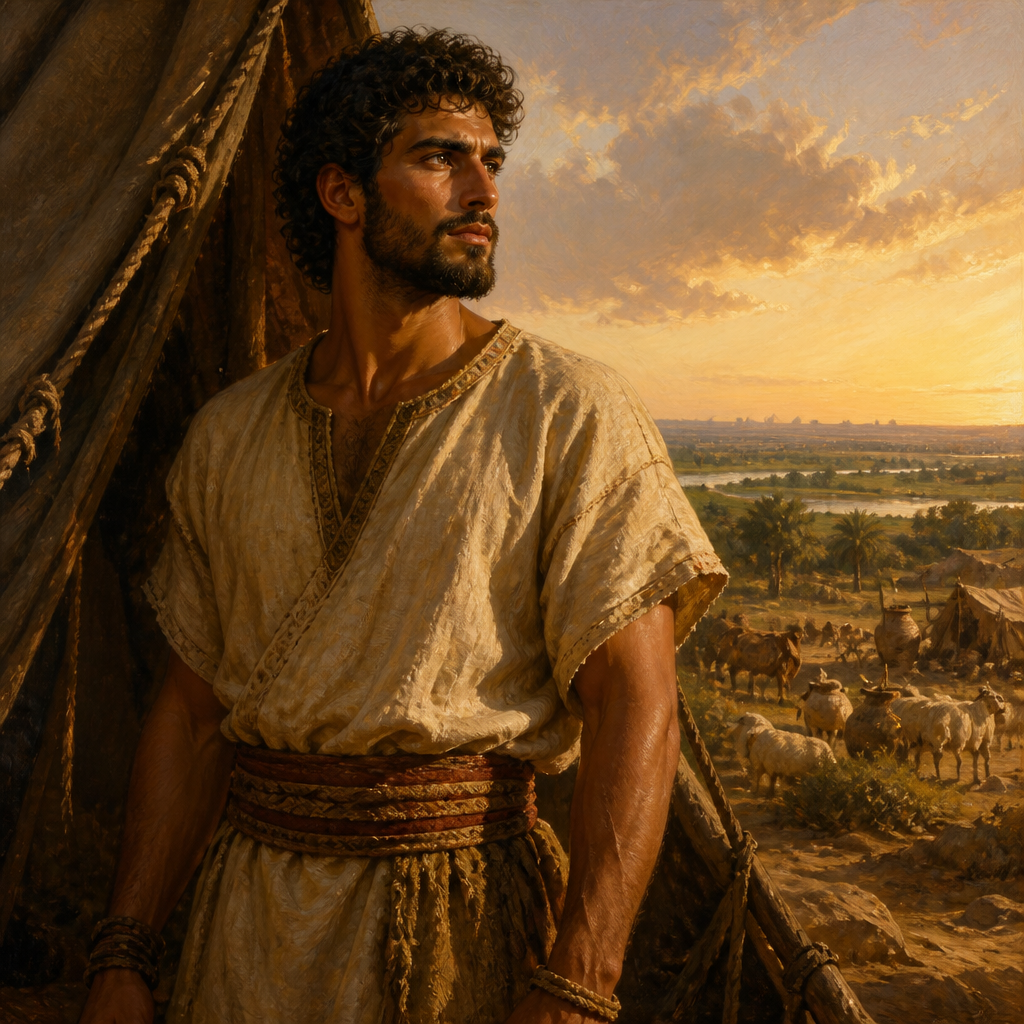
Jachin was a son of Simeon and a grandson of the patriarch Jacob, serving as the ancestral head of the Jachinite clan during the Egyptian sojourn and the Exodus.
Jachin was the fourth son of Simeon, the second son of Jacob and Leah. He is primarily recognized in the biblical narrative as one of the seventy members of the house of Jacob who migrated from Canaan to Egypt to escape a severe famine. His inclusion in the genealogical records of the Torah and 1 Chronicles establishes his role as a foundational patriarch within the tribe of Simeon.
As the progenitor of the Jachinites, Jachin’s lineage is tracked from the initial descent into Egypt through the wilderness wanderings following the Exodus. While he is not depicted engaging in specific narrative dialogue or individual exploits, his placement in the sacred registries underscores the organized, tribal structure of early Israel and the fulfillment of the divine promise to multiply the descendants of Jacob.
Background and Family
Jachin was born into the turbulent and growing family of Simeon during the Patriarchal Period. His father, Simeon, was known for a volatile temperament, most notably displayed in the violent retaliation against the city of Shechem. Jachin grew up as one of six brothers: Jemuel, Jamin, Ohad, Zohar (also called Zerah), and Shaul. Notably, the biblical text specifies that his brother Shaul was the son of a Canaanite woman, a detail that highlights the diverse ethnic realities within the burgeoning Israelite tribes, though no such specific distinction is made for Jachin’s own mother.
As a member of the immediate family of Jacob, Jachin was part of the migration to Egypt (c. 1876 BC). According to Genesis 46:10, he was among those who presented themselves before Pharaoh, eventually settling in the land of Goshen. This move marked the transition of his family from a nomadic clan of shepherds to a settled community within the Egyptian social structure.
Major Life Events
Jachin’s life is defined by two primary biblical milestones: the migration to Egypt and the establishment of a tribal clan.
In Genesis 46 and Exodus 6, Jachin is listed as a vital link in the chain of Simeonite descent. These genealogies are not merely lists of names but are legal and spiritual documents proving the continuity of the covenant. By the time of the Exodus (c. 1446 BC), the descendants of Jachin had grown sufficiently numerous to be recognized as a distinct sub-group within the tribe of Simeon.
In the book of Numbers, which records the census of the Israelites in the wilderness, Jachin is identified as the founder of the "Jachinite clan" (Numbers 26:12). This census, taken on the plains of Moab near the end of the forty-year wandering, confirms that despite the harsh conditions of the desert and the judgments faced by the nation, the line of Jachin survived to prepare for the conquest of the Promised Land.
Relationship to Other Biblical Figures
Jachin stood as a nephew to Joseph, the Vizier of Egypt, and a grandson to Jacob. His primary relationships were defined by his position among his brothers. He is consistently listed alongside Jemuel and Jamin. In the later records of 1 Chronicles 4:24, the list of Simeon’s sons varies slightly, mentioning Nemuel, Jamin, Jarib, Zerah, and Shaul. Scholars generally equate Jachin with "Jarib" in this context, or view it as a scribal variant, maintaining his position as a core ancestor of the tribe.
Spiritual Significance
While Jachin remains a silent figure in the text, his presence in the genealogies serves a specific theological purpose. In the ancient Near Eastern context, the preservation of a name within a genealogy was synonymous with a form of immortality and divine favor. Jachin represents the fulfillment of God's covenant with Abraham—that his descendants would be as numerous as the stars.
Furthermore, the survival of the Jachinites through the period of Egyptian bondage and the subsequent wilderness journey illustrates the themes of preservation and providence. As a "prince" or head of a father’s house, Jachin’s legacy was the structured community he left behind, which contributed to the strength and order of the camp of Israel as they marched toward Canaan.
Spiritual Significance
Jachin’s significance lies in his role as a clan patriarch. By founding the Jachinite clan, he ensured the tribal identity of Simeon remained intact during the transition from a family unit to a nation. His name, which essentially means 'He will establish' or 'He establishes,' reflects the thematic focus on God establishing a people for Himself through the lineage of the patriarchs.
His inclusion in the census of Numbers 26 demonstrates that his family line remained distinct and identifiable for centuries. In the broader biblical theology of the Pentateuch, Jachin is a witness to the faithfulness of God in sustaining the children of Israel across generations and geographic shifts.
Frequently Asked Questions
Who was Jachin's father?
Jachin was the son of Simeon, who was the second son of the patriarch Jacob and his wife Leah.
Which tribe did Jachin belong to?
Jachin belonged to the Tribe of Simeon; he was one of the primary ancestors and founders of a clan within that tribe.
What does the name Jachin mean?
The name Jachin (יָכִין) is derived from a Hebrew root meaning 'to establish' or 'he will establish'.
Is Jachin mentioned in the New Testament?
No, this specific Jachin is only mentioned in the Old Testament books of Genesis, Exodus, Numbers, and 1 Chronicles.
Did Jachin survive the Exodus?
Jachin was part of the original generation that entered Egypt with Jacob. While he died in Egypt, his descendants—the Jachinite clan—survived and participated in the Exodus and the wilderness wandering.
Connected Figures

Categories
Mentions by Book
- 1 Chronicles1
- Exodus1
- Genesis1
- Numbers1
Family & Relationships
Sibling
Genesis 46:10
Sibling
Genesis 46:10
Sibling
Genesis 46:10
Sibling
Genesis 46:10
Sibling
Shaul, Son of the Canaanite Woman
Genesis 46:10
Parent
Genesis 29:33
Parent
Genesis 46:10
Sibling
Genesis 46:10
Sibling
Genesis 46:10
Sibling
Genesis 46:10
Sibling
Shaul, Son of the Canaanite Woman
Genesis 46:10
Sibling
Genesis 46:10
Others Named Jachin
Jachin, Priest of the Divided Monarchy1 Chronicles 24:17
A Levite priest who was assigned to the twenty-first division of temple service during the reorganization of the priesthood under King David.
Jachin, Priest of the Post-Exilic Period1 Chronicles 9:10
A prominent Levite priest who returned to Jerusalem following the Babylonian exile to reestablish the temple service.