Caleb son of Jephunneh
One of the twelve spies sent by Moses to Canaan, distinguished by his wholehearted faith and courage in claiming his inheritance at Hebron.
Caleb son of Jephunneh stands as one of the most prominent figures of the Exodus and Conquest eras, noted for his unwavering fidelity to Yahweh. As a representative of the tribe of Judah, Caleb was selected as one of the twelve spies sent from Kadesh-barnea to scout the land of Canaan. While ten of the scouts returned with a report of fear that demoralized the Israelite assembly, Caleb—alongside Joshua—delivered a minority report of confidence, insisting that the Israelites could conquer the land through divine assistance.
Because of this 'different spirit,' Caleb was one of only two men from the adult generation that left Egypt permitted to enter the Promised Land. His story spans from the wilderness wanderings into the allotment of the land under Joshua’s leadership, where he famously requested the mountainous region of Hebron. Even in his eighties, he remained a vigorous warrior, successfully driving out the formidable Anakim and establishing a lasting legacy for his descendants, known as the Calebites.
Background and Family
Caleb is consistently identified as the son of Jephunneh. He is often further distinguished by the epithet "the Kenizzite" (Numbers 32:12, Joshua 14:6), which suggests a connection to the Kenizzite clan, though he was fully integrated into the leadership of the tribe of Judah. Caleb’s immediate family played significant roles in the early history of Israel’s settlement. He was the brother of Kenaz, whose son Othniel became a central figure in the conquest of Kiriath-sepher and eventually the first of the biblical Judges.
Caleb’s children included his daughter Achsah, whom he offered in marriage to the man who could conquer Kiriath-sepher, and three sons named Iru, Elah, and Naam (1 Chronicles 4:15). His lineage remained distinct and influential throughout Israel's history; even centuries later, during the reign of Saul, the wealthy Nabal is identified as a "Calebite," indicating the enduring territorial and social identity of Caleb’s house in the Negev region (1 Samuel 25:3).
Major Life Events
The Mission of the Twelve Spies
The defining moment of Caleb’s life occurred at Kadesh-barnea. According to Numbers 13, Moses dispatched twelve tribal leaders to investigate the Promised Land. While the scouts confirmed the land's fruitfulness, ten of them focused on the immense size of the inhabitants and the strength of their walled cities. Caleb, however, "quieted the people before Moses" and declared, “We must go up and take possession of the land, for we can certainly conquer it!” (Numbers 13:30). When the congregation threatened to stone the leaders, Caleb and Joshua tore their clothes in grief, pleading with the people not to rebel against God. As a result of his faithfulness, God declared that Caleb would survive the forty years of wandering and inherit the ground his feet had trod upon.
The Conquest of Hebron
Forty-five years later, at the age of eighty-five, Caleb approached Joshua to claim his promised inheritance. Despite his advanced age, Caleb asserted that he was as strong for war then as he was the day Moses sent him. He requested Hebron, a territory inhabited by the Anakim—a race of giants that had terrified the other spies decades earlier. Joshua blessed Caleb and gave him Hebron. Caleb successfully drove out the three sons of Anak—Sheshai, Ahiman, and Talmai—proving that his confidence in God was not misplaced (Joshua 15:14).
The Capture of Debir
Following the victory at Hebron, Caleb turned his attention to Kiriath-sepher (also called Debir). In a strategic move, he promised his daughter Achsah to whoever captured the city. His nephew Othniel rose to the challenge. The biblical narrative records a specific interaction between Caleb and Achsah, where she requested additional water sources for the land he had given her. Demonstrating his role as a provider and patriarch, Caleb granted her both the upper and lower springs, securing the productivity of her inheritance.
Relationship to Other Biblical Figures
Caleb’s most significant peer was Joshua son of Nun. The two are frequently paired as the only voices of faith during the wilderness rebellion. While Joshua succeeded Moses as the national leader, Caleb functioned as the primary champion of the tribe of Judah. His relationship with his nephew Othniel is also critical, as it bridges the era of the Conquest and the era of the Judges. Caleb’s interactions with Moses reveal a man who held the "man of God" in high esteem, basing his legal claim to Hebron on the specific word Moses had spoken decades earlier.
Spiritual Significance
In the biblical text, Caleb is the archetype of "wholeheartedness." God Himself characterizes Caleb as a servant who had a "different spirit" and who "followed Me wholeheartedly" (Numbers 14:24). This phrase is repeated multiple times throughout the Pentateuch and the Book of Joshua. Caleb represents the theological truth that age and external obstacles are secondary to divine promise. His life serves as a counter-narrative to the faithlessness of the Exodus generation; while the majority died in the wilderness due to unbelief, Caleb’s endurance and vigor illustrate the life-sustaining power of trust in God’s word. His legacy in Hebron, a city that would later become a city of refuge and the first capital of King David, further cements his importance in the redemptive history of Israel.
Spiritual Significance
Caleb represents the virtue of perseverance and the reward of unwavering faith. His significance lies in his role as a moral foil to the faithless majority of Israel; he proves that God's promises were attainable for those who trusted Him. Theologically, Caleb is presented as a 'servant' of Yahweh who possessed a 'different spirit,' highlighting that true inheritance in the biblical tradition is linked to spiritual fidelity rather than just physical lineage.
Furthermore, Caleb’s occupation of Hebron is historically significant for the tribe of Judah. By conquering the Anakim, he cleared the way for Judah's dominance in the southern highlands. His story emphasizes that the transition from wandering to rest required active, courageous participation in the divine plan, making him a model for later generations of Israelites.
Frequently Asked Questions
Why was Caleb allowed to enter the Promised Land while others were not?
Caleb and Joshua were the only two adults from the original Exodus generation allowed to enter Canaan because they were the only ones who trusted God's ability to conquer the land when the twelve spies were sent out. The rest of the generation was barred due to their rebellion and lack of faith.
How old was Caleb when he conquered Hebron?
Caleb was eighty-five years old when he approached Joshua to claim Hebron. He noted that he was forty years old when Moses sent him as a spy and that forty-five years had passed since that time.
What does the name 'Kenizzite' mean in relation to Caleb?
Calling Caleb a 'Kenizzite' suggests he may have had ancestral roots in the Kenizzite clan (a group mentioned as early as Abraham's time). However, he is clearly identified as a leader within the tribe of Judah, showing that he or his ancestors were fully incorporated into the covenant community of Israel.
Who was Caleb's daughter and who did she marry?
Caleb’s daughter was Achsah. She married Othniel, who was the son of Caleb’s younger brother Kenaz. Othniel won her hand in marriage by capturing the city of Kiriath-sepher and later became Israel's first judge.
What is the 'different spirit' mentioned about Caleb?
In Numbers 14:24, God says Caleb had a 'different spirit.' This refers to his attitude of faith, courage, and loyalty, which stood in stark contrast to the spirit of fear, complaining, and unbelief that characterized the rest of the Israelite assembly.
Connected Figures
Joshua
Fellow spy and leader of Israel
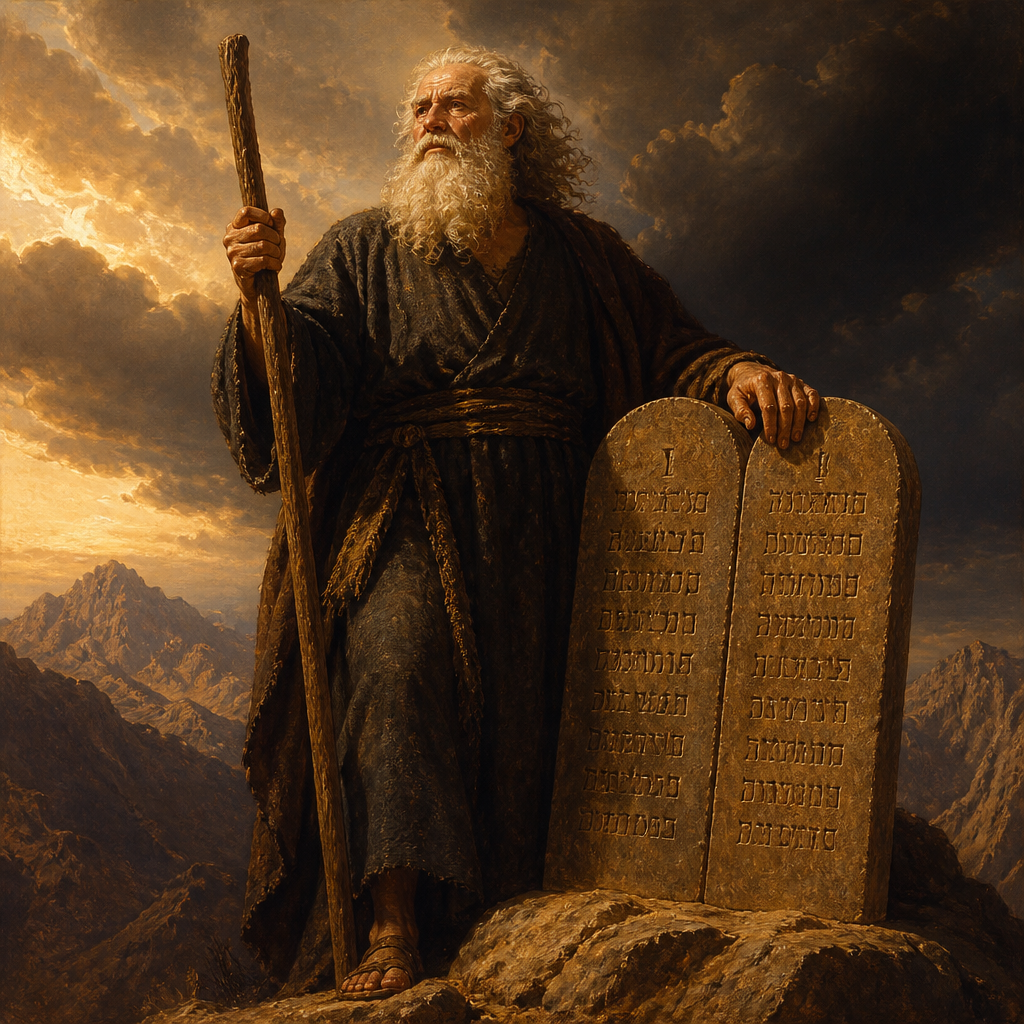
Moses
Leader who commissioned Caleb as a spy
Achsah
Daughter
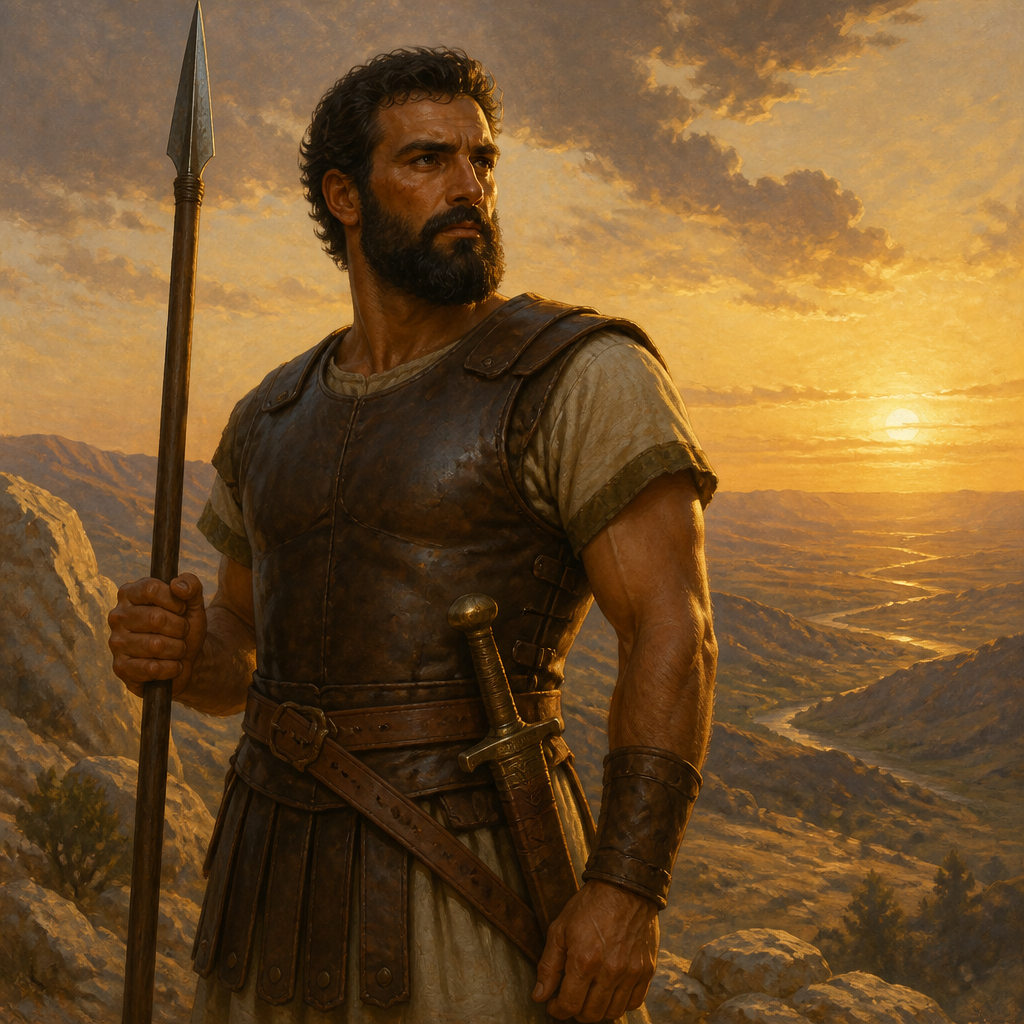
Othniel
Nephew and son-in-law
Jephunneh
Father
Categories
Mentions by Book
- Joshua9
- Numbers9
- Judges6
- 1 Chronicles2
- 1 Samuel2
- Deuteronomy1
Family & Relationships
Child
Numbers 13:6
Child
Numbers 13:6
Child
Numbers 13:6
Child
Numbers 13:6
Sibling
Numbers 13:6
Parent
Numbers 13:6
Sibling
Numbers 32:12
Others Named Caleb son of Jephunneh
Caleb, Son of Hezron1 Chronicles 2:18
A prominent descendant of Judah and son of Hezron, Caleb was a foundational figure in the genealogical expansion of the Tribe of Judah during the Egyptian and wilderness eras.