Anak
Who was Anak in the Bible?
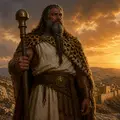
Anak was a formidable patriarch of a race of giants in Canaan, whose physical stature terrified the Israelite spies during the Exodus.
Anak is a significant, albeit enigmatic, figure appearing in the Old Testament during the period of the Israelite wilderness wanderings and the subsequent conquest of Canaan. He is primarily identified as the progenitor of the Anakim, a group of people renowned for their immense physical stature and strength. The biblical narrative uses Anak and his descendants as a benchmark for the daunting challenges faced by the Israelites as they transitioned from the Egyptian sojourn to the promised land.
Historically and genealogically, Anak is positioned as the son of Arba, the founder of the city of Hebron (originally Kiriath-arba). While Anak himself is not described in detail as an individual actor in the narrative, his legacy is felt through his three sons—Ahiman, Sheshai, and Talmai—who held the hill country of Hebron until they were eventually displaced by the Israelite leader Caleb. His presence in the biblical text serves to emphasize the transition from the era of primordial giants to the established tribal boundaries of Israel.
Background and Family
Anak is firmly rooted in the genealogy of the pre-conquest inhabitants of Canaan. According to Joshua 14:15 and 15:13, Anak was the son of Arba. Arba is described as the "greatest man among the Anakim" and the founder of Kiriath-arba, the city that would later be renamed Hebron. This lineage establishes Anak not merely as an individual, but as a link in a dynasty of regional power and physical dominance.
The biblical record identifies three specific sons of Anak: Ahiman, Sheshai, and Talmai. These three individuals were residing in Hebron when the twelve spies sent by Moses first surveyed the land (Numbers 13:22). The text notes that Hebron was an ancient city, built seven years before Zoan in Egypt, suggesting that Anak’s family line was well-established and prestigious within the ancient Near Eastern landscape.
Major Life Events
While the Bible does not record the specific deeds or words of Anak during his lifetime, his impact is detailed through the experiences of the Israelites. In Numbers 13, Moses sent spies to scout the land of Canaan. Upon their return, the spies reported a land of abundance but also one of terrifying inhabitants. They specifically mentioned seeing the "descendants of Anak" (Numbers 13:28). The psychological impact of Anak’s lineage was profound; the spies claimed that compared to these giants, they felt like "grasshoppers" (Numbers 13:33).
The dread associated with Anak’s name became a cultural proverb in the region. Deuteronomy 9:2 records the common saying: "Who can stand up to the sons of Anak?" This highlights that Anak had established a reputation of invincibility that preceded the Israelite arrival.
The era of Anak’s family dominance came to an end during the conquest led by Joshua and Caleb. Although the Anakim were widespread throughout the hill country of Judah and Israel, Joshua "devoted them to destruction" (Joshua 11:21). However, the specific task of clearing Anak’s immediate family from their stronghold in Hebron fell to Caleb. According to Joshua 15:14, Caleb successfully drove out the three sons of Anak—Sheshai, Ahiman, and Talmai—claiming the territory for the tribe of Judah.
Relationship to Other Biblical Figures
Anak’s primary relationship in the text is to his father, Arba, and his three sons. However, he serves as a significant foil to the faith of Caleb and Joshua. While the ten faithless spies saw the sons of Anak as an insurmountable obstacle, Caleb viewed them as a challenge that could be overcome through divine assistance.
The text also connects the lineage of Anak to the Nephilim. Numbers 13:33 explicitly states that the descendants of Anak "come from the Nephilim." This connection suggests that in the biblical worldview, Anak was a remnant of an ancient, superhuman race that existed before the conquest, linking the struggles of the Exodus generation to the primeval history of the world.
Spiritual Significance
The narrative of Anak and the Anakim serves a dual purpose in the biblical canon. First, it functions as a historical marker of the inhabitants of Canaan prior to the Israelite settlement. Second, it serves as a theological illustration of the nature of fear versus faith. Anak represents the "giants" of life—tangible, frightening obstacles that appear impossible to overcome by human strength alone.
The eventual defeat of Anak’s sons by Caleb is presented not as a feat of superior physical prowess, but as a result of Caleb’s wholehearted devotion to God. The removal of the Anakim from the hill country (Joshua 11:21) signifies the purification of the land and the fulfillment of the promise that no enemy, regardless of their size or reputation, could withstand the purpose of the Lord. The mention of a few survivors in Gaza, Gath, and Ashdod (Joshua 11:22) sets the stage for future conflicts between Israel and the descendants of these formidable people, most notably in the stories of the Philistines.
Anak is theologically significant as the representative of the 'insurmountable' obstacles that tested Israel's faith. By identifying Anak as a descendant of the Nephilim and the son of the great Arba, the biblical authors emphasize the magnitude of the threat he posed. His presence in the narrative serves to highlight the contrast between human perception (seeing oneself as a grasshopper) and divine reality (the inevitable victory of God's people).
Furthermore, the total displacement of Anak’s lineage from Hebron underscores the theme of God’s sovereignty over the nations. The land was not merely captured; it was cleared of a race that symbolized a ancient, chaotic power, making room for the establishment of the Davidic line in Hebron, which would later become David’s first royal capital.
Frequently Asked Questions
Who was Anak's father?
Anak was the son of Arba, who is described as the greatest man among the Anakim and the founder of the city of Hebron (Kiriath-arba).
Who were the three sons of Anak?
Anak’s three sons were Ahiman, Sheshai, and Talmai. They lived in Hebron and were eventually driven out by Caleb.
Are the Anakim related to the Nephilim?
Yes, Numbers 13:33 states that the descendants of Anak come from the Nephilim, suggesting a link to the ancient giants mentioned in Genesis.
What happened to the descendants of Anak?
Most were destroyed by Joshua and Caleb during the conquest of Canaan, though some survived in the Philistine cities of Gaza, Gath, and Ashdod.
Why did the Israelite spies fear Anak?
The spies feared Anak because his descendants were exceptionally tall and strong, making the Israelites feel like grasshoppers by comparison.
Family & Relationships
Parents
 ArbaFatherJoshua 21:11Stated
 AnakThis page
Children
 Ahiman, son of AnakSonNumbers 13:22
Inferred
Numbers 13:22 lists Anak and Ahiman among the descendants of anak, but does not say how the two of them are related.Evidence: Numbers 13:22
 SheshaiSonNumbers 13:22
Inferred
Numbers 13:22 lists Anak and Sheshai among the descendants of anak, but does not say how the two of them are related.Evidence: Numbers 13:22
 Talmai, son of AnakSonNumbers 13:22
Inferred
Numbers 13:22 lists Anak and Talmai among the descendants of anak, but does not say how the two of them are related.Evidence: Numbers 13:22
Connected Figures
Family
Father · Joshua 21:11
Arba was a renowned patriarch of the Anakim in Canaan, known as the greatest man among his people and the namesake of the city that became Hebron.
Conquest and JudgesFirst: Joshua 14:153 versesPatriarch and Chieftain
Son · Numbers 13:22
Ahiman was a descendant of Anak and a member of the fearsome Anakim who inhabited Hebron during the Israelite conquest of Canaan.
Egypt and WildernessFirst: Numbers 13:223 versesLeader of the Anakim
Son · Numbers 13:22
Sheshai was one of the three giant descendants of Anak who inhabited the ancient city of Hebron and were eventually defeated by the Israelites during the conquest of Canaan.
Son · Numbers 13:22
Talmai was a descendant of Anak and one of three giants dwelling in Hebron who were eventually driven out and defeated during the Israelite conquest of Canaan.
Egypt and WildernessFirst: Numbers 13:223 versesLocal ruler / Warrior
Categories
Mentions by Book
- Numbers3
- Deuteronomy1
- Joshua3
- Judges1
Scripture References
All 8 indexed verses, in canonical order, from the Berean Standard Bible.
Numbers · 3
- Numbers 13:22
They went up through the Negev and came to Hebron, where Ahiman, Sheshai, and Talmai, the descendants of Anak, dwelled. It had been built seven years before Zoan in Egypt.
- Numbers 13:28
Nevertheless, the people living in the land are strong, and the cities are large and fortified. We even saw the descendants of Anak there.
- Numbers 13:33
We even saw the Nephilim there—the descendants of Anak that come from the Nephilim! We seemed like grasshoppers in our own sight, and we must have seemed the same to them!”
Deuteronomy · 1
- Deuteronomy 9:2
The people are strong and tall, the descendants of the Anakim. You know about them, and you have heard it said, “Who can stand up to the sons of Anak?”
Joshua · 3
- Joshua 15:13
According to the LORD’s command to him, Joshua gave Caleb son of Jephunneh a portion among the sons of Judah—Kiriath-arba, that is, Hebron. (Arba was the forefather of Anak.)
- Joshua 15:14Partial
And Caleb drove out from there the three sons of Anak—the descendants of Sheshai, Ahiman, and Talmai, the children of Anak.
- Joshua 21:11
They gave them Kiriath-arba (that is, Hebron), with its surrounding pasturelands, in the hill country of Judah. (Arba was the father of Anak.)
Judges · 1
- Judges 1:20
Just as Moses had promised, Judah gave Hebron to Caleb, who drove out the descendants of the three sons of Anak.