Arba
Who was Arba in the Bible?
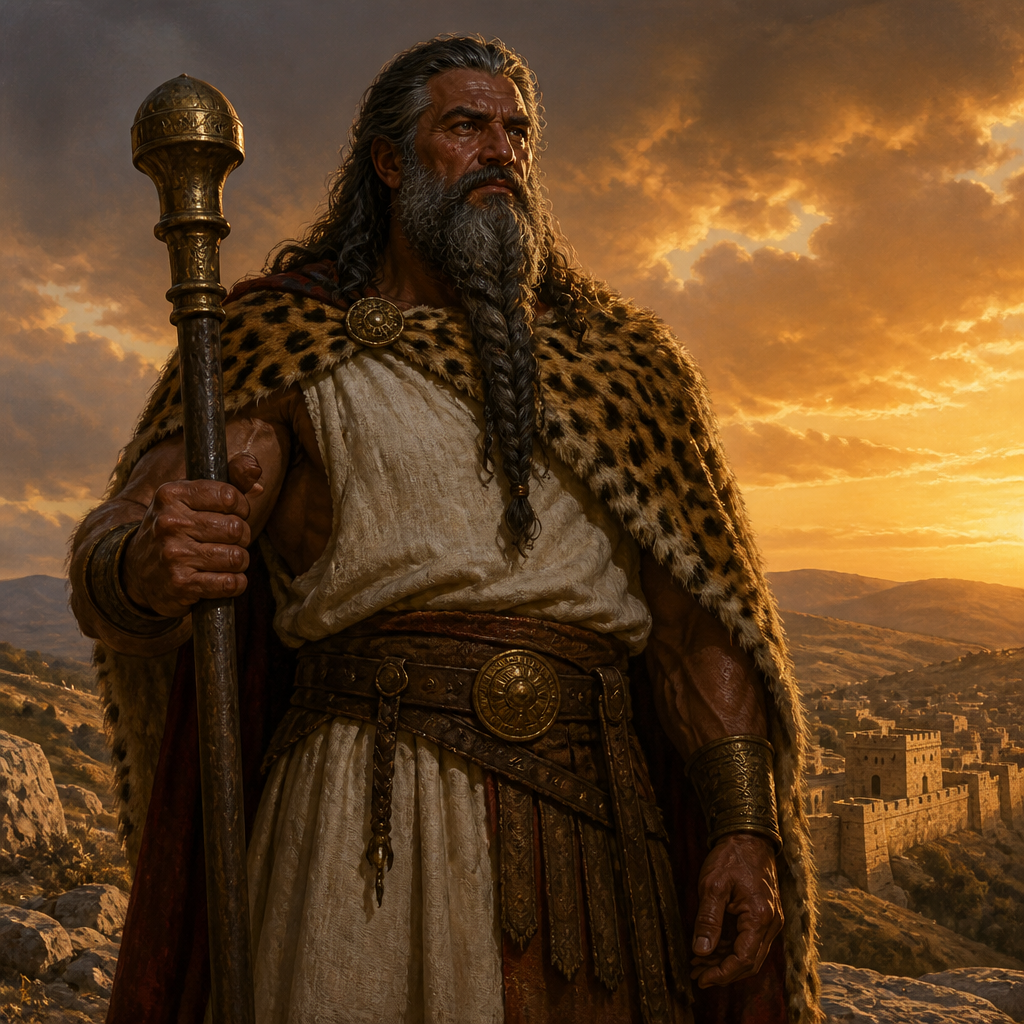
Arba was a renowned patriarch of the Anakim in Canaan, known as the greatest man among his people and the namesake of the city that became Hebron.
Arba is a figure of significant ancestral importance within the pre-conquest history of Canaan, specifically associated with the region that would later become a central hub for the tribe of Judah. He is primarily identified in the Book of Joshua as a patriarch of the Anakim, a group of people noted in the biblical text for their immense physical stature and strength. Though Arba does not appear as a living character within the primary narrative of the Israelite conquest, his legacy is preserved through the geography of the land.
The historical weight of Arba’s name is evidenced by the ancient name of Hebron, which was known as Kiriath-arba (the "City of Arba"). His status among his peers was unparalleled; the biblical record explicitly distinguishes him as the "greatest man among the Anakim." This designation suggests not only a high social standing but perhaps a physical prowess that surpassed even the legendary giants who descended from him.
Background and Family
Arba is identified as a patriarch within the Canaanite context during the era of the conquest and the judges, existing as a foundational figure for the Anakim. The Anakim were a specialized subgroup of the inhabitants of Canaan, often associated with the Nephilim or other groups of extraordinary height and strength (Numbers 13:33). Within this formidable lineage, Arba occupies a position of unique prominence. The text of Joshua 15:13 and Joshua 21:11 explicitly identifies Arba as the "father" or "forefather" of Anak, the eponymous ancestor from whom the Anakim took their name.
By establishing Arba as the father of Anak, the biblical record places him at the very root of the giant clans that the Israelites encountered upon their arrival in the Promised Land. His family line produced notable descendants such as Sheshai, Ahiman, and Talmai, the three sons of Anak who were later driven out of Hebron by Caleb (Joshua 15:14). Thus, Arba represents the ancestral source of the greatest military challenge faced by the southern tribes during the conquest.
Major Life Events
While the specific events of Arba's life are not detailed in the biblical narrative, his impact is memorialized through the naming of Kiriath-arba. The scriptures note that "Hebron used to be called Kiriath-arba, after Arba" (Joshua 14:15). In the ancient Near East, the naming of a city after an individual was a mark of supreme honor and often indicated that the individual was the founder, a great conqueror, or a revered chieftain.
The biblical description of Arba as the "greatest man among the Anakim" (Joshua 14:15) serves as his primary biographical marker. In a culture where the Anakim were defined by their physical size and martial capability, to be the "greatest" among them implies that Arba was a figure of legendary proportions and influence. His life concluded prior to the arrival of the Israelites, but the shadow of his reputation remained over the hill country of Judah for generations.
Relationship to Other Biblical Figures
Arba’s primary relationship in the text is to his son, Anak. Through this lineage, Arba is the progenitor of the people who terrified the original twelve spies sent by Moses. However, his most direct literary connection is with Caleb, the son of Jephunneh. When Joshua distributed the land among the tribes, Caleb specifically requested the region of Hebron—Arba’s namesake city.
The transition of Kiriath-arba to Hebron represents a significant shift in biblical history, where the stronghold of the greatest Canaanite patriarch was transferred to one of the most faithful Israelite leaders. The text notes that after the conquest of Arba's city and the displacement of his descendants, "the land had rest from war" (Joshua 14:15), signaling the end of the era dominated by Arba's lineage.
Spiritual Significance
Theologically, Arba represents the pinnacle of human strength and worldly prestige that stands in opposition to the purposes of God. As the "greatest man" of a race that caused the Israelites to shrink in fear, Arba serves as a benchmark for the scale of the victory God provided through Caleb and Joshua. The renaming of his city from Kiriath-arba to Hebron symbolizes the replacement of a pagan patriarchal legacy with a covenantal one.
Furthermore, the mention of Arba in the context of the Levitical cities (Joshua 21:11) highlights a redemptive arc: the city founded by a pagan giant became a city of refuge and a residence for the priests of Yahweh. Arba’s legacy, while rooted in physical might, ultimately serves as a backdrop to demonstrate that even the most formidable human dynasties are subject to the sovereign will of God.
Arba's significance lies in his role as the ultimate ancestor of the Anakim giants, representing the height of Canaanite power and physical stature. His name is inextricably linked to the city of Hebron, one of the most sacred sites in the Bible. By identifying him as the 'greatest man among the Anakim,' the text underscores the magnitude of the challenge faced by the Israelites. His defeat—through the displacement of his descendants—marks the triumph of faith over physical intimidation.
From a historical perspective, Arba provides a genealogical link that explains the origins of the formidable inhabitants of the Judean hill country. The transformation of Kiriath-arba into a city for the Kohathite Levites signifies the consecration of former pagan strongholds to the service of the Lord. Arba stands as a reminder of the 'giants' that occupied the land before the fulfillment of the divine promise to Abraham.
Frequently Asked Questions
What does the name 'Arba' mean in Hebrew?
The name Arba (אַרְבַּע) literally means 'four' in Hebrew. Some scholars suggest this might refer to a confederation of four cities or perhaps that Arba was the greatest of four legendary heroes, though the Bible specifically identifies him as a person and the father of Anak.
Was Arba a giant?
While the Bible does not explicitly state Arba's height, it identifies him as the 'greatest man' among the Anakim, who were a race of giants. As the father of Anak, he is the patriarch of the giant clans encountered by Israel.
Why is Hebron called Kiriath-arba?
Kiriath-arba means 'City of Arba.' It was named in honor of Arba because he was considered the most significant and powerful figure among the original Anakim inhabitants of the region.
Did Arba fight against Joshua or Caleb?
No, Arba was an ancestral figure who lived before the Israelite conquest. By the time Caleb took Hebron, he was fighting Arba's descendants (the sons of Anak), not Arba himself.
Where is Arba mentioned in the Bible?
Arba is mentioned three times, all within the Book of Joshua: Joshua 14:15, Joshua 15:13, and Joshua 21:11.
Family & Relationships
 ArbaThis page
Children
 AnakSonJoshua 21:11Stated
Connected Figures
Family
Son · Joshua 21:11
Anak was a formidable patriarch of a race of giants in Canaan, whose physical stature terrified the Israelite spies during the Exodus.
Egypt and WildernessFirst: Numbers 13:228 versesPatriarch of the Anakites
Categories
Mentions by Book
- Joshua3
Scripture References
All 3 indexed verses, in canonical order, from the Berean Standard Bible.
Joshua · 3
- Joshua 14:15
(Hebron used to be called Kiriath-arba, after Arba, the greatest man among the Anakim.) Then the land had rest from war.
- Joshua 15:13
According to the LORD’s command to him, Joshua gave Caleb son of Jephunneh a portion among the sons of Judah—Kiriath-arba, that is, Hebron. (Arba was the forefather of Anak.)
- Joshua 21:11
They gave them Kiriath-arba (that is, Hebron), with its surrounding pasturelands, in the hill country of Judah. (Arba was the father of Anak.)