Sheshai
Who was Sheshai in the Bible?
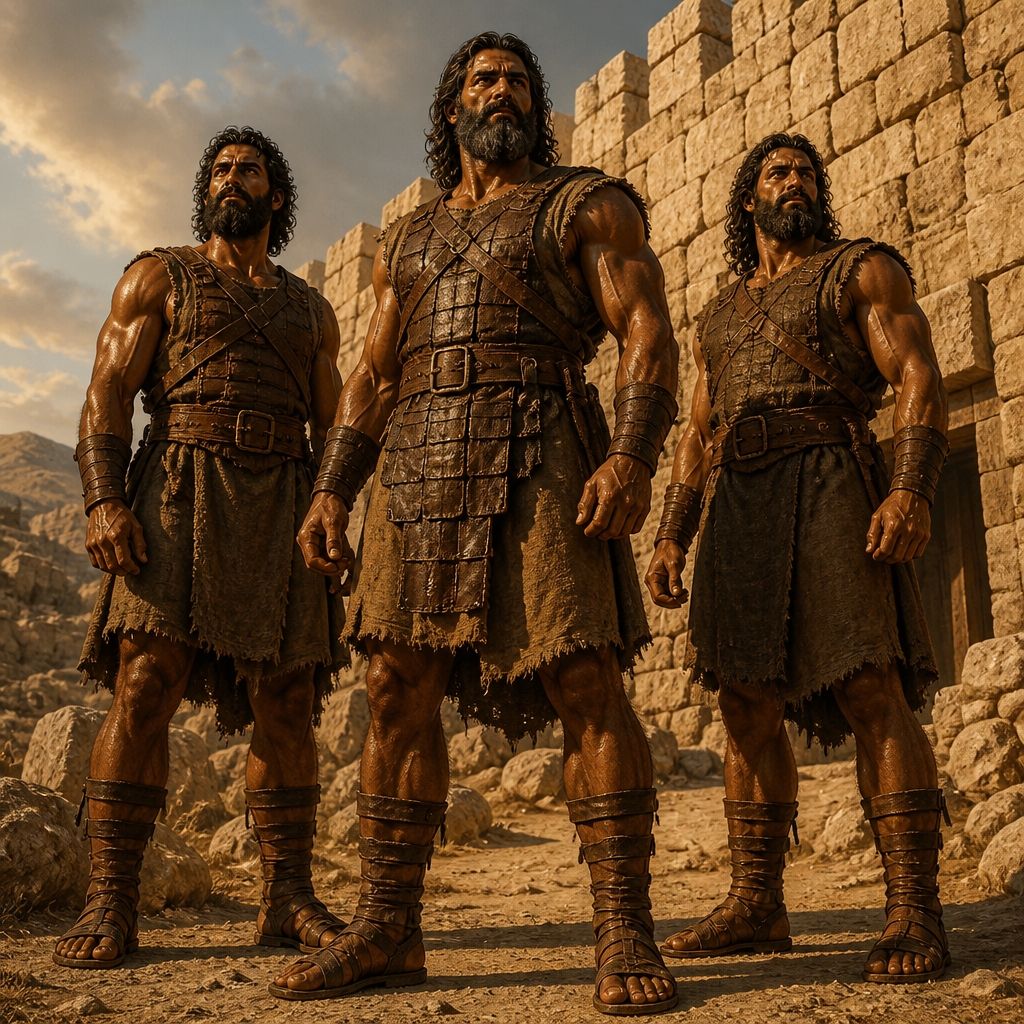
Sheshai was one of the three giant descendants of Anak who inhabited the ancient city of Hebron and were eventually defeated by the Israelites during the conquest of Canaan.
Sheshai is identified in the Hebrew Bible as a prominent inhabitant of Hebron and a member of the Anakim, a group known for their exceptional height and formidable strength. He lived during the era of the Exodus and the subsequent Israelite conquest of Canaan. Sheshai is consistently mentioned alongside his two brothers, Ahiman and Talmai, representing the ruling class or primary clans of the Anakim in the southern hill country of Judah.
His presence in the fortified city of Hebron served as a major psychological obstacle for the Israelites. During the initial reconnaissance mission led by the twelve spies, the sighting of Sheshai and his kin instilled profound fear in ten of the spies, leading to the prolonged wandering of Israel in the wilderness. The biblical record eventually details his downfall during the military campaigns led by Caleb and the tribe of Judah, marking the end of the Anakim's dominance in that region.
Background and Family
Sheshai is explicitly identified as a descendant of Anak, the progenitor of the Anakim (Numbers 13:22). The Anakim are described in biblical tradition as a race of giants, a characterization that placed them among the most feared inhabitants of the Promised Land. The lineage of Sheshai is tied directly to Kirjath-arba, an older name for Hebron, which was reportedly founded seven years before Zoan in Egypt. This chronological note suggests that Sheshai and his family belonged to an ancient and well-established power structure in the Levant.
He is always listed in connection with his two brothers, Ahiman and Talmai. In the social and military structure of the Anakim, these three individuals likely functioned as clan leaders or petty kings of the Hebron district. Their ancestry, tracing back to Anak, suggests a hereditary nobility defined by physical stature and martial prowess.
Major Life Events
The Encounter with the Spies
Sheshai first appears in the biblical narrative in Numbers 13. When Moses sent twelve spies to scout the land of Canaan, they traveled through the Negev and reached Hebron. It was here that they encountered Sheshai, Ahiman, and Talmai. The sight of these men was so intimidating that the spies reported themselves feeling like "grasshoppers" in comparison (Numbers 13:33). While the text does not record a direct interaction or dialogue, the mere presence of Sheshai and his brothers was the primary catalyst for the Israelites' refusal to enter the land, resulting in forty years of wandering.
The Conquest of Hebron
The later years of Sheshai’s life involve the Israelite invasion under Joshua and Caleb. According to Joshua 15:14, after the land had been partitioned, Caleb son of Jephunneh took possession of Hebron. The text credits Caleb with driving out the three sons of Anak—Sheshai, Ahiman, and Talmai. This displacement was not merely a territorial shift but a significant military feat, as the Anakim were considered nearly invincible due to their size.
The Death of Sheshai
The final mention of Sheshai occurs in Judges 1:10. This passage clarifies the fate of the three brothers during the campaign of the tribe of Judah. The account states that Judah marched against the Canaanites in Hebron and "struck down Sheshai, Ahiman, and Talmai." This record confirms that Sheshai was killed in battle, signaling the total removal of the Anakim influence from the Judean highlands.
Relationship to Other Biblical Figures
Sheshai’s primary relationships are familial, defined by his father, Anak, and his brothers, Ahiman and Talmai. He serves as a foil to Caleb, the Israelite hero who successfully challenged the giants that the rest of the nation feared. While Caleb represents faith in divine assistance, Sheshai represents the physical might of the world that stands in opposition to the fulfillment of the divine promise to Israel.
Spiritual Significance
In the broader biblical narrative, Sheshai serves as a symbol of the "giants in the land"—formidable obstacles that appear insurmountable to human strength. The presence of Sheshai in Hebron tested Israel's faith; their failure to trust God in the face of Sheshai’s physical stature resulted in a generation dying in the desert. Conversely, his eventual defeat at the hands of Caleb and Judah serves as a theological testament that no physical power, regardless of its perceived magnitude or ancient pedigree, can withstand the purposes of God when His people act in faith. Sheshai’s death marks the transition from a land occupied by terrifying legends to a land settled by the covenant people.
Theologically, Sheshai represents the height of human opposition to the divine will. As one of the Anakim, his physical imposing nature became the ultimate test of Israelite faith during the Exodus. His presence at Hebron was the specific catalyst for the Israelites' 'evil report' and their subsequent forty-year punishment in the wilderness.
His eventual defeat by Caleb and the tribe of Judah serves as a scriptural archetype for the triumph of faith over fear. By chronicling the death of Sheshai, the biblical authors emphasize that the giants who once terrified the nation were ultimately mortal and vulnerable when confronted by those acting under divine mandate.
Frequently Asked Questions
Was Sheshai a literal giant?
Yes, according to the biblical text in Numbers 13, Sheshai was a descendant of Anak. The Anakim are described as people of great stature who made the Israelite spies feel like grasshoppers by comparison.
Who were Sheshai's brothers?
Sheshai is consistently listed alongside his two brothers, Ahiman and Talmai. Together, they were the three sons of Anak residing in Hebron.
Who killed Sheshai?
The book of Judges (1:10) records that the men of the tribe of Judah struck down Sheshai, Ahiman, and Talmai during the conquest of Hebron. Joshua 15:14 also credits Caleb with driving them out.
Where did Sheshai live?
Sheshai lived in Hebron, which was formerly known as Kiriath-arba. The Bible notes that this city was built seven years before Zoan in Egypt.
What does the name Sheshai mean?
While the exact etymology is debated, some scholars suggest the name may be of Hurrian origin or related to the Hebrew word for 'six' or 'whitish/noble,' though its specific meaning in the context of the Anakim remains uncertain.
Family & Relationships
Parents
 AnakFatherNumbers 13:22
Inferred
Numbers 13:22 lists Anak and Sheshai among the descendants of anak, but does not say how the two of them are related.Evidence: Numbers 13:22
 SheshaiThis page
 Ahiman, son of AnakBrotherNumbers 13:22
Inferred
Numbers 13:22 lists Ahiman and Sheshai among the descendants of anak, but does not say how the two of them are related.Evidence: Numbers 13:22
 Talmai, son of AnakBrotherNumbers 13:22
Inferred
Numbers 13:22 lists Talmai and Sheshai among the descendants of anak, but does not say how the two of them are related.Evidence: Numbers 13:22
Connected Figures
Family
Father · Numbers 13:22
Anak was a formidable patriarch of a race of giants in Canaan, whose physical stature terrified the Israelite spies during the Exodus.
Egypt and WildernessFirst: Numbers 13:228 versesPatriarch of the Anakites
Brother · Numbers 13:22
Ahiman was a descendant of Anak and a member of the fearsome Anakim who inhabited Hebron during the Israelite conquest of Canaan.
Egypt and WildernessFirst: Numbers 13:223 versesLeader of the Anakim
Brother · Numbers 13:22
Talmai was a descendant of Anak and one of three giants dwelling in Hebron who were eventually driven out and defeated during the Israelite conquest of Canaan.
Egypt and WildernessFirst: Numbers 13:223 versesLocal ruler / Warrior
Categories
Mentions by Book
- Numbers1
- Joshua1
- Judges1
Scripture References
All 3 indexed verses, in canonical order, from the Berean Standard Bible.
Numbers · 1
- Numbers 13:22
They went up through the Negev and came to Hebron, where Ahiman, Sheshai, and Talmai, the descendants of Anak, dwelled. It had been built seven years before Zoan in Egypt.
Joshua · 1
- Joshua 15:14
And Caleb drove out from there the three sons of Anak—the descendants of Sheshai, Ahiman, and Talmai, the children of Anak.
Judges · 1
- Judges 1:10
Judah also marched against the Canaanites who were living in Hebron (formerly known as Kiriath-arba), and they struck down Sheshai, Ahiman, and Talmai.