Shimei, Hemanite Levite
A Levite of the Hemanite family who participated in the spiritual purification and restoration of the temple during the reign of King Hezekiah.
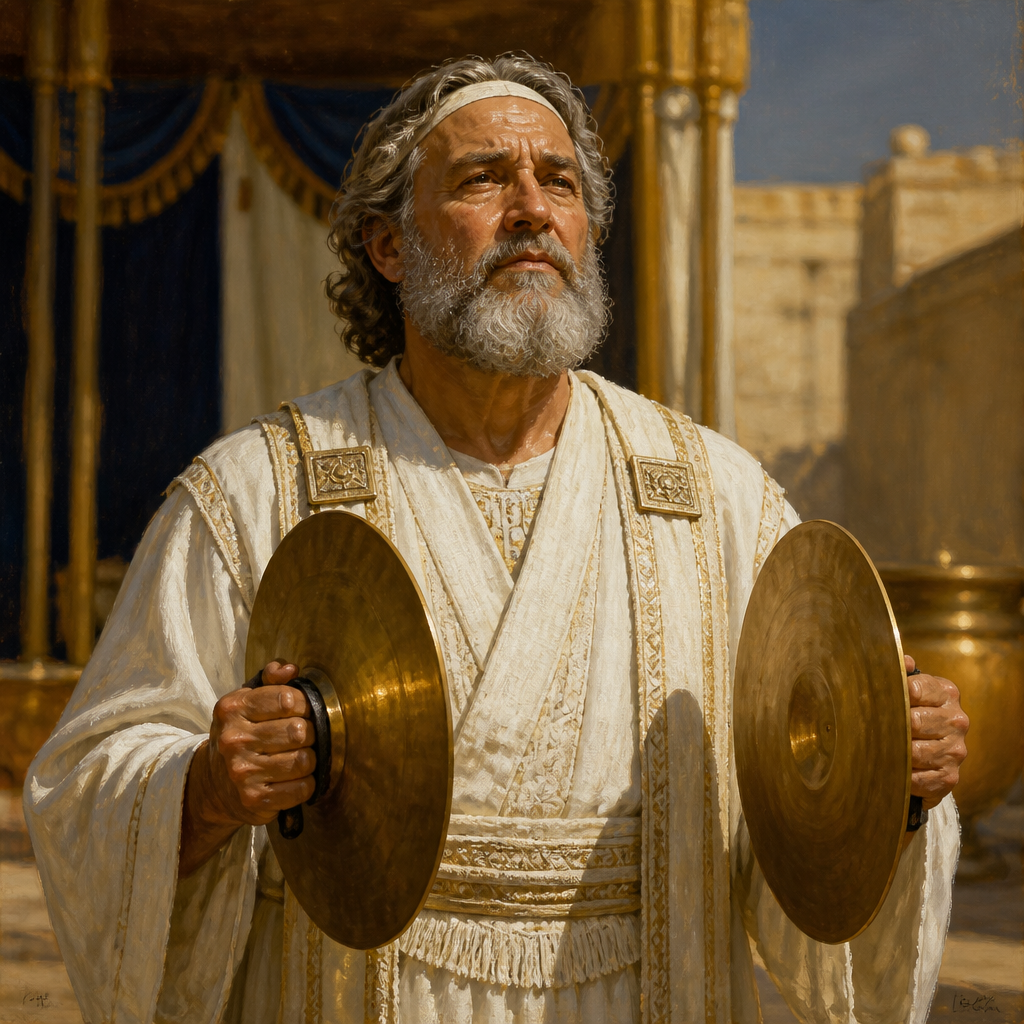
Shimei, a member of the tribe of Levi and a descendant of the Hemanite line, is recorded in the biblical narrative as a participant in the religious reforms of King Hezekiah during the era of the Divided Monarchy. As a descendant of Heman, one of the three principal musicians appointed by King David, Shimei belonged to a lineage traditionally tasked with the musical and liturgical services of the sanctuary.
His primary appearance occurs in the context of the national revival following the reign of the apostate King Ahaz. Shimei was among the Levites who answered the call to consecrate themselves and cleanse the House of the Lord, thereby facilitating the restoration of orthodox worship in Judah. His presence reflects the mobilization of the various Levite clans—specifically the Kohathites, Merarites, Gershonites, and the descendants of the three great masters of song: Asaph, Heman, and Jeduthun.
Background and Family
Shimei was a member of the Hemanites, a specific branch of the Levite tribe descended from Heman the singer (1 Chronicles 6:33). According to the genealogical and historical record in 2 Chronicles 29:14, Shimei was the son of Heman and the brother of Jehiel (also spelled Jehuel). This pedigree is significant because the Hemanites were one of the three major guilds of temple musicians established during the United Monarchy, a tradition that persisted into the Divided Monarchy.
The Hemanites were known not only for their musical skill but for their spiritual standing; Heman was described as the "king’s seer in the matters of God" (1 Chronicles 25:5). Shimei, therefore, was part of a family deeply embedded in the sacred rituals and prophetic ministry of the temple. By the time of the Divided Monarchy, his family remained a pillar of the religious infrastructure in Jerusalem.
Major Life Events
The specific biblical footprint of Shimei is found during the first year of the reign of King Hezekiah (c. 715 BC). Following a period of spiritual decline under King Ahaz, the temple had been neglected and desecrated. Hezekiah initiated a massive restoration project, summoning the priests and Levites to sanctify themselves and remove the "filthiness" from the holy place.
Shimei is listed among those who responded to this royal summons. Alongside his brother Jehuel, he represented the Hemanite clan in the task of gathering their brethren and beginning the sixteen-day purification process. This involved removing idols and ritual debris from the temple and transporting them to the Kidron Valley for disposal. Shimei’s participation was essential for the legal and ceremonial reinstatement of the Passover and the regular sacrificial system.
Relationship to Other Biblical Figures
Shimei’s primary associations are familial and professional. He is explicitly linked to his brother Jehiel (or Jehuel), with whom he shared the responsibility of leading the Hemanite contingent. He is also defined by his relationship to his father, Heman the Singer, whose legacy dictated Shimei’s role in the liturgical life of Israel.
In the broader historical context, Shimei acted under the authority of King Hezekiah. His work in the temple aligned him with other Levite leaders of the era, such as Shemaiah and Uzziel of the Jeduthunites, and Mahath and Joel of the Kohathites. These men worked in a unified effort to re-establish the covenantal relationship between Yahweh and the Kingdom of Judah.
Spiritual Significance
Though Shimei appears only briefly in the chronicler's record, his inclusion serves a vital purpose in the theological framework of 2 Chronicles. His presence underscores the continuity of the Davidic order. By highlighting that descendants of Heman—like Shimei—were still active and obedient to the Law, the text demonstrates that despite the failures of previous kings, the core components of the faithful community remained intact.
Shimei represents the "remnant" of the Levites who were ready to serve when a righteous leader called. His work was not in the spotlight of the battlefield or the throne room, but in the laborious, behind-the-scenes task of purification. In the biblical narrative, his willingness to engage in the physical and spiritual cleaning of the temple was a prerequisite for the national revival that followed.
Spiritual Significance
Shimei’s significance lies in his role as a representative of the Hemanite Levites during a critical turning point in Judah's history. His participation in the reforms of Hezekiah demonstrates the resilience of the Levitical guilds and their essential role in maintaining the holiness of the Temple. He serves as a scriptural example of a faithful servant who, though only mentioned once, was vital to the restoration of true worship.
Theologically, Shimei’s presence in the list of reformers in 2 Chronicles 29:14 affirms that the restoration of Israel required the cooperation of all designated families. By fulfilling his ancestral duty, Shimei helped bridge the gap between the original Davidic appointments and the practical needs of the eighth-century BC Judean restoration.
Frequently Asked Questions
Which tribe did Shimei belong to?
Shimei was a member of the Tribe of Levi, specifically belonging to the Hemanite family line.
What was Shimei’s primary contribution to the Bible?
He was one of the Levites who participated in cleansing and sanctifying the Temple in Jerusalem during the first year of King Hezekiah's reign.
Who was Shimei's father?
Shimei was the child of Heman the Singer, the famous Hemanite musician and seer.
In which book of the Bible is this Shimei found?
This Shimei is mentioned exclusively in the book of 2 Chronicles, specifically in chapter 29, verse 14.
Who was Shimei's brother?
He is recorded as having a brother named Jehiel (also referred to as Jehuel).
Connected Figures
Categories
Mentions by Book
- 2 Chronicles1
Family & Relationships
Sibling
2 Chronicles 29:14
Parent
1 Chronicles 6:33
Sibling
2 Chronicles 29:14
Others Named Shimei
Shimei, Overseer of Hezekiah2 Chronicles 31:12
A Levite officer who served as second-in-command to his brother Conaniah in managing the temple contributions and tithes during the reign of King Hezekiah.
Shimei, descendant of Merari1 Chronicles 6:29
A Levite of the Merarite line who is identified in the biblical genealogies as the son of Libni and the father of Uzzah.
Shimei, Son of GershonNumbers 3:18
A prominent Levite and grandson of Levi who established the Shimeite clan during the Egyptian sojourn and the wilderness wanderings.
Shimei, Descendant of BinnuiEzra 10:38
A Jewish returnee from the Babylonian exile who was among those identified for having married a foreign woman during the time of Ezra.
Shimei, son of Ela1 Kings 1:8
A high-ranking official and tribal administrator in the court of King Solomon, noted for his loyalty to David and his oversight of the territory of Benjamin.
Shimei, Levite of the ReturnEzra 10:23
A Levite who returned from the Babylonian exile and was among those who pledged to separate from foreign wives during the reforms of Ezra.
Shimei, Gershonite Levite of the Divided Monarchy1 Chronicles 6:42
A Levite of the Gershonite line during the Divided Monarchy era, recognized as the head of a significant family within the house of Ladan.
Shimei, Benjamite of the Divided Monarchy1 Chronicles 8:21
A prominent member of the tribe of Benjamin during the Divided Monarchy era, recognized as the father of nine sons including Adaiah and Beraiah.
Shimei, Descendant of HashumEzra 10:33
A Jewish returnee from the Babylonian exile who was recorded among those who had married foreign women in violation of the Mosaic Law.
Shimei, Son of Gera2 Samuel 16:5
A Benjamite who famously cursed King David during Absalom’s rebellion and was later executed under King Solomon for violating a house arrest agreement.
Shimei, Son of Zaccur1 Chronicles 4:26
A member of the tribe of Simeon noted for his exceptionally large family, consisting of sixteen sons and six daughters.
Shimei, Sibling of Zerubbabel1 Chronicles 3:19
Shimei was a member of the tribe of Judah, the son of Pedaiah, and a brother to the prominent governor Zerubbabel during the era of the Divided Monarchy.
Shimei, Great-grandfather of MordecaiEsther 2:5
A Benjamite ancestor of Mordecai whose lineage connects the exilic Jewish community to the house of Kish.
Shimei the Ramathite1 Chronicles 27:27
Shimei the Ramathite served as the royal official in charge of King David's vineyards during the era of the Divided Monarchy.
Shimei, Reubenite of the Divided Monarchy1 Chronicles 5:4
A member of the tribe of Reuben during the era of the Divided Monarchy, recorded as the son of Gog and the father of Micah.