Jerimoth, Overseer of the Divided Monarchy
An official and overseer during the reign of King Hezekiah, Jerimoth was responsible for managing the sacred tithes and contributions in the Temple.
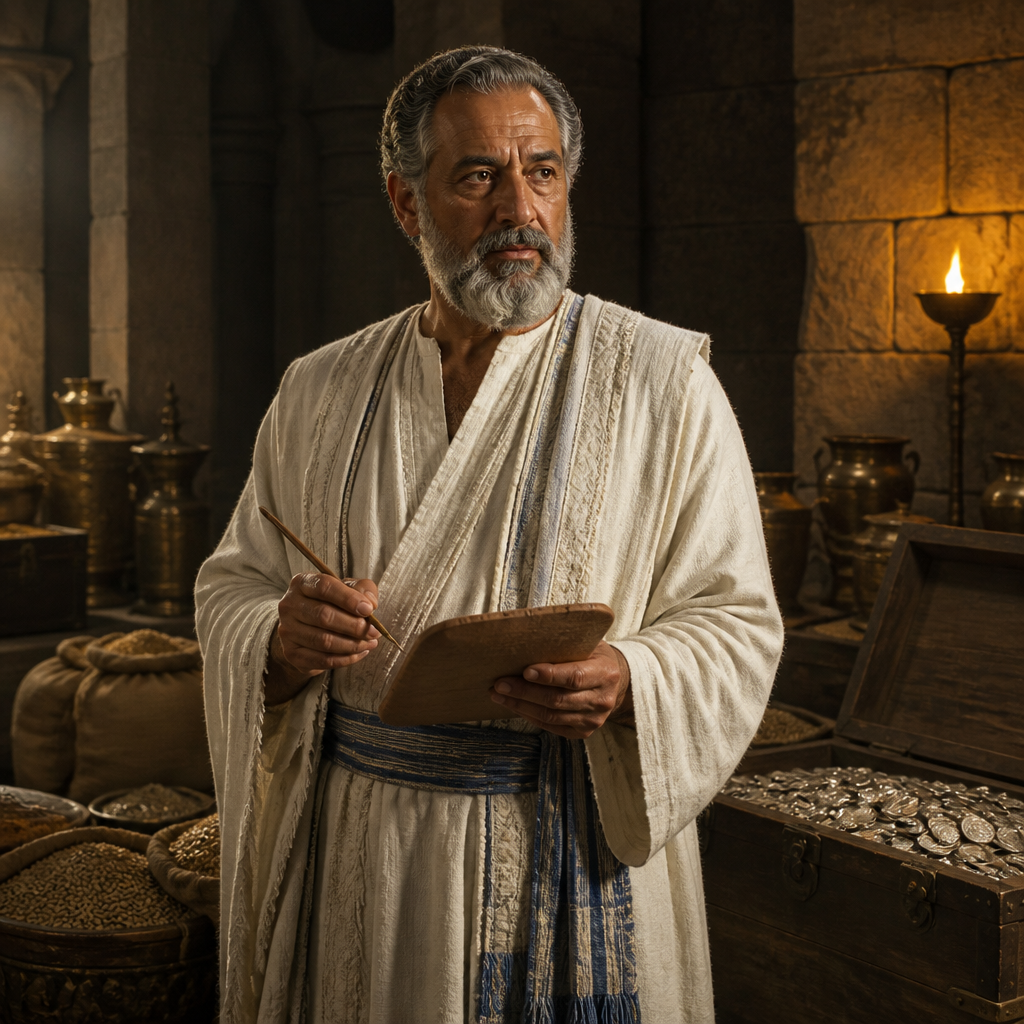
Jerimoth was a Judean official who served during the late 8th century BC under the administration of King Hezekiah. During a period of significant religious reform in the Kingdom of Judah, Jerimoth was appointed as one of the ten overseers charged with the logistics of the Temple storehouses. His role was critical in ensuring that the sudden influx of tithes and offerings, prompted by the king's call to return to Mosaic Law, was properly organized and distributed to the Levites and priests.
While Jerimoth is mentioned only once in the biblical record, his inclusion in the list of overseers under Conaniah and Shimei indicates a position of significant trust and administrative competence. He functioned as a subordinate official reporting directly to the leadership of the Temple and, ultimately, to the crown and the high priesthood.
Background and Context
Jerimoth lived during the Divided Monarchy, specifically during the reign of King Hezekiah of Judah (c. 715–686 BC). This era was marked by a dramatic shift in the religious landscape of the southern kingdom. Following the apostasy of his father Ahaz, Hezekiah initiated a massive restoration of the Temple in Jerusalem. This restoration included the reopening of the Temple doors, the cleansing of the sanctuary, and the re-establishment of the Passover. As part of these reforms, the people of Israel and Judah responded with overwhelming generosity, bringing in heaps of tithes, including grain, new wine, oil, and honey.
Appointment and Duties
As the volume of contributions exceeded the capacity of existing storage, Hezekiah commanded that storehouses be prepared in the house of the Lord. To manage these resources, a hierarchy of officials was established. Jerimoth was named as one of the ten specific men appointed as "overseers" (Hebrew: paqid) to serve under the authority of Conaniah the Levite and his brother Shimei.
According to 2 Chronicles 31:13:
"Jehiel, Azaziah, Nahath, Asahel, Jerimoth, Jozabad, Eliel, Ismachiah, Mahath, and Benaiah were overseers under the authority of Conaniah and his brother Shimei, by appointment of King Hezekiah and of Azariah the chief official of the house of God."
Jerimoth's duties likely involved the weighing, recording, and guarding of the sacred portions. This administrative structure was essential to ensure that the priests and Levites who were performing the Temple service received their proper sustenance, allowing them to devote themselves fully to the Law of the Lord.
Significance of the Administration
The appointment of Jerimoth reflects the organized nature of Hezekiah’s reforms. The text emphasizes that these appointments were made by the king and Azariah, the chief official of the house of God, highlighting the synergy between the civil and religious authorities. Jerimoth represents the class of reliable civil servants who facilitated the spiritual revival of the nation through diligent logistical support.
Spiritual Significance
Jerimoth serves as an example of the 'supporting cast' in biblical history—individuals whose names are recorded not for prophetic or military exploits, but for their faithfulness in administrative service. His role underscores the importance of order and stewardship within the community of faith, demonstrating that the success of great religious reforms often depends on the integrity of those managing the behind-the-scenes logistics of the sanctuary.
Frequently Asked Questions
When did Jerimoth live?
Jerimoth lived during the Divided Monarchy, specifically during the reign of King Hezekiah in the late 8th century BC.
What was Jerimoth's job in the Bible?
He was an overseer or assistant supervisor in the Temple, responsible for managing the tithes and offerings brought by the people.
Who was Jerimoth's superior?
He served under Conaniah and his brother Shimei, who were the chief managers of the Temple storehouses.
In which book of the Bible is this Jerimoth mentioned?
He is mentioned only in the book of 2 Chronicles, specifically in chapter 31, verse 13.
Connected Figures
Categories
Mentions by Book
- 2 Chronicles1
Others Named Jerimoth
Jerimoth, Son of David2 Chronicles 11:18
A son of King David and a member of the royal house of Judah whose daughter, Mahalath, married King Rehoboam.
Jerimoth son of Azriel1 Chronicles 27:19
A tribal leader of Naphtali who served as a high-ranking official during the administration of the Divided Monarchy.
Jerimoth of the Divided Monarchy1 Chronicles 12:5
One of the mighty men who defected from Saul's army to support David at Ziklag during the early years of the Divided Monarchy period.
Jerimoth, Levite Musician of the Divided Monarchy1 Chronicles 25:4
A Levite musician and son of Heman the king's seer, Jerimoth was chosen by lot to lead the fifteenth division of musicians in the temple during the reign of King David.
Jerimoth, Levite of the Egypt and Wilderness Era1 Chronicles 24:30
A Levite of the Merarite clan and son of Mushi, Jerimoth served as a head of a household during the wilderness period and tribal organization of Israel.
Jerimoth, Son of Bela1 Chronicles 7:7
A Benjamite leader and son of Bela, recognized as a head of a family and a mighty man of valor during the era of the Egyptian sojourn and the early formation of the tribes.