Jehoahaz, Son of Jehu
The eleventh king of the northern kingdom of Israel, Jehoahaz reigned during a period of severe military decline and Aramean oppression.
Jehoahaz was the son of Jehu and the second monarch of the Jehu dynasty. He ascended to the throne of the northern kingdom of Israel in the twenty-third year of King Joash of Judah and reigned for seventeen years in Samaria, approximately between 814 BC and 798 BC. His reign was characterized by a catastrophic loss of sovereign power to the Kingdom of Aram-Damascus, which reduced Israel’s military to a skeletal force.
Though Jehoahaz followed the religious patterns of his predecessors—specifically the golden calf worship established by Jeroboam I—his reign is notable for a moment of genuine distress where he sought the favor of the LORD. This resulted in a divine response that eventually provided a savior for Israel, though the full restoration of Israel’s territories did not occur until after his death under the leadership of his son and grandson.
Background and Family
Jehoahaz was born into the turbulent political landscape of the ninth century BC. His father, Jehu, had violently seized the throne of Israel by eradicating the house of Ahab and the priests of Baal (2 Kings 10:35). Despite Jehu’s zeal in removing Baal worship, he did not depart from the calf worship at Bethel and Dan. Jehoahaz inherited this religious status quo upon his father's death. As the eldest son, he represented the continuation of the Jehu dynasty, which God had promised would last for four generations (2 Kings 10:30).
Major Life Events
The Aramean Oppression
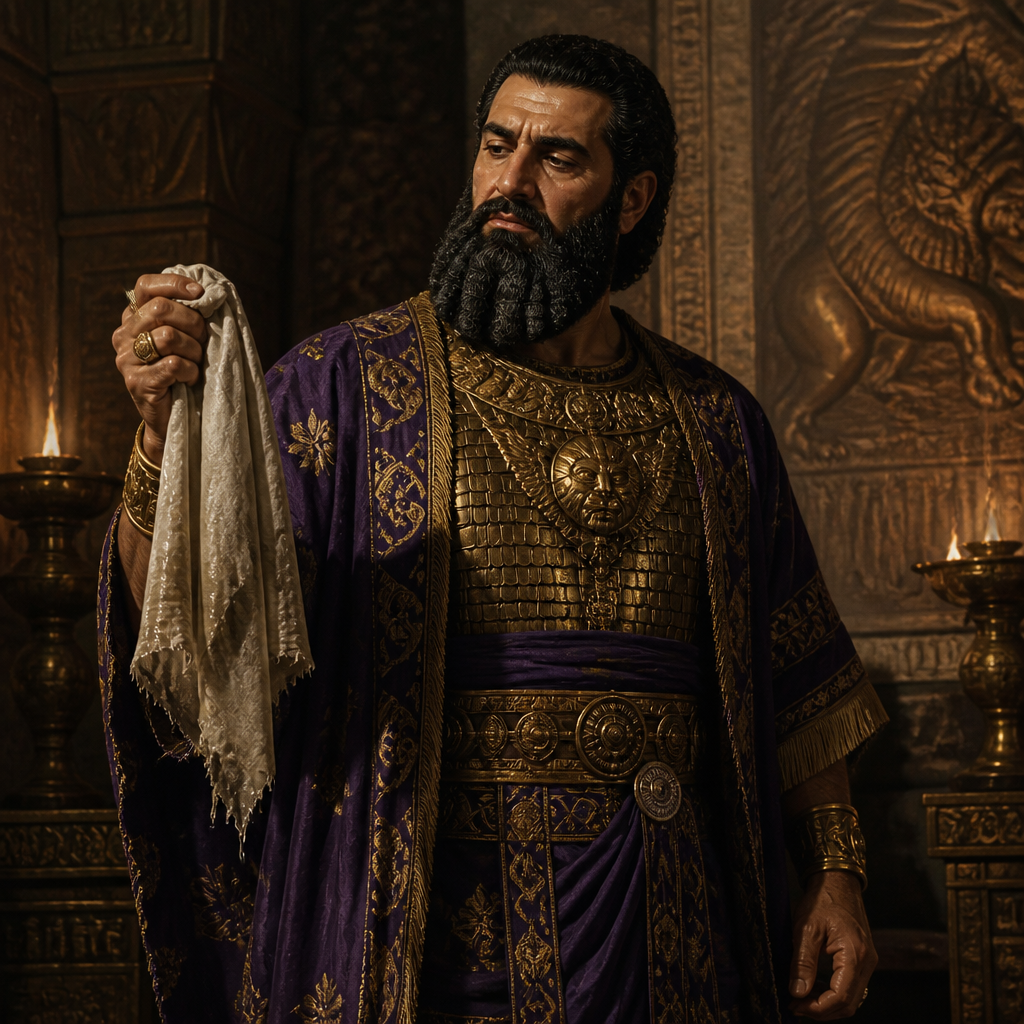
The seventeen-year reign of Jehoahaz was defined by the relentless pressure of Hazael, the king of Aram, and his son Ben-hadad. The biblical record states that the anger of the LORD was kindled against Israel because of their continued idolatry, leading Him to deliver the nation into the hands of the Arameans (2 Kings 13:3). The military devastation was nearly total. By the end of his reign, Jehoahaz’s army was reduced to a mere fifty horsemen, ten chariots, and ten thousand foot soldiers. The text describes the Aramean destruction of the Israelite forces as making them "like the dust at threshing" (2 Kings 13:7).
The Prayer and the Deliverer
In the midst of this crushing occupation, Jehoahaz performed an act that stood in contrast to his general reputation for evil. He "sought the favor of the LORD" (2 Kings 13:4). The Hebrew text suggests a sense of entreaty or stroking the face of God in desperate supplication. Unusually for the kings of the northern kingdom, God responded to this plea, not because of the king's righteousness, but because He "saw the oppression" inflicted by Aram.
God provided a "deliverer" (2 Kings 13:5), allowing the Israelites to escape from Aramean control and live in their tents as before. While the text does not explicitly name this deliverer in the context of Jehoahaz’s lifetime, scholars often identify this figure as either his son Jehoash, his grandson Jeroboam II, or the Assyrian king Adad-nirari III, whose pressure on Aram forced a withdrawal from Israelite territories.
Final Years and Death
Despite the divine intervention, Jehoahaz did not lead a national reformation. The Asherah pole remained in Samaria throughout his reign, and the people continued in the sins of Jeroboam. Jehoahaz eventually "rested with his fathers" and was buried in the capital city of Samaria. He was succeeded by his son, Jehoash (also called Joash), who would go on to recover the cities his father had lost.
Relationship to Other Biblical Figures
Jehoahaz’s primary domestic relationship was with his father, Jehu, and his son, Jehoash. The biblical narrative frequently identifies him by his lineage—"Jehoahaz son of Jehu"—to distinguish him within the chronology of the Divided Monarchy. His reign overlapped significantly with King Joash of Judah (the son of Ahaziah).
In the broader international context, Jehoahaz was the primary victim of Hazael of Aram. The conflict between these two figures is the central tension of 2 Kings 13. While Jehoahaz was unable to overcome Hazael, his son Jehoash eventually fulfilled the prophetic promise of victory given by Elisha, reclaiming the cities that Hazael had seized from Jehoahaz (2 Kings 13:25).
Spiritual Significance
The life of Jehoahaz serves as a study in the complexity of divine mercy. Although the Bible labels him as one who "did evil in the eyes of the LORD" (2 Kings 13:2), his narrative proves that God is attentive even to the prayers of wayward leaders when their people suffer under extreme injustice. The preservation of Israel during the reign of Jehoahaz highlights God's commitment to His covenant with Abraham, Isaac, and Jacob (2 Kings 13:23), ensuring that the nation was not entirely destroyed despite its spiritual infidelity. Jehoahaz represents a king who experienced the consequences of national sin yet glimpsed the possibility of restoration through humble petition.
Spiritual Significance
Jehoahaz is a pivotal figure for understanding the grace of God toward the northern kingdom of Israel. His reign illustrates the principle that God responds to genuine distress and petition, even when the petitioner is someone who has otherwise been unfaithful to the covenant. The account of Jehoahaz seeking the Lord’s favor provides a rare moment of humility in the history of the northern kings, showing that the door to divine assistance remained open despite the persistent idolatry of the Jehu dynasty.
Theologically, his reign also emphasizes the theme of remnant preservation. Despite being reduced to 'dust' by the Aramean military machine, Israel survived. The recovery of territory under his successors was viewed as a direct result of the compassion God felt for the nation during Jehoahaz’s era, framing his life as the low point that preceded a temporary national resurgence under his son and grandson.
Frequently Asked Questions
How long did Jehoahaz reign over Israel?
Jehoahaz reigned for seventeen years in Samaria, beginning in the twenty-third year of King Joash of Judah (2 Kings 13:1).
Why was the army of Jehoahaz so small?
The King of Aram (Hazael) had decimated the Israelite forces, leaving Jehoahaz with only fifty horsemen, ten chariots, and ten thousand foot soldiers, compared to the much larger armies usually maintained by Israel (2 Kings 13:7).
Did Jehoahaz stop the idolatry of Jeroboam?
No. Although he sought God's help against Aram, he did not turn away from the sins of the house of Jeroboam, and the Asherah pole remained in Samaria during his rule (2 Kings 13:6).
Who was the 'deliverer' mentioned during his reign?
The Bible does not explicitly name the deliverer in 2 Kings 13:5, but it likely refers to his son Jehoash or grandson Jeroboam II, who eventually defeated the Arameans, or possibly the Assyrian king whose attacks on Aram provided relief to Israel.
Where was Jehoahaz buried?
He was buried in Samaria, the capital of the northern kingdom of Israel, alongside his father Jehu (2 Kings 13:9).
Connected Figures
Jehu
Father
Jehoash (Joash) of Israel
Son and Successor
Hazael
Aramean Oppressor
Joash of Judah
Contemporary King of Judah
Categories
Mentions by Book
- 2 Kings12
- 2 Chronicles2
Family & Relationships
Child
2 Kings 10:35
Parent
1 Kings 19:16
Others Named Jehoahaz
Jehoahaz, Son of Josiah2 Kings 23:30
Jehoahaz was the seventeenth king of Judah, whose brief three-month reign in 609 BC ended when he was deposed and imprisoned by Pharaoh Neco II.