Jabin, King of Hazor during the Conquest
The King of Hazor who formed a northern Canaanite coalition to oppose the Israelite invasion under Joshua.
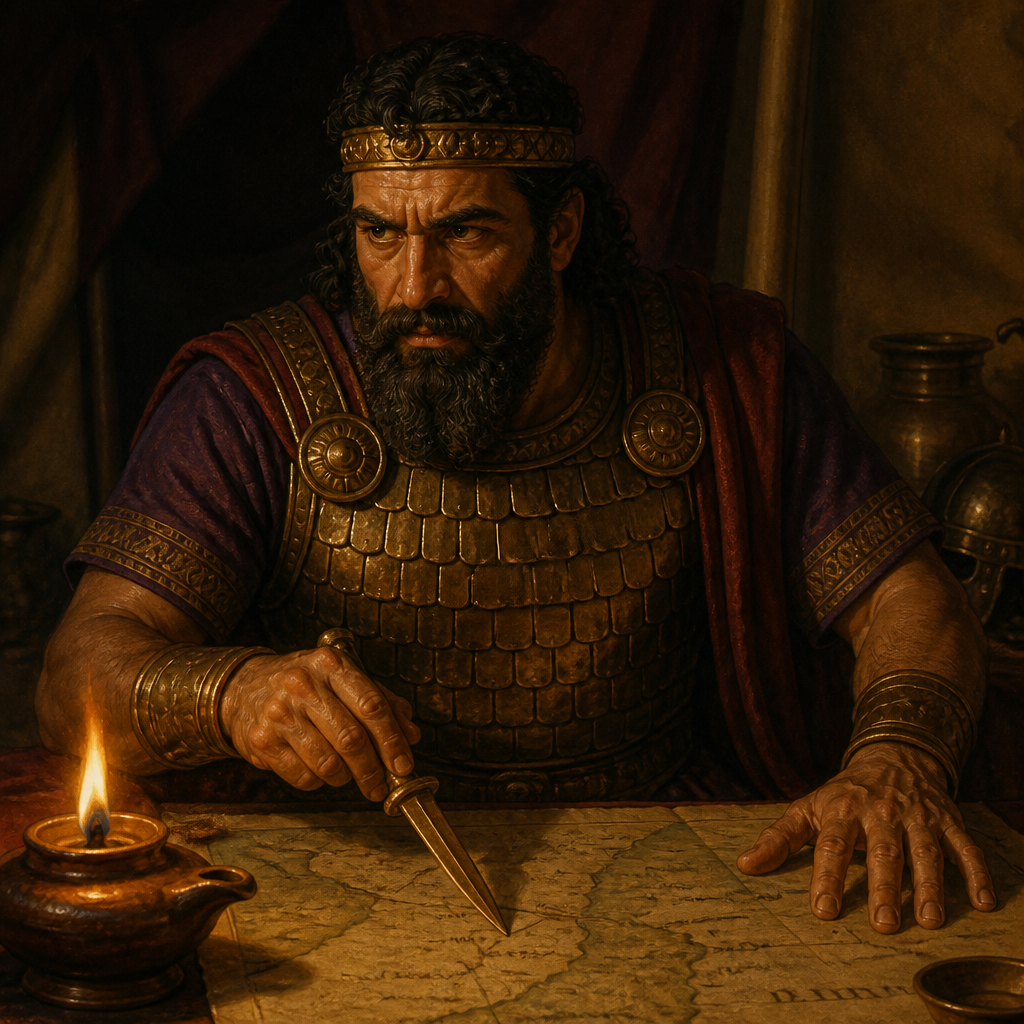
Jabin was the King of Hazor, a prominent city-state in northern Canaan, during the era of the Israelite conquest. He is characterized by his swift political and military action in response to the news of Israel’s victories in the southern and central regions of the Promised Land.
Recognizing the threat posed by Joshua and the Israelite forces, Jabin did not wait to be attacked. Instead, he initiated a broad diplomatic effort, sending messengers to various neighboring kings to consolidate a massive military alliance. His primary mention in the biblical record highlights his role as the architect of the northern resistance against the expansion of Israel.
Background and Family
Jabin served as the King of Hazor during the late 15th or early 14th century BC, a period defined by the Israelite conquest of Canaan. While the biblical text in Joshua 11:1 provides his name and title, it offers no specific details regarding his lineage, family, or the length of his reign. However, his title as the King of Hazor is highly significant; archeological evidence confirms that Hazor was one of the largest and most influential urban centers in the southern Levant during the Bronze Age. As the leader of this strategic city, Jabin wielded considerable geopolitical influence over the surrounding Canaanite territories.
Major Life Events
The entirety of Jabin's recorded actions occurs in response to the reports of the Israelite military campaign under Joshua. After Joshua had successfully defeated the southern kings at the Battle of Gibeon and subsequently conquered the hill country and the Negeb, Jabin took the initiative to organize a northern counter-offensive.
According to Joshua 11:1, Jabin "sent word" to several regional monarchs, including Jobab king of Madon, and the unnamed kings of Shimron and Achshaph. This act of mobilization demonstrates Jabin's authority and his recognition of the existential threat Israel posed to the Canaanite city-states. By forming this coalition, Jabin sought to assemble a force capable of halting the Israelite advance through sheer numerical and technological superiority, particularly involving horses and chariots.
Relationship to Other Biblical Figures
Jabin’s interactions are strictly limited to his diplomatic peers. He is shown communicating directly with Jobab of Madon and extending his influence to the kings of Shimron and Achshaph. His role in the biblical narrative is that of a primary antagonist to Joshua. While Jabin and Joshua are the two central leaders of their respective sides in this northern conflict, the text focuses on Jabin’s role as the catalyst for the gathering of the kings rather than any personal dialogue between the two figures.
Spiritual Significance
In the context of the Book of Joshua, Jabin represents the pinnacle of Canaanite resistance. His efforts to unite multiple kingdoms underscore the recurring biblical theme that human alliances, regardless of their size or military sophistication, are ultimately ineffective against the divine mandate given to Israel. Jabin’s story serves as a transition point in the conquest narrative, moving the focus from the southern campaign to the final major organized resistance in the north. His actions highlight the sovereignty of God in delivering the land to Israel despite the strategic efforts of powerful local rulers.
Spiritual Significance
Jabin of Hazor is significant for being the primary instigator of the northern Canaanite coalition. His leadership represents the final major organized military opposition to Joshua's initial conquest of the land. His appearance in the text illustrates the scale of the opposition Israel faced and sets the stage for the definitive victory of the Israelites in the northern region.
Theologically, Jabin serves as an example of a ruler who trusts in political alliances and superior military technology—specifically the chariot—only to be overcome by the fulfillment of God's promises to Joshua. His mention provides historical and geographical anchoring for the expansion of the Israelite territory into the Galilee region.
Frequently Asked Questions
What city did Jabin rule?
Jabin was the king of Hazor, which was a major Canaanite city-state located in northern Israel.
Which kings did Jabin contact to form an alliance?
According to Joshua 11:1, Jabin sent word to Jobab king of Madon, as well as the kings of Shimron and Achshaph.
Why did Jabin form a coalition?
He formed the coalition to defend northern Canaan against the Israelite invasion led by Joshua, after hearing about Israel's previous military successes.
How many times is this Jabin mentioned in the Bible?
This specific Jabin is mentioned in exactly one verse: Joshua 11:1.
Was Jabin successful in his campaign?
The biblical record indicates that although Jabin successfully gathered a massive army, the coalition was ultimately defeated by Joshua's forces.
Connected Figures
Joshua
Military Adversary
Jobab king of Madon
Military Ally
Categories
Mentions by Book
- Joshua1
Others Named Jabin
Jabin, King of CanaanJudges 4:2
Jabin was a powerful Canaanite king who ruled from Hazor and oppressed the Israelites for twenty years before his forces were defeated by Deborah and Barak.