Deborah, Prophetess and Judge of Israel
A charismatic prophetess and the only female judge of Israel, who rallied the tribes to defeat the Canaanite forces of Sisera under the Palm of Deborah.
Deborah stands as one of the most unique and influential figures in the Old Testament during the Period of the Judges. At a time when Israel lacked a central monarchy and frequently fell into apostasy and foreign oppression, Deborah emerged as a multidimensional leader: a prophetess, a judge (shofet), and a military strategist. She is the only woman recorded in the Bible to have held the highest judicial and executive authority over the Israelite tribes before the rise of the kings.
Her leadership was characterized by her ability to communicate divine revelation and her capacity to inspire military action. Living in the hill country of Ephraim, she served as a moral and legal arbiter for the nation, eventually commissioning the commander Barak to liberate Israel from the twenty-year oppression of King Jabin of Hazor and his formidable general, Sisera. Her legacy is preserved not only in the narrative of her victory but also in the 'Song of Deborah,' one of the oldest extant examples of Hebrew poetry.
Background and Family
The biblical record identifies Deborah as the wife of Lappidoth, though very little is known regarding her husband or her specific lineage. Unlike many figures in the book of Judges whose tribal affiliations are explicitly highlighted at the outset, Deborah’s primary identification is functional: she is a "prophetess" (nebi'ah) and a "judge" (shofet). Her residence was established in the hill country of Ephraim, between the settlements of Ramah and Bethel.
She performed her duties under a specific landmark known as the "Palm of Deborah." This setting suggests a public and accessible form of leadership where Israelites from various tribes would "go up to her for judgment" (Judges 4:5). The text implies a period of settled, respected authority prior to the military crisis involving the Canaanites. While her family life remains largely in the background, she describes herself in her triumphal song as a "mother in Israel," a title that likely denotes her protective, nurturing, and foundational role in the national life of the people rather than her biological status alone.
Major Life Events
Deborah’s primary narrative focus is the liberation of Israel from the Canaanite king Jabin. After twenty years of harsh treatment, Deborah summoned Barak son of Abinoam from Kedesh in Naphtali. Relaying a divine command, she instructed him to gather ten thousand men from the tribes of Zebulun and Naphtali at Mount Tabor.
Barak’s response—insisting that he would only go if Deborah accompanied him—highlights her status as the mediator of God’s presence. Deborah agreed to go but prophesied that the glory of the victory would not belong to Barak, for the Lord would deliver the enemy general, Sisera, into the hands of a woman. This prophecy set the stage for the dramatic defeat of the Canaanite army.
During the battle, Deborah acted as the catalyst for action. At Mount Tabor, she commanded Barak to charge, declaring, "Arise, for this is the day that the LORD has delivered Sisera into your hand" (Judges 4:14). The ensuing conflict saw the destruction of Sisera’s nine hundred iron chariots. Following the victory, Deborah co-authored and performed a victory hymn known as the Song of Deborah (Judges 5). This poetic account celebrates the tribes that joined the fight, such as Issachar and Ephraim, while rebuking those like Reuben who remained indecisive.
Relationship to Other Biblical Figures
Deborah’s most significant partnership was with Barak. While Barak held the military command, he was functionally subordinate to Deborah’s prophetic direction. Their relationship represents a rare biblical instance of shared gender-balanced leadership in a time of national crisis.
She also shared a strategic connection with the tribes of the north. The princes of Issachar are specifically noted for their presence with Deborah in the valley. The narrative further links her, albeit indirectly through her prophecy, to Jael, the wife of Heber the Kenite. It was Jael who eventually fulfilled Deborah’s prediction by killing Sisera, thus concluding the military campaign Deborah had initiated.
Spiritual Significance
Theologically, Deborah serves as a reminder of God’s sovereignty over human social structures. In a patriarchal ancient Near Eastern context, her elevation to the position of national judge and prophetess demonstrates that divine gifts and leadership mandates are not restricted by gender. Her role underscores the concept of "charismatic leadership," where authority is derived from a direct call by God rather than hereditary right.
Furthermore, the Song of Deborah (Judges 5) provides deep insight into the spiritual state of Israel. It portrays a God who marches from Seir and Sinai to defend His people, using the very elements of nature to defeat oppressors. Deborah’s call to "Awake, awake!" serves as a perennial biblical motif for spiritual renewal and the necessity of responding to divine initiative during times of national and spiritual decay.
Spiritual Significance
Deborah is a pivotal figure who bridges the gap between the era of nomadic tribalism and the organized resistance of the early Israelite judges. Her status as a prophetess places her in a lineage of divine spokespersons, emphasizing that God’s guidance was available to Israel even in their darkest periods of idolatry and defeat. She is unique in the book of Judges for her dual role; unlike other judges who were primarily military 'deliverers' (moshi'im), Deborah was a recognized judicial authority before the war began.
Her legacy is defined by her unwavering faith and her ability to mobilize a fragmented nation. The 'Song of Deborah' is considered one of the most significant theological texts in the Old Testament, illustrating the transition of Israelite identity from scattered clans to a unified people under the covenant of Yahweh. Her presence in the canon challenges strictly limited views of women's roles in biblical history, presenting a woman as the supreme administrative and prophetic voice of her generation.
Frequently Asked Questions
What does the name Deborah mean?
The Hebrew name Deborah (דְּבוֹרָה) translates to 'Bee.' In the context of her leadership, scholars often note the industrious and communal nature associated with the insect.
Was Deborah a queen?
No, Deborah was not a queen. She was a 'judge' (shofet) and a 'prophetess.' While she held executive power, her authority was based on her spiritual standing and legal wisdom rather than a royal bloodline.
Under what tree did Deborah sit?
She sat under a specific palm tree known as the 'Palm of Deborah,' located between Ramah and Bethel in the hill country of Ephraim.
Who was Deborah's husband?
Deborah was the wife of a man named Lappidoth. The Bible provides no details about his life or occupation, focusing entirely on Deborah’s public ministry.
Did Deborah fight in the battle against Sisera?
Deborah went to the battlefield at Mount Tabor with Barak, but the text does not record her engaging in physical combat. Her role was to provide prophetic timing and spiritual encouragement for the army.
Connected Figures

Barak
Military commander and collaborator
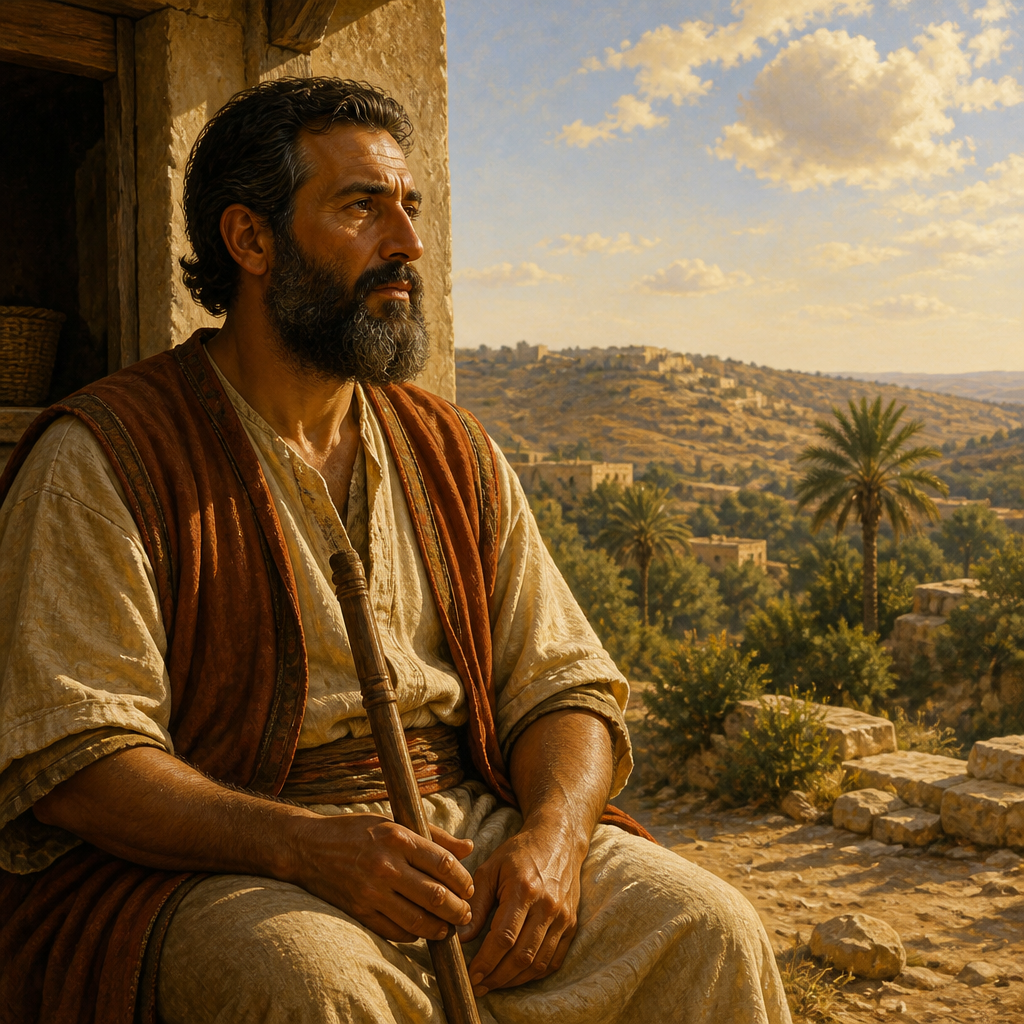
Lappidoth
Husband
Sisera
Enemy general defeated by her strategy
Categories
Mentions by Book
- Judges9
Family & Relationships
Others Named Deborah
Deborah, Nurse of RebekahGenesis 35:8
The devoted nurse and companion of the matriarch Rebekah, whose death was marked by significant communal mourning under an oak at Bethel.