Deborah, Nurse of Rebekah
The devoted nurse and companion of the matriarch Rebekah, whose death was marked by significant communal mourning under an oak at Bethel.
Deborah, the nurse of Rebekah, is a figure from the Patriarchal Period whose life is captured in a singular but poignant moment in the Book of Genesis. While her specific origins and early life are not detailed in the text, her presence within the household of the patriarchs signifies the important role of domestic attendants and lifelong companions in the early Hebrew family structure.
Her inclusion in the narrative serves as a bridge between the generations of Isaac and Jacob. Although she appears only at the end of her life, the specific details regarding her burial and the naming of her resting place indicate that she was a woman of substantial influence and affection within the family of Jacob.
Background and Family
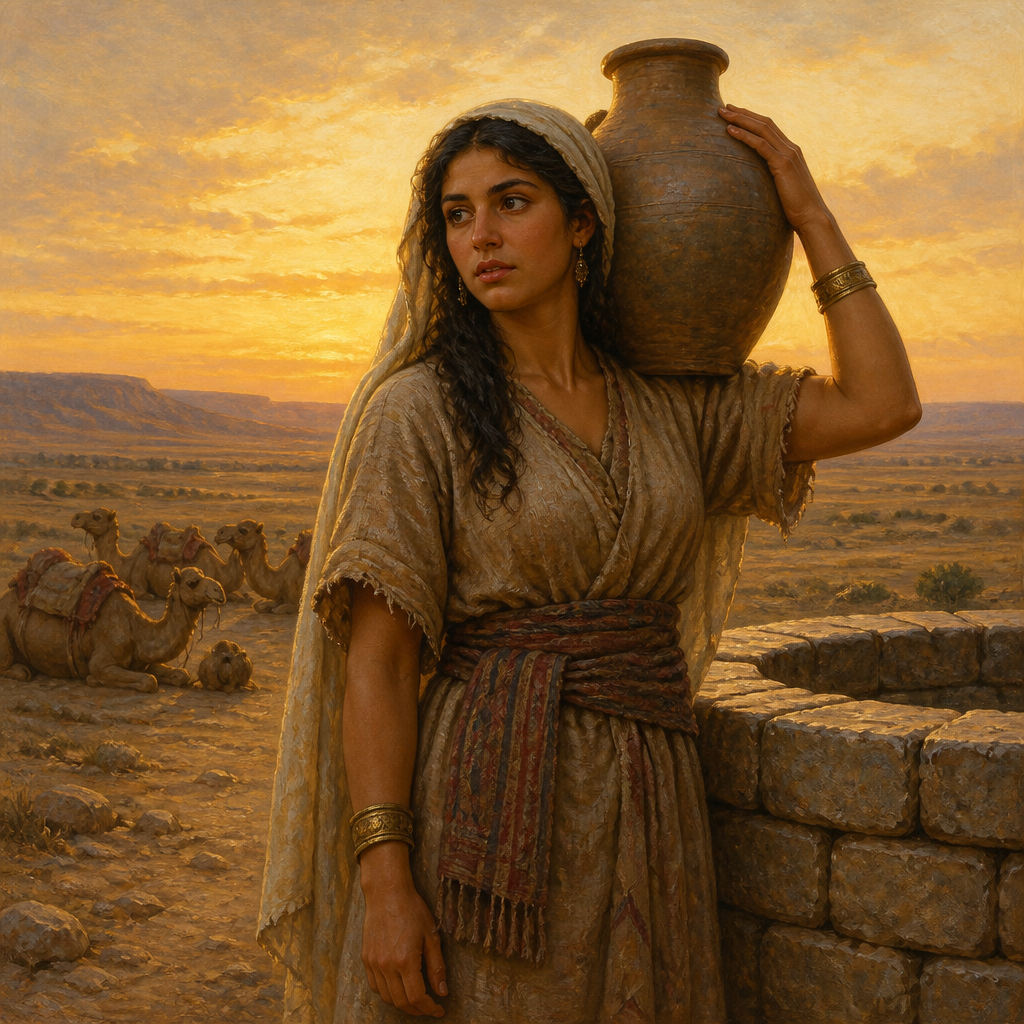
Deborah is introduced in the biblical record as the nurse (meneqet) of Rebekah. In the ancient Near Eastern context, a nurse was often a high-ranking servant or a foster mother who accompanied a bride to her new home. While the text of Genesis 35:8 does not provide her parentage or her own children, her identity is inextricably linked to the household of Isaac and Rebekah. It is widely understood by scholars that she would have traveled with Rebekah from Mesopotamia to Canaan when Rebekah was betrothed to Isaac.
Though her name is not explicitly mentioned in the earlier account of Rebekah’s journey (Genesis 24), she represents the continuity of the family’s history. Her presence in Jacob’s camp decades after the death of Rebekah suggests she remained a vital part of the patriarchal entourage, perhaps serving as a living link to Jacob’s mother during his return to the land of his father.
Major Life Events
The entirety of Deborah’s recorded biography centers on her death and burial. The biblical account places this event after Jacob’s departure from Shechem and his arrival at Bethel, a site of great spiritual significance for the patriarch.
Now Deborah, Rebekah’s nurse, died and was buried under the oak below Bethel. So Jacob named it Allon-bachuth. (Genesis 35:8)
This event occurred at a time of transition for Jacob’s family. They had just purged foreign idols from their midst and reaffirmed their covenant with God. The death of Deborah appears to have been a moment of profound communal grief. The location of her burial, beneath an oak tree (allon) below the hill of Bethel, was deemed significant enough to be named Allon-bachuth, which translates to "Oak of Weeping."
Relationship to Other Biblical Figures
Deborah’s primary relationship was with Rebekah, whom she likely raised and later served throughout Rebekah’s life in Canaan. The fact that she was with Jacob’s company at the time of her death implies a deep bond with the patriarch himself. Having likely been a maternal figure to Jacob in his youth, her presence in his household during his later years suggests a role of honored status. The mourning ritual led by Jacob indicates that she was viewed not merely as a servant, but as a member of the extended family.
Spiritual Significance
The spiritual significance of Deborah, the nurse, lies in the honor bestowed upon her in the sacred text. In a narrative dominated by patriarchs and legal genealogies, the mention of a servant's death and the specific naming of her grave is rare and noteworthy. It highlights the biblical value placed on loyalty and the enduring nature of familial bonds. The "Oak of Weeping" stands as a monument to a life of service and the respect due to those who nurtured the founders of the nation of Israel. Her death marks the end of an era, closing the final chapter of the generation associated with Rebekah as Jacob fully assumes his role as the father of the twelve tribes.
Spiritual Significance
Deborah's significance lies in the rare and tender mention of a domestic servant within the patriarchal narrative. Her burial and the naming of the 'Oak of Weeping' demonstrate that individuals outside the direct bloodline were deeply integrated and valued within the covenant family. She represents the silent, supporting figures who facilitated the lives of the patriarchs and matriarchs.
Theologically, her burial at Bethel—a site of divine encounter—sanctifies her long life of service. The attention given to her passing underscores the humanity of the Genesis accounts, showing that the great patriarchs were moved by the loss of those who had provided them with care and continuity.
Frequently Asked Questions
Who was Deborah in the book of Genesis?
She was the nurse and lifelong companion of Rebekah, the wife of Isaac.
Where was Deborah buried?
She was buried under an oak tree below Bethel.
What does Allon-bachuth mean?
It means 'Oak of Weeping,' named by Jacob to commemorate the mourning for Deborah.
Why was Deborah with Jacob if she was Rebekah's nurse?
The Bible does not explain how she joined Jacob, but it is likely she joined his household after Rebekah's death or during his return to Canaan to serve her former mistress's son.
Connected Figures

Categories
Mentions by Book
- Genesis1
Others Named Deborah
Deborah, Prophetess and Judge of IsraelJudges 4:4
A charismatic prophetess and the only female judge of Israel, who rallied the tribes to defeat the Canaanite forces of Sisera under the Palm of Deborah.