Festus
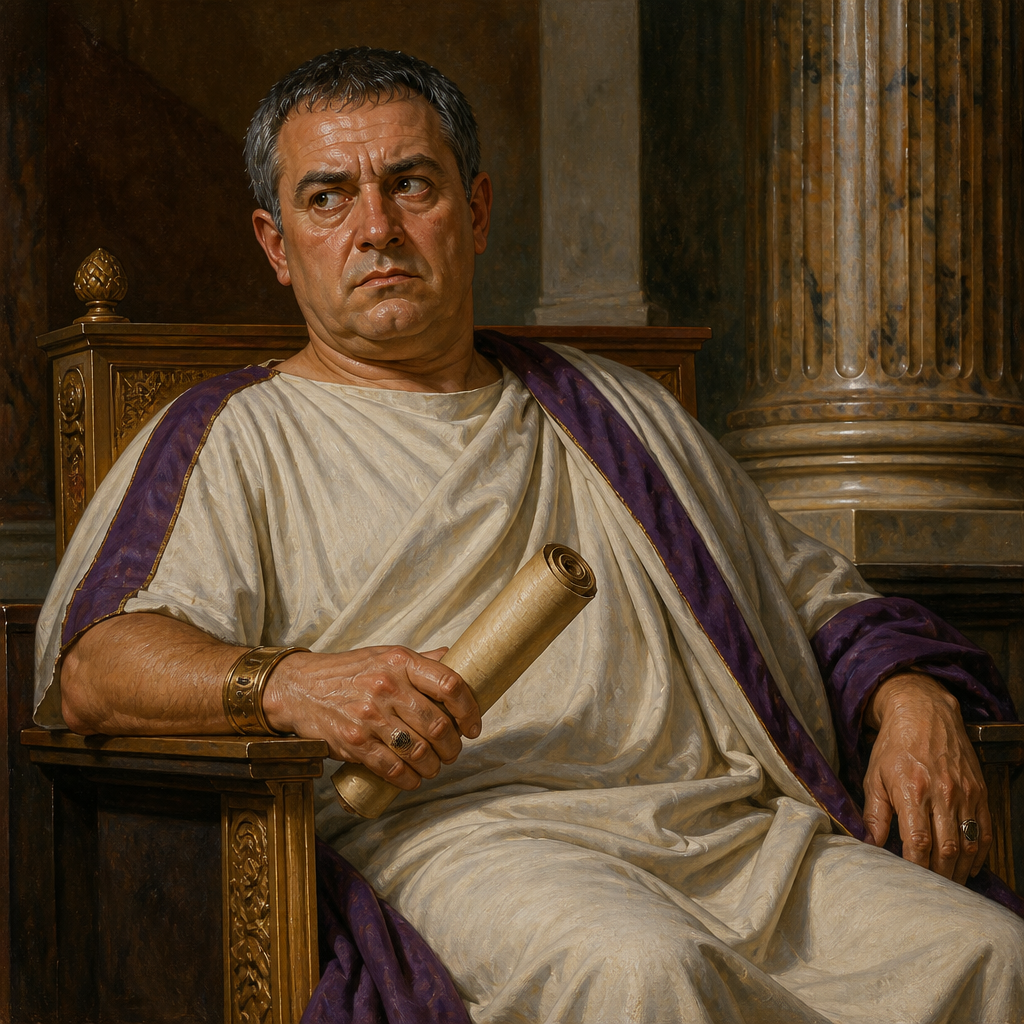
Porcius Festus was the Roman procurator of Judea who succeeded Antonius Felix and presided over the legal appeal of the Apostle Paul, eventually sending him to stand trial before Caesar in Rome.
Porcius Festus served as the Roman procurator of Judea during the mid-1st century AD, succeeding the unpopular and corrupt Antonius Felix. His administration is primarily documented within the Book of Acts, specifically chapters 24 through 26, where he inherits the legal dilemma of the Apostle Paul’s imprisonment. Unlike his predecessor, who had left Paul in prison for two years as a political favor to local Judean leadership, Festus is portrayed as a more decisive, albeit politically pragmatic, administrator who sought to resolve the case quickly upon his arrival in the province.
Upon taking office, Festus traveled from the administrative capital of Caesarea to Jerusalem, where he was immediately pressured by the high priest and Jewish leaders to transfer Paul to Jerusalem for trial—a plot intended to facilitate an ambush on the road. Festus denied this request, insisting that the trial take place in Caesarea. His tenure is marked by this delicate balancing act: maintaining Roman legal standards while attempting to appease the volatile political factions of Judea, an effort that ultimately led to Paul appealing to the Emperor Nero.
Background and Family
The biblical record identifies this official as Porcius Festus. While secular history provides some context for his family line (the gens Porcia), the New Testament focuses exclusively on his role as the successor to Felix in the province of Judea. His arrival is dated to approximately 58 AD to 60 AD. Acts 24:27 marks the transition of power, noting that Felix, wishing to do the Judeans a favor, left Paul in bonds as a parting gesture, thereby bequeathing a complex legal and religious controversy to Festus.
Major Life Events
Arrival and the Jerusalem Petition
Three days after arriving in the province, Festus traveled to Jerusalem to meet with the local leadership. The Jewish authorities immediately presented their case against Paul, requesting his transfer. Festus demonstrated Roman procedural firmness by refusing to move the prisoner without a proper hearing, inviting the accusers to Caesarea instead (Acts 25:1-5).
The Trial in Caesarea
During the subsequent trial in Caesarea, Festus observed that the charges brought against Paul were not criminal in the Roman sense but rather concerned "certain points of dispute with him about their own religion and about a certain Jesus, who was dead, but whom Paul asserted to be alive" (Acts 25:19). Despite recognizing Paul's innocence regarding Roman law, Festus, "wishing to do the Jews a favor," proposed a trial in Jerusalem. Sensing the danger, Paul invoked his right as a Roman citizen: "I appeal to Caesar!"
Consultation with King Agrippa II
Before Paul could be sent to Rome, King Agrippa II and his sister Bernice arrived in Caesarea to greet the new governor. Festus, admitting he had no specific charges to write to the Emperor (Acts 25:26-27), sought Agrippa's expertise in Jewish law. During Paul's defense before the assembled dignitaries, Festus famously interrupted the apostle’s discourse on the resurrection, shouting that Paul’s "great learning" had driven him to madness (Acts 26:24).
Relationship to Other Biblical Figures
Festus’s primary interaction is with the Apostle Paul, whom he treats with a mix of professional courtesy and intellectual dismissal. He also shares a significant diplomatic dialogue with King Agrippa II. Festus describes Paul to Agrippa as a man left in prison by Felix, showing the continuity of Roman administration. Through his legal ruling, Festus serves as the catalyst that fulfills the divine mandate for Paul to bear witness in Rome.
Spiritual Significance
In the narrative of Acts, Festus represents the secular world’s inability to grasp the spiritual realities of the Gospel. While he is depicted as more just than Felix, he remains spiritually blind, viewing the core of the Christian faith—the resurrection of Jesus—as a mere superstition or a sign of mental instability. His cry of "You are insane, Paul!" serves as a literary foil to Paul’s "words of truth and sobriety," highlighting the tension between Roman rationalism and Christian revelation. Ultimately, Festus is an instrument of God's providence; his political maneuvering and adherence to Roman legal protocol ensure that Paul reaches the heart of the Empire.
Spiritual Significance
Festus is historically significant as the Roman official who validated Paul’s legal right to appeal to Caesar, thereby facilitating the spread of Christianity to the highest levels of Roman society. His character illustrates the intersection of Roman law and the early church, showing that while the state often viewed the Gospel as a domestic religious dispute, it also provided the legal framework that protected the apostles and allowed for the fulfillment of Christ's prophecy that His followers would stand before governors and kings.
Furthermore, Festus's reaction to Paul's testimony serves as a paradigm for the 'enlightened' pagan response to the Gospel. By labeling Paul's faith as 'madness,' he represents the worldly wisdom that considers the message of the cross to be foolishness, yet his inability to find a criminal charge against Paul reinforces the New Testament theme of the innocence of the early Christians before civil authorities.
Frequently Asked Questions
Why did Festus send Paul to Rome?
Festus sent Paul to Rome because Paul invoked his right as a Roman citizen to appeal to Caesar (Nero) after Festus suggested moving his trial to Jerusalem to please the local Jewish leadership.
Did Festus believe Paul was guilty of a crime?
No. Festus admitted to King Agrippa that the accusations against Paul were related to religious disputes and that Paul had done nothing worthy of death under Roman law.
How did Festus describe Paul's preaching?
Festus interrupted Paul's defense, exclaiming in a loud voice that Paul's great learning was driving him to madness or insanity.
Who succeeded Felix as governor of Judea?
Porcius Festus succeeded Antonius Felix as the Roman procurator of Judea, as recorded in Acts 24:27.
Who did Festus consult regarding Paul's case?
Festus consulted with his council and later with King Agrippa II and Bernice to help formulate the charges against Paul for the Emperor.
Connected Figures

Paul the Apostle
Prisoner whose case he adjudicated

Herod Agrippa II
Diplomatic guest and consultant
Felix
Predecessor in office
Categories
Mentions by Book
- Acts13