Felix
A Roman governor of Judea who presided over the legal proceedings against the Apostle Paul in Caesarea during the mid-1st century AD.
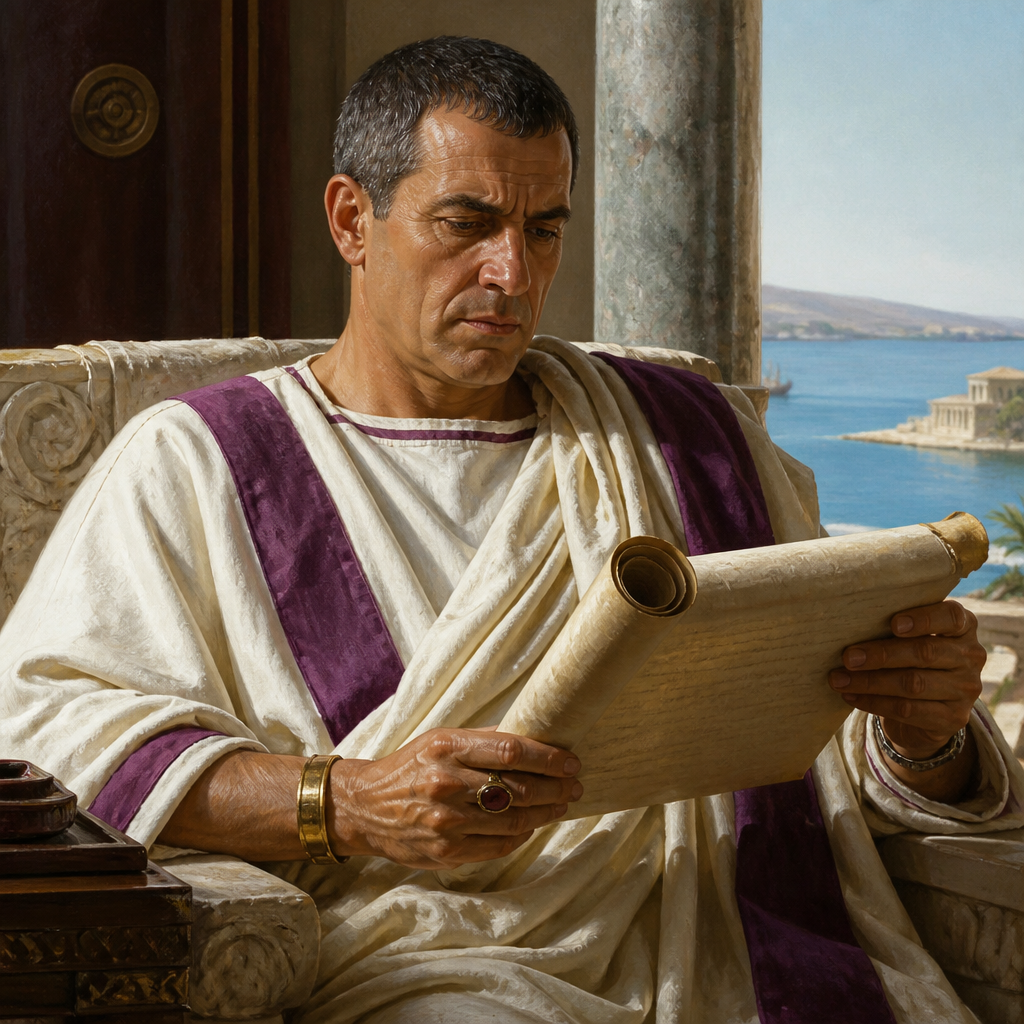
Antonius Felix was the Roman procurator of Judea from approximately 52 AD to 58 AD. He is primarily known in the biblical record for his involvement in the legal case of the Apostle Paul, who was brought before him after a riot in Jerusalem. The Book of Acts presents Felix as a ruler who was well-acquainted with the religious landscape of his province, specifically the burgeoning Christian movement known as 'the Way.'
Despite his position of authority, the biblical narrative depicts Felix as a man deeply conflicted by the message of the Gospel. While he treated Paul with a degree of leniency compared to the Jewish authorities, his motivations were often transactional rather than judicial. His tenure concludes with the transition of power to his successor, leaving Paul in custody as a political maneuver to appease local leaders.
Background and Family
Felix held the title of governor (procurator) of the Roman province of Judea. According to the Book of Acts, he was married to Drusilla, who is identified specifically as a 'Jewess' (Acts 24:24). This domestic arrangement is significant as it likely contributed to Felix being 'well informed about the Way' (Acts 24:22). His marriage to a member of the Herodian dynasty gave him a unique vantage point into the theological and political tensions between traditional Judaism and the early Christian church. The text notes that Drusilla accompanied him during some of his interactions with Paul, suggesting she may have influenced his curiosity or his hesitation regarding the case.
Major Life Events
The Trial of Paul
The central event involving Felix in the New Testament is the trial of the Apostle Paul at Caesarea. After Paul was rescued from a mob in Jerusalem by the commander Claudius Lysias, he was sent under heavy guard to Felix to prevent an assassination plot. Lysias’s letter to the governor introduced the case as a matter involving Jewish law rather than Roman crimes (Acts 23:26-30).
Five days later, the high priest Ananias and a lawyer named Tertullus arrived to present charges against Paul, accusing him of being a 'plague' and a 'ringleader of the sect of the Nazarenes' (Acts 24:5). Felix allowed Paul to defend himself, during which Paul argued his innocence regarding the Temple and the Law. Recognizing the complexity of the case, Felix adjourned the hearing, ostensibly to wait for Lysias, but effectively delaying a verdict.
The Discourse on Faith
While Paul was in custody, Felix sent for him on several occasions to hear him speak about faith in Christ Jesus. The most famous of these encounters occurred when Paul expounded on 'righteousness, self-control, and the coming judgment' (Acts 24:25). The biblical record indicates a visceral reaction from the governor; Felix became 'frightened' (or 'trembled') at these topics. However, rather than acting on this conviction, he dismissed Paul, stating he would call for him again when he found a more convenient time.
Relationship to Other Biblical Figures
Felix’s primary interaction is with the Apostle Paul, whom he treated with a mixture of respect and exploitation. He ordered that Paul be kept under guard but allowed him 'some liberty' and permitted his friends to minister to his needs (Acts 24:23). However, the text explicitly reveals a darker motive: Felix hoped that Paul would offer him a bribe for his release (Acts 24:26).
Felix also maintained a professional relationship with the Roman commander Claudius Lysias and the Jewish leadership in Jerusalem. His eventual successor was Porcius Festus, who inherited the unresolved case of Paul when Felix was recalled from his post.
Spiritual Significance
Felix serves as a cautionary figure in the New Testament regarding the dangers of procrastination and spiritual indecision. Despite having direct access to the greatest missionary of the early church and being clearly moved by the message of judgment and righteousness, Felix prioritized political and financial gain over spiritual response.
His decision to leave Paul in prison for two years—purely to 'do the Jews a favor' upon his departure (Acts 24:27)—highlights a character driven by expediency rather than justice. In the broader narrative of the Book of Acts, Felix represents the Roman state's initial ambivalence toward Christianity: recognizing it as a non-criminal internal Jewish matter while simultaneously using its leaders as pawns in the game of provincial politics.
Spiritual Significance
Theologically, Felix represents the 'almost-persuaded' hearer who allows worldly distractions—such as the desire for bribes or political standing—to stifle the conviction of the Holy Spirit. His trembling in response to Paul's preaching illustrates the power of the Gospel to reach even the highest levels of Roman authority, yet his subsequent procrastination serves as a warning against delaying spiritual decisions. Historically, his presence in Acts provides a firm anchor for the chronology of Paul's life and the transition of the early church into the Roman legal consciousness.
Frequently Asked Questions
Why did Felix leave Paul in prison for two years?
According to Acts 24:27, Felix left Paul in prison for two years because he wanted to do the Jews a favor and he also hoped that Paul would offer him a bribe for his release.
Who was Felix's wife?
Felix was married to Drusilla, who is described in Acts 24:24 as a Jewess.
How did Felix react to Paul's preaching?
When Paul spoke about righteousness, self-control, and the coming judgment, Felix became frightened and dismissed Paul, saying he would call for him when he found the time.
Who succeeded Felix as governor?
Felix was succeeded by Porcius Festus around 58 AD.
Was Felix a Christian?
No. While he was well-informed about 'the Way' and listened to Paul speak, there is no biblical evidence that he ever converted.
Connected Figures

Paul the Apostle
Prisoner whose case he presided over

Drusilla
Spouse
Porcius Festus
Successor as Governor

Claudius Lysias
Subordinate commander who sent Paul to him