Mephibosheth, Son of Jonathan
The grandson of King Saul and son of Jonathan who was crippled in childhood and later restored to royal honor by King David.
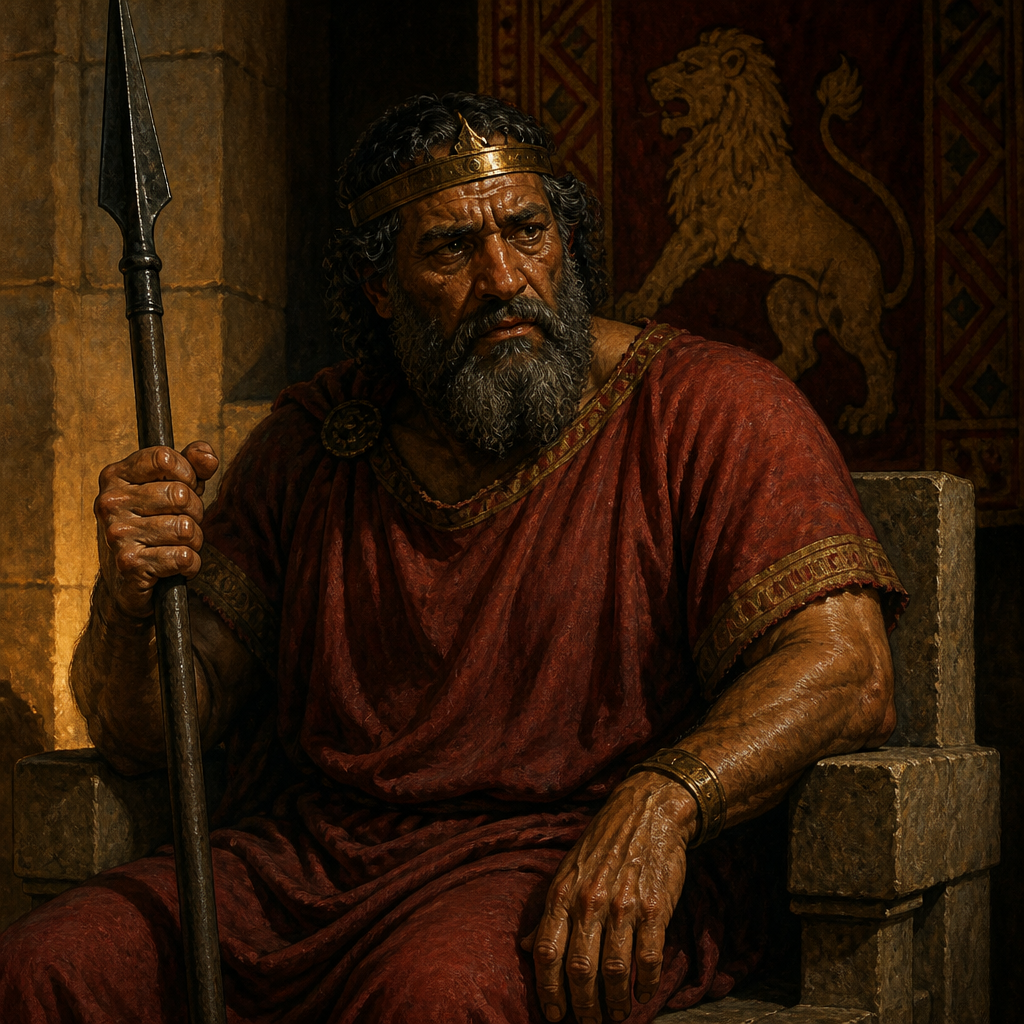
Mephibosheth, also known as Merib-baal, was a member of the royal house of Saul during the era of the United Monarchy in ancient Israel. A member of the tribe of Benjamin, he was the son of Jonathan, the beloved friend of King David. His life was defined by the sudden fall of his dynasty and a physical disability sustained during the chaotic aftermath of the Battle of Mount Gilboa. Despite his potential status as a rival claimant to the throne, he was treated with unexpected kindness by David, reflecting the king's loyalty to a previous covenant.
His narrative, primarily found in 2 Samuel, serves as a significant illustration of grace, loyalty, and political intrigue within the Davidic court. Mephibosheth's story encompasses his childhood injury, his years in hiding at Lo-debar, his restoration to the king's table in Jerusalem, and the complications of his loyalty during the rebellion of Absalom. He remains a pivotal figure for understanding the transition of power between the houses of Saul and David.
Background and Family
Mephibosheth was born into the first royal family of Israel. As the son of Jonathan and the grandson of King Saul, he occupied a high position in the tribe of Benjamin. However, his life took a tragic turn at the age of five. When news arrived from Jezreel that both Saul and Jonathan had been killed in battle against the Philistines, the royal household fled in fear. In the haste of the escape, Mephibosheth's nurse dropped him, resulting in a permanent injury that left him lame in both feet (2 Samuel 4:4).
Following the collapse of Saul's immediate dynasty, Mephibosheth was taken to Lo-debar, where he lived in the house of Machir son of Ammiel. During this period, he married and fathered a son named Micah (also spelled Mica), ensuring the continuation of Jonathan’s lineage. In the genealogical records of 1 Chronicles 8:34 and 9:40, he is referred to as Merib-baal, a name that scholars suggest may have been his original name before it was altered in the text of Samuel to avoid the name of the deity Baal.
Major Life Events
Restoration by David
Years after David had solidified his grip on the United Monarchy, he sought to show "the kindness of God" to any remaining members of Saul’s house for the sake of his covenant with Jonathan. Upon learning of Mephibosheth's existence from a former servant of Saul named Ziba, David summoned him to the palace. Mephibosheth approached the king with great humility, referring to himself as a "dead dog," a term of extreme self-deprecation reflecting his vulnerable social and physical status (2 Samuel 9:8).
David restored to Mephibosheth all the ancestral lands that belonged to Saul and appointed Ziba, along with Ziba's fifteen sons and twenty servants, to farm the land on Mephibosheth's behalf. Most significantly, David granted Mephibosheth a permanent seat at the royal table, treating him "like one of the king’s own sons" (2 Samuel 9:11). Mephibosheth subsequently moved to Jerusalem to reside near the court.
The Rebellion of Absalom
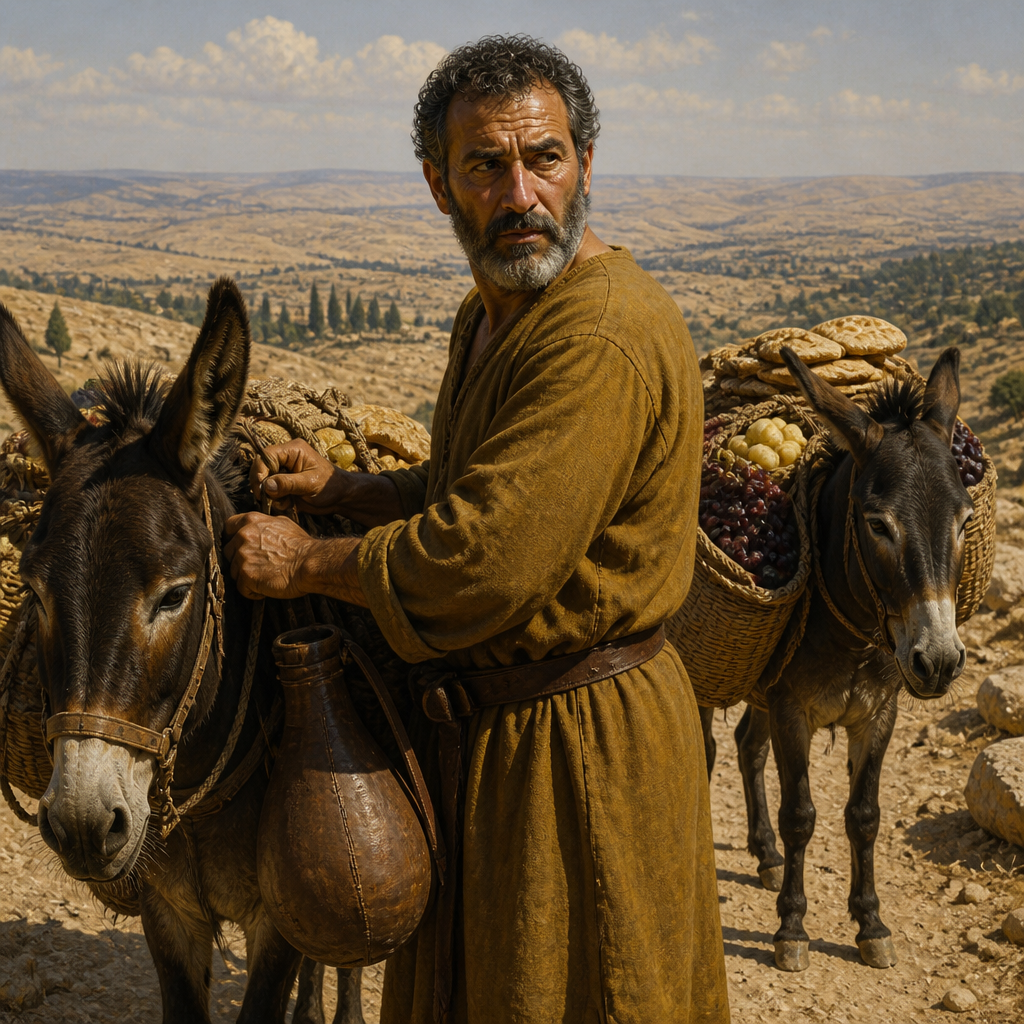
Mephibosheth's loyalty was tested during the revolt of David’s son, Absalom. When David was forced to flee Jerusalem, Ziba met the king with provisions but claimed that Mephibosheth had stayed behind in hopes of reclaiming Saul's kingdom. Relying on this report, David summarily transferred Mephibosheth’s estates to Ziba (2 Samuel 16:1-4).
However, upon David’s victorious return, Mephibosheth met the king, appearing in a state of mourning—unwashed and unkempt—having grieved for David since the day of his flight. He explained that Ziba had deceived him and slandered him to the king. Confronted with conflicting accounts, David ordered the estate to be divided between Mephibosheth and Ziba. Mephibosheth famously responded that Ziba could take it all, expressing that his only concern was the king's safe return (2 Samuel 19:24-30).
Relationship to Other Biblical Figures
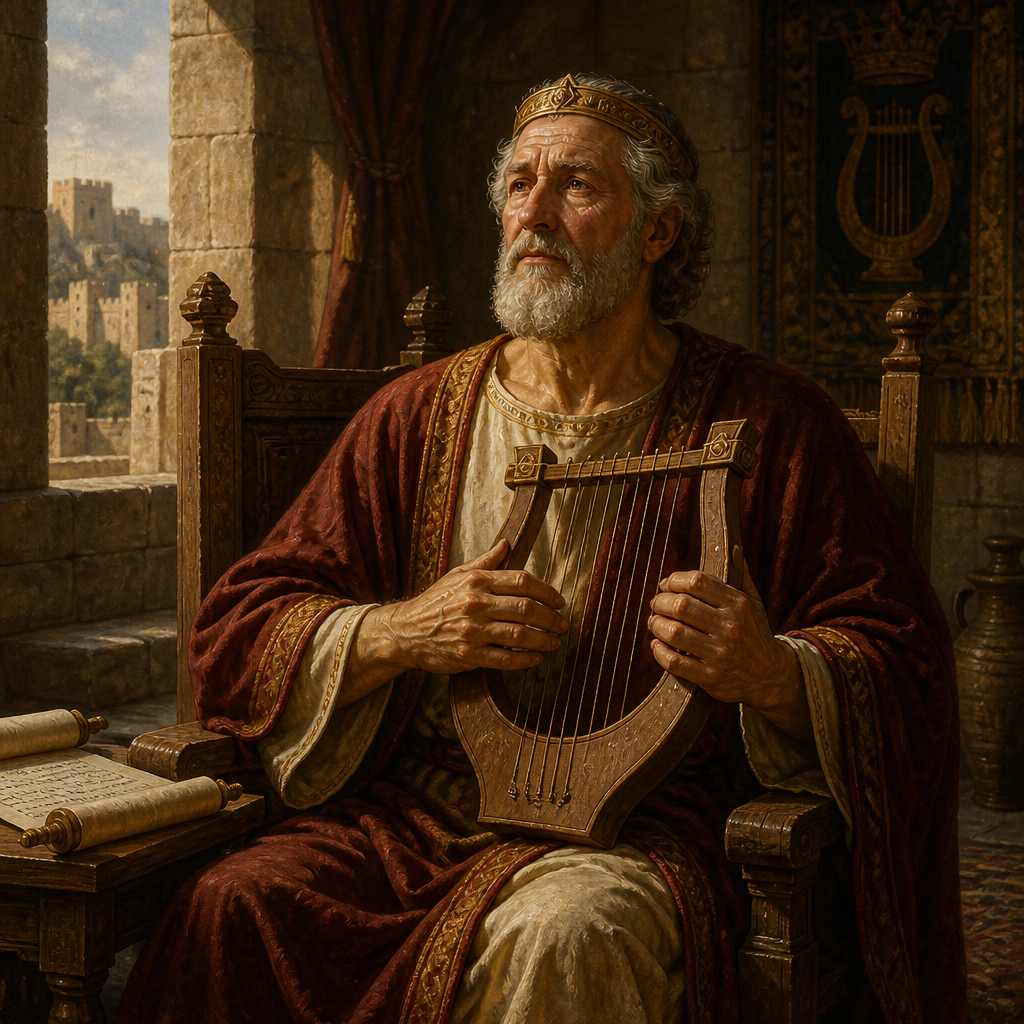
Mephibosheth’s primary relationship was with King David, a bond rooted in the deep friendship between David and Jonathan. This relationship was the catalyst for Mephibosheth’s survival; under normal ancient Near Eastern customs, a new king might execute all potential rivals from the previous dynasty. David’s protection of Mephibosheth was a public fulfillment of his oath to Jonathan.
His relationship with Ziba was fraught with tension. While Ziba initially served as the steward of Mephibosheth’s estate, his later actions suggest an opportunistic attempt to seize the family lands for himself. Finally, Mephibosheth’s role as the father of Micah ensured that the line of Jonathan continued within the tribe of Benjamin, a lineage meticulously preserved in the records of the Chronicler.
Spiritual Significance
The account of Mephibosheth is frequently cited as a profound biblical example of grace and covenant faithfulness. His status as a crippled man from a rejected house who is nevertheless invited to eat at the king's table is often interpreted as a typology of the believer's relationship with God—restored not by personal merit, but because of a covenant made by another.
His story also highlights the complexities of justice and deception in the biblical narrative. The unresolved nature of Ziba’s slander and the subsequent division of the land serves as a reminder of the difficulties David faced in maintaining equity during a time of civil strife. Mephibosheth’s willingness to forgo his inheritance for the sake of the king’s presence underscores a theme of selfless loyalty over material gain.
Spiritual Significance
Mephibosheth represents the intersection of divine grace and human frailty within the history of the United Monarchy. His presence in the royal court served as a living testament to David's integrity and his commitment to the oath he swore to Jonathan. Theologically, his story is often viewed as a portrait of 'hesed' (steadfast love or kindness), demonstrating how David chose mercy over political pragmatism.
Furthermore, Mephibosheth’s narrative provides essential continuity for the tribe of Benjamin. By documenting his life and his son Micah, the biblical text confirms that Jonathan's line survived the catastrophic end of Saul's reign, eventually integrating into the post-exilic community described in Chronicles. His life underscores the theme that God remembers the descendants of the faithful even in the midst of national upheaval.
Frequently Asked Questions
Why was Mephibosheth lame in both feet?
He became lame at the age of five when his nurse, fleeing in haste after the deaths of Saul and Jonathan, accidentally dropped him.
What was Mephibosheth's other name?
In the books of 1 Chronicles, he is referred to as Merib-baal.
How did King David treat Mephibosheth?
David treated him with great honor, restoring his family lands, providing servants to work them, and allowing him to eat at the king's table as one of his own sons.
Did Ziba betray Mephibosheth?
According to Mephibosheth's account in 2 Samuel 19, Ziba lied to King David by claiming Mephibosheth was trying to seize the throne, when in fact Mephibosheth had been mourning for the king.
What happened to Mephibosheth's land at the end of the story?
King David ordered that the land be divided between Mephibosheth and Ziba, though Mephibosheth stated he was willing to let Ziba take all of it since the king had returned safely.
Connected Figures
Categories
Mentions by Book
- 2 Samuel12
- 1 Chronicles2
Family & Relationships
Child
2 Samuel 4:4
Parent
1 Samuel 13:2
Others Named Mephibosheth
Mephibosheth, Son of Saul and Rizpah2 Samuel 21:8
A son of King Saul and his concubine Rizpah who was executed by the Gibeonites during the reign of King David.