Igal, Son of Nathan of Zobah
A member of the elite 'Thirty' warriors in King David's military who hailed from Zobah during the United Monarchy.
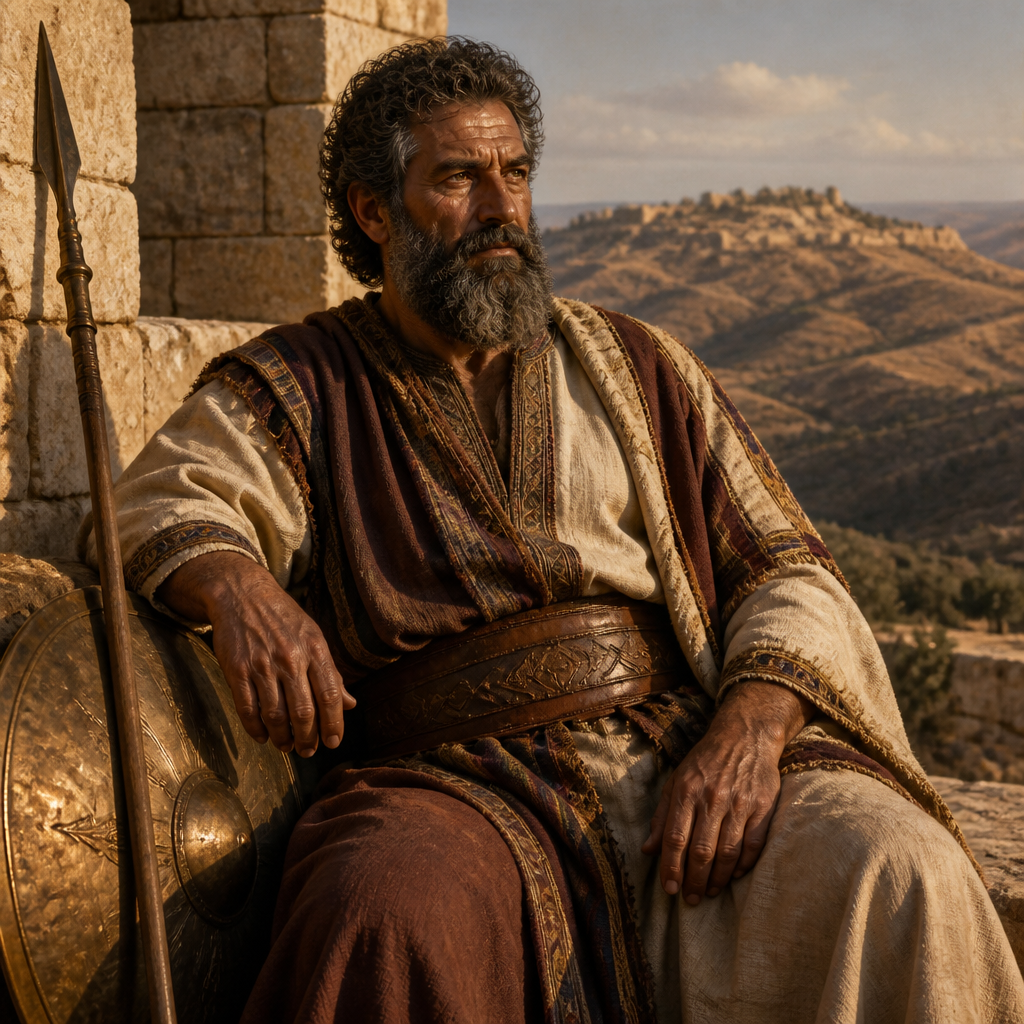
Igal is identified in the biblical record as a distinguished warrior serving under King David during the United Monarchy in the 10th century BC. He is specifically named as the son of Nathan of Zobah. His inclusion in the prestigious list of David’s 'mighty men' (the Gibborim) indicates that he was a soldier of exceptional valor and high standing within the Israelite military hierarchy.
While his background is linked to Zobah—a region often associated with Aramean territory north of Israel—Igal's service was dedicated to the throne of Israel. He was one of the elite combatants known as 'The Thirty,' a group of officers who provided specialized support and leadership during David's extensive military campaigns to secure the borders of the kingdom.
Background and Family
Igal is identified in the biblical text by his patronymic and his place of origin: he is the son of Nathan of Zobah (2 Samuel 23:36). The mention of Zobah is significant, as it refers to a Syrian (Aramean) kingdom that was frequently in conflict with Israel during the early years of the United Monarchy. King Saul had fought against the kings of Zobah (1 Samuel 14:47), and King David later decisively defeated Hadadezer, the king of Zobah, as recorded in 2 Samuel 8.
Whether Igal was a native of Zobah who defected to David’s cause or an Israelite who had settled in that region remains a subject of scholarly discussion. His father, Nathan, is not further detailed in this context, distinguishing him from other figures named Nathan, such as the prophet who served David and Solomon.
Major Life Events
The primary recognition of Igal occurs within the military roster of 2 Samuel 23. This chapter catalogues the 'mighty men' who served David, organized into tiers of prestige. Igal is listed among the elite group known as 'The Thirty.' This was not a strictly numerical designation, as the roster occasionally included more than thirty names, but served as a title for a specialized band of warriors renowned for their physical prowess and loyalty to the king.
Unlike the 'Three' (David’s most senior commanders), specific individual exploits for Igal are not preserved in the surviving text. However, his presence on this list implies he participated in the foundational battles that transitioned Israel from a tribal confederation into a regional power. His inclusion alongside figures like Bani the Gadite suggests a diverse military force drawn from various tribes and even neighboring regions.
Relationship to Other Biblical Figures
Igal’s primary relationship is his professional and loyal bond to King David. As one of the Gibborim, he was part of the inner circle of the military establishment. The text places him in immediate proximity to Bani the Gadite in the list of the Thirty. His father, Nathan of Zobah, provides the genealogical anchor for his identity, though Nathan’s specific role in the wars between Israel and Zobah is not described.
Spiritual Significance
Within the narrative of the United Monarchy, Igal represents the broad, international support that David accrued during his rise to power. His inclusion in the sacred text serves as a testament to the fact that God’s chosen king was supported by men of great strength and varied backgrounds. Igal’s legacy is one of service; though his specific words and individual deeds are not recorded, his name stands as a permanent marker of the courage required to establish the Davidic kingdom.
Spiritual Significance
Igal’s significance lies in his status as one of David’s 'mighty men.' The inclusion of his name in the official records of the United Monarchy underscores the organized and formidable nature of David’s military administration. Theologically, he represents the individuals who labored in the shadow of the King to fulfill the promise of a secure land for Israel.
Furthermore, as a man from Zobah, Igal illustrates how former enemies or foreign territories were integrated into the service of the Davidic throne. His presence in the biblical canon honors the dedication of those who served the kingdom of God through physical protection and military excellence during a pivotal era of redemptive history.
Frequently Asked Questions
Who was Igal’s father?
Igal was the son of Nathan of Zobah, as recorded in 2 Samuel 23:36.
What military group did Igal belong to?
He was a member of 'The Thirty,' an elite group of King David’s mighty men known for their valor.
Where was Zobah located?
Zobah was an Aramean (Syrian) kingdom located north of Israel, which was eventually defeated by King David.
What are Igal's specific deeds in the Bible?
The Bible does not record specific battles or individual acts for Igal; it only notes his name and high rank among David's most elite warriors.
Is Igal, the son of Nathan, the same as the spy sent by Moses?
No. While they share a name, they lived centuries apart and belonged to different tribes and historical eras.
Connected Figures


Categories
Mentions by Book
- 2 Samuel1
Family & Relationships
Parent
2 Samuel 23:36
Others Named Igal
Igal, Spy of the ExodusNumbers 13:7
A representative of the tribe of Issachar who was selected as one of the twelve scouts sent by Moses to explore the land of Canaan.
Igal, Descendant of David1 Chronicles 3:22
Igal was a member of the post-exilic royal line of Judah, identified as a son of Shemaiah and a direct descendant of King David.