Aiah, Father of Rizpah
Aiah was a man of the United Monarchy period whose legacy is defined through the resilience and loyalty of his daughter, Rizpah.
Aiah was a figure living during the transition of power between the house of Saul and the house of David in the United Monarchy. While he does not appear as an active participant in the military or political maneuvers of the era, his name is preserved in the biblical record as a genealogical marker for one of the most poignant figures in the narrative of Israel’s early kingship: Rizpah.
His status within the social hierarchy of Israel is not explicitly defined, but the association of his daughter with the royal household of King Saul suggests he belonged to a family of at least moderate social standing. Aiah’s name serves as a patronymic identifier that appears at critical junctures in the books of Samuel, particularly when the text seeks to validate the identity and nobility of Rizpah during her moments of political and personal crisis.
Background and Family
Aiah lived during the 11th century BC, a time characterized by the establishment of the Israelite monarchy under Saul and the subsequent rise of David. The biblical record does not provide specific details regarding Aiah’s own tribe or birthplace. However, he is consistently identified as the father of Rizpah, who served as a concubine to King Saul, the first king of Israel.
In the ancient Near Eastern context, the selection of a woman to be a royal concubine often implied a connection to a family of some recognition, though not necessarily of the highest nobility. Aiah’s inclusion in the text functions primarily to ground Rizpah in a specific lineage, distinguishing her from other women of the court and providing a formal identification for her descendants.
Major Life Events
There are no recorded actions performed by Aiah himself within the surviving scriptures of the United Monarchy. His presence is entirely felt through the lineage he established. Through his daughter Rizpah, Aiah became the grandfather of two of Saul’s sons, Armoni and Mephibosheth (not to be confused with Jonathan’s son of the same name).
His name appears most prominently in the context of two major political events. First, during the power struggle following Saul's death, a dispute arose between Saul's general Abner and Saul's son Ish-bosheth concerning Rizpah (2 Samuel 3:7). Second, years later, David surrendered two of Aiah’s grandsons to the Gibeonites to atone for Saul’s bloodguilt (2 Samuel 21:8). In both instances, the mention of "Aiah" serves to anchor the identity of the woman at the center of these storms.
Relationship to Other Biblical Figures
Aiah’s primary relationship is that of a father to Rizpah. This relationship is emphasized four times in the Second Book of Samuel, reinforcing the bond between father and daughter as a primary means of identification. Through this connection, Aiah is linked to the household of King Saul.
Additionally, he is indirectly linked to King David. When David finally moved to provide an honorable burial for the remains of Saul and his sons, it was a direct response to the vigil kept by the "daughter of Aiah." Thus, Aiah’s name is recorded in the annals of the kings of Israel through the actions of his daughter, whose devotion eventually moved the heart of the king.
Spiritual Significance
While Aiah is a silent figure, his role in the narrative highlights the biblical importance of lineage and the preservation of names. In the Hebrew tradition, being remembered by name is a sign of lasting legacy. Aiah’s inclusion reminds the reader that even those who do not stand in the spotlight of history are integral to the stories of those who do.
The repeated phrase "Rizpah daughter of Aiah" underscores a sense of dignity. Even when Rizpah was mourning in sackcloth or being treated as a political pawn, the text honors her by citing her father’s name. For the scholar, Aiah represents the foundational family units that existed behind the high drama of the United Monarchy, providing the context for the personal loyalties that shaped the nation.
Spiritual Significance
Aiah’s significance lies in his role as the father of Rizpah, whose extraordinary vigil over her sons' bodies became a symbol of maternal devotion and justice. By identifying Rizpah as the daughter of Aiah, the biblical text grants her a specific social identity and legal standing, ensuring that her actions are recorded not as those of an anonymous woman, but as a member of a recognized Israelite family.
Frequently Asked Questions
Who was Aiah's most famous relative?
His daughter, Rizpah, who was a concubine to King Saul and is famous for her long vigil over the bodies of her executed sons.
What tribe did Aiah belong to?
The Bible does not specify Aiah's tribe, though his daughter was associated with the house of Saul, who was of the tribe of Benjamin.
In which books of the Bible is Aiah mentioned?
Aiah is mentioned exclusively in the book of 2 Samuel, appearing in chapters 3 and 21.
Did Aiah have any official role in King Saul's court?
The biblical text does not assign Aiah an official title or role; he is only identified through his relationship to his daughter.
Connected Figures
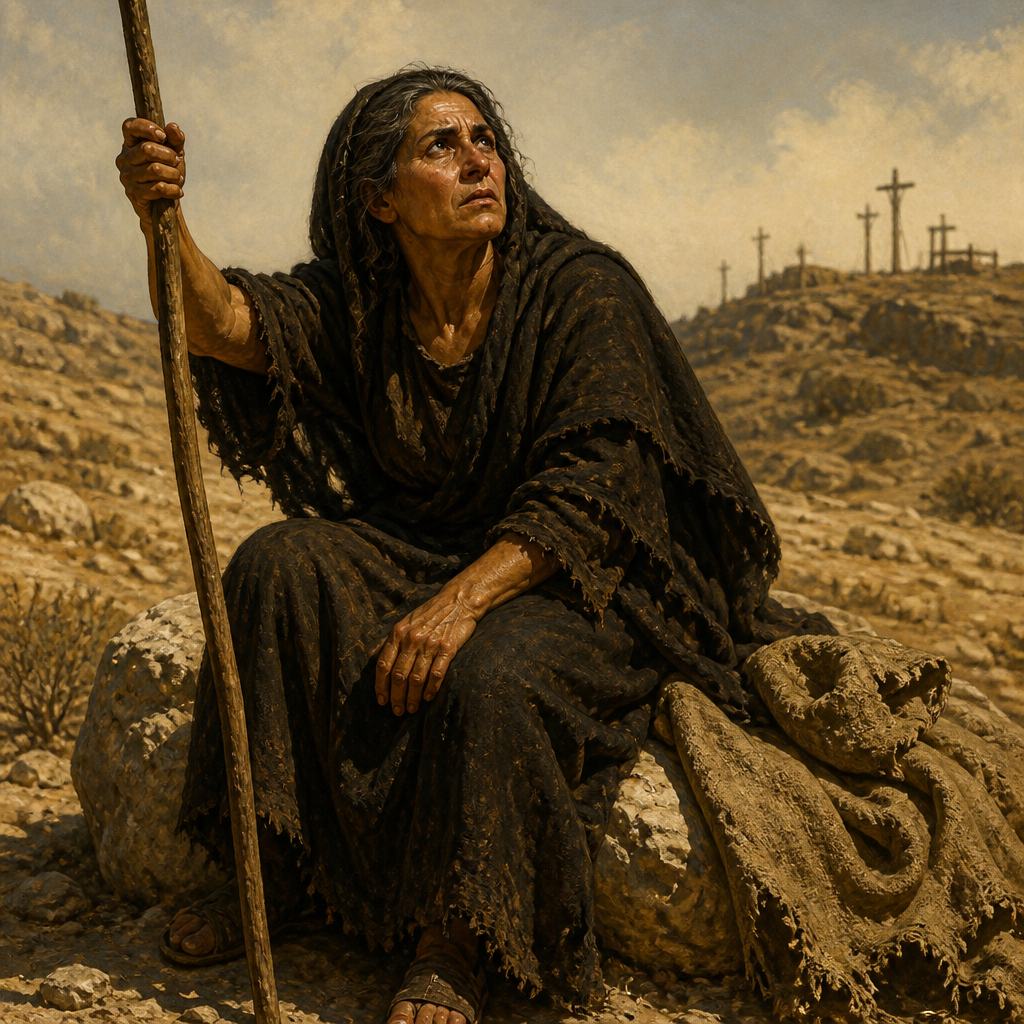
Rizpah
Daughter

Saul
Son-in-law (via concubinage)

Armoni
Grandson
Mephibosheth
Grandson (son of Saul and Rizpah)
Categories
Mentions by Book
- 2 Samuel4
Family & Relationships
Child
2 Samuel 3:7
Others Named Aiah
Aiah, Son of ZibeonGenesis 36:24
Aiah was a Horite nobleman of the land of Edom, identified as the son of Zibeon and a member of the ancestral line of Seir the Horite.