Aiah, Son of Zibeon
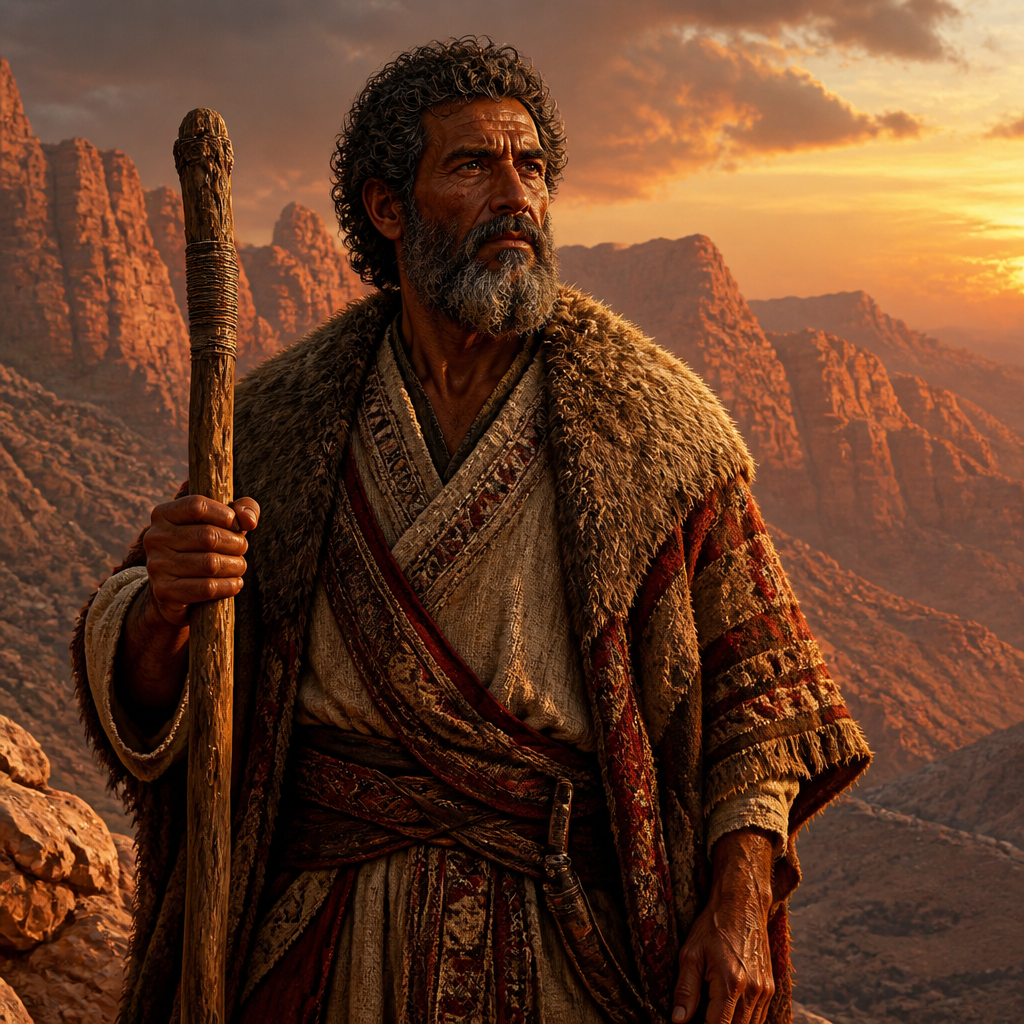
Aiah was a Horite nobleman of the land of Edom, identified as the son of Zibeon and a member of the ancestral line of Seir the Horite.
Aiah appears in the biblical record as a figure of genealogical importance within the narrative of the early development of Edom. As a son of Zibeon, he was a member of the Horite clan that inhabited the rugged region of Mount Seir before and during the rise of the descendants of Esau. His inclusion in the sacred text serves to establish the complex ethnic and social landscape of the Transjordan region during the Patriarchal Period.
While the biblical record regarding Aiah is brief, his placement within the lists of Genesis and 1 Chronicles identifies him as a man of status among his people. He represents a bridge between the ancient Horite inhabitants and the emerging nation of Edom. His life is contextualized by the activities of his immediate family, particularly his father Zibeon and his brother Anah, who were instrumental in the early history of the Seir region.
Background and Family
Aiah was born into the clan of Zibeon, a sub-group of the Horites who lived in the territory of Seir. The Horites are described in the Old Testament as the original inhabitants of the land of Edom before being largely supplanted or assimilated by the descendants of Esau. According to the genealogy provided in Genesis 36:24, Aiah was the son of Zibeon and the brother of Anah. His grandfather was Seir the Horite, the eponymous ancestor of the region.
This familial structure indicates that Aiah belonged to a lineage of considerable local influence. The Horites were organized into clans led by chiefs (or "dukes"), and Aiah’s immediate relatives are listed among the prominent leaders of their time. The biblical text carefully preserves these names to provide a historical backdrop for the later interactions between the Israelites and the Edomites.
Major Life Events
The scriptural record does not provide specific details regarding the personal deeds or major life events of Aiah himself. His significance is primarily tied to his presence in the administrative and genealogical records of the Pentateuch and the post-exilic histories. However, the mention of his brother, Anah, provides a glimpse into the environment in which Aiah lived. Genesis 36:24 notes that while pasturing Zibeon’s donkeys, Anah discovered hot springs in the wilderness. This detail suggests that Aiah’s family was involved in pastoralism and the exploration of the harsh, volcanic terrain of the Seir region.
As a son of Zibeon, Aiah would have participated in the nomadic or semi-nomadic lifestyle typical of the Horite elite. His existence is confirmed in two separate biblical accounts, separated by centuries of tradition, highlighting the enduring importance of his lineage to the chroniclers of Israel’s history.
Relationship to Other Biblical Figures
Aiah’s primary relationships are defined by his lineage. He is most closely associated with his father, Zibeon the Hivite (or Horite), and his brother Anah. Through his family, he is linked to the wider narrative of Esau’s expansion. One of Esau’s wives, Oholibamah, was the daughter of Anah and granddaughter of Zibeon, meaning Aiah was the grand-uncle of one of the matriarchs of the Edomite nation. This connection demonstrates how the Horite nobility, of which Aiah was a part, eventually intermarried with the house of Isaac through Esau.
Spiritual Significance
While Aiah is not presented as a spiritual leader or a recipient of divine revelation, his inclusion in the Bible underscores the theological theme of God’s sovereignty over the nations. By detailing the lineages of non-Israelite peoples like the Horites and Edomites, the biblical authors affirm that the history of all peoples—not just Israel—is under divine observation and order. Aiah represents the "other" nations that bordered Israel, whose histories were inextricably linked to the promises made to Abraham and Isaac. His presence in 1 Chronicles 1:40, a book written to help post-exilic Israelites reclaim their heritage, shows that even the details of neighboring genealogies were considered essential to the complete understanding of God’s redemptive history.
Spiritual Significance
Aiah represents the preservation of non-Israelite history within the Hebrew canon, specifically highlighting the Horite tribes of Seir. His inclusion in both the Torah and the post-exilic records of Chronicles affirms the biblical commitment to historical accuracy regarding the ethnic groups surrounding early Israel. He serves as a genealogical link between the indigenous people of Seir and the later Edomite kingdom.
Frequently Asked Questions
Who was Aiah's father?
Aiah was the son of Zibeon, a descendant of Seir the Horite.
What tribe did Aiah belong to?
Aiah belonged to the Horites, the indigenous inhabitants of the land that became Edom.
Where is Aiah first mentioned in the Bible?
Aiah is first mentioned in Genesis 36:24 in the genealogy of the sons of Seir.
Did Aiah have any famous relatives?
Aiah was the brother of Anah, who is noted for finding hot springs in the wilderness while tending their father's donkeys.
What does the name Aiah mean?
The Hebrew name Aiah (אַיָּה) literally translates to 'Falcon' or 'Kite,' referring to a bird of prey.
Connected Figures


Categories
Mentions by Book
- 1 Chronicles1
- Genesis1
Family & Relationships
Others Named Aiah
Aiah, Father of Rizpah2 Samuel 3:7
Aiah was a man of the United Monarchy period whose legacy is defined through the resilience and loyalty of his daughter, Rizpah.