Terah
A foundational patriarch and the father of Abraham who led his family out of Ur of the Chaldeans toward the land of Canaan.
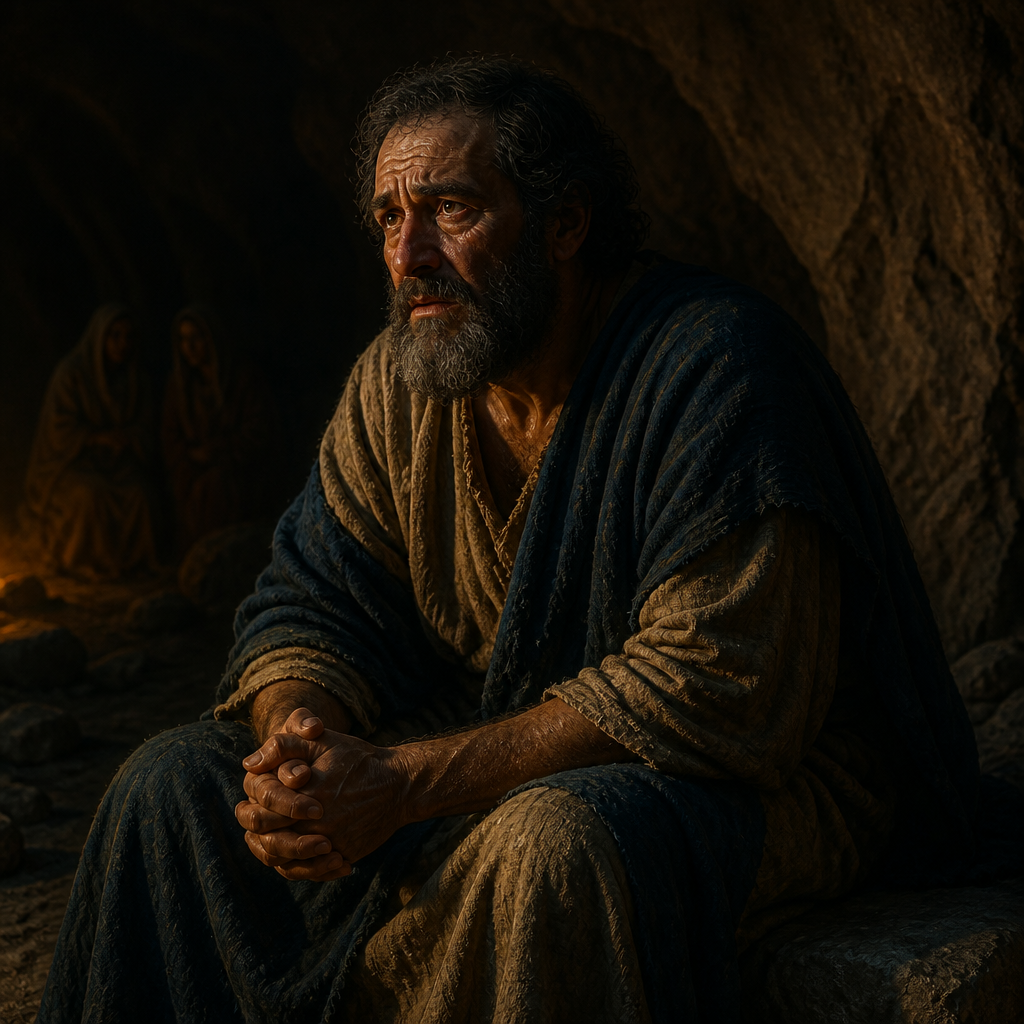
Terah was a significant figure in the early patriarchal period, serving as the biological and genealogical bridge between the post-flood generations of Shem and the pivotal era of the Abrahamic covenant. Born in the lineage of Nahor, he is primarily known for being the father of three sons—Abram (Abraham), Nahor, and Haran—and for initiating the family’s departure from their ancestral home in Ur of the Chaldeans.
Though Terah is often overshadowed by his son Abraham, his life marks the beginning of the journey toward the Promised Land. The biblical narrative records that he set out for Canaan with his household but ultimately settled in the city of Haran, where he remained until his death. His life is characterized by this migration and his complex religious legacy, as later scripture identifies him as one who originally worshiped other gods beyond the Euphrates.
Background and Family
Terah appears in the biblical record within the genealogies of Genesis 11, which trace the descendants of Noah’s son Shem. According to Genesis 11:24, Terah was born when his father, Nahor, was 29 years old. The text notes that Nahor lived for another 119 years after Terah's birth, fathering other sons and daughters. Terah represents the ninth generation from Shem, positioning him as a central link in the lineage that would produce the nation of Israel.
At the age of 70, Terah became the father of three sons: Abram, Nahor, and Haran. While Abram is the most prominent in the biblical narrative, Haran is noted for being the father of Lot. The family originally resided in Ur of the Chaldeans, a location in Mesopotamia. It was here that Haran died during Terah's lifetime, leaving behind his son Lot. Additionally, while not explicitly mentioned in the initial genealogy of Genesis 11, the later narrative in Genesis 20:12 clarifies that Terah was also the father of Sarah (Sarai), who was Abram's half-sister and wife.
Major Life Events
The most significant event recorded in Terah’s life is his migration from Ur. Genesis 11:31 states:
"And Terah took his son Abram, his grandson Lot son of Haran, and his daughter-in-law Sarai the wife of Abram, and they set out from Ur of the Chaldeans for the land of Canaan."
This movement is notable because it precedes the specific call of God to Abram recorded in Genesis 12. Terah acted as the patriarch and leader of this expedition, guiding his immediate family northwest along the Fertile Crescent. However, the journey toward Canaan was interrupted. The group arrived at a place they named Haran (sharing the name of Terah's deceased son) and settled there. The Bible does not provide a specific reason for why Terah stopped short of Canaan, but he remained in this settlement for the duration of his life.
Relationship to Other Biblical Figures
Terah occupies a vital position as the head of the family that would eventually inherit the divine promises. As the father of Abraham, he is the direct ancestor of the Jewish people and, through the Messianic line, Jesus Christ (as confirmed in the genealogy of Luke 3:34).
His relationship with his grandson Lot is also highlighted, as Lot joined Terah’s caravan after the death of his father. Terah’s influence extended to his other son, Nahor, whose descendants (such as Rebekah, Leah, and Rachel) would later marry back into the line of Abraham and Isaac, maintaining the family’s presence in the region of Haran long after Terah’s death.
Spiritual Significance
The spiritual legacy of Terah is nuanced. While he was the father of the "Father of Faith," Joshua 24:2 provides a critical detail about Terah’s own religious practice:
"And Joshua said to all the people, 'This is what the LORD, the God of Israel, says: “Long ago your fathers, including Terah the father of Abraham and Nahor, lived beyond the Euphrates and worshiped other gods.”'"
This revelation indicates that Terah was originally a practitioner of the polytheism prevalent in Mesopotamia. Consequently, the call of his son Abram to leave his "father’s house" (Genesis 12:1) represents a significant break from the idolatrous traditions of Terah’s generation. Terah’s life ended in Haran at the age of 205. His death served as a chronological marker, after which Abram continued the journey to Canaan in full obedience to God's command. Thus, Terah is viewed as a transitional figure—one who began the journey out of the pagan east but did not personally enter the land of promise.
Spiritual Significance
Terah is theologically significant as the genealogical bridge between the post-diluvian world and the era of the Covenant. He represents the starting point of the movement away from Mesopotamian polytheism toward the monotheism established through his son, Abraham. His inclusion in the genealogies of 1 Chronicles and the Gospel of Luke reinforces his status as a foundational ancestor in the Messianic line.
His life also serves as a study in partial obedience or transitional leadership. While he successfully led his family out of Ur, he died in Haran without reaching the ultimate destination of Canaan. In the broader biblical narrative, his death marks the end of the old patriarchal order in Mesopotamia, clearing the way for Abraham to become the new head of the family under a direct mandate from God.
Frequently Asked Questions
Where was Terah originally from?
Terah was originally from Ur of the Chaldeans, located in ancient Mesopotamia.
How old was Terah when he died?
Terah lived for a total of 205 years and died in the city of Haran.
Did Terah worship the God of Israel?
According to Joshua 24:2, Terah and his ancestors lived beyond the Euphrates and worshiped other gods, indicating he was originally a polytheist.
Who were Terah's children?
Terah is recorded as the father of Abram (Abraham), Nahor, Haran, and Sarah (Sarai).
Why did Terah leave Ur?
The Bible states that Terah took his family and set out from Ur for the land of Canaan, though it does not explicitly state his personal motivation other than the geographic goal.
Connected Figures

Categories
Mentions by Book
- Genesis7
- 1 Chronicles1
- Joshua1
- Luke1
Family & Relationships
Child
Genesis 11:24
Child
Genesis 11:24
Child
Genesis 11:24
Child
Genesis 11:24
Parent
Genesis 11:22