Peleg
A descendant of Shem and a key link in the messianic lineage, most famous for the division of the earth that occurred during his lifetime.
Peleg is a significant figure within the genealogical records of the Old Testament, specifically identified as an early patriarch in the line of Shem following the Great Flood. He is the son of Eber and the brother of Joktan. His name, which in Hebrew denotes 'division,' serves as a chronological marker for a transformative event in early human history. The biblical text notes that 'in his days the earth was divided,' a statement that has invited various interpretations regarding the physical or social state of the world during the post-flood expansion.
Chronologically, Peleg represents the fourth generation after Shem, the son of Noah. His placement in the genealogies of Genesis and 1 Chronicles establishes him as a direct ancestor of Abraham and, consequently, a forebear of the nation of Israel and the Davidic line. Although his personal biography is sparse in terms of narrative action, his longevity and parental role are documented with precision, reflecting the transitioning lifespans of the patriarchal era.
Background and Family
Peleg appears within the 'Table of Nations' and the subsequent detailed genealogies of the book of Genesis. He was born to Eber when his father was 34 years old (Genesis 11:16). Peleg was part of a lineage that preserved the heritage of the Semites, the descendants of Noah's son Shem. He was the brother of Joktan, whose descendants are listed as populating various regions of the Arabian Peninsula. Unlike the expansive list of Joktan’s offspring, the biblical record focuses specifically on Peleg’s role as the progenitor of the line leading toward the Hebrews.
At the age of 30, Peleg fathered Reu. Following the birth of Reu, the biblical text records that Peleg lived another 209 years, during which time he fathered other unnamed sons and daughters. He died at the age of 239. His lifespan marks a continuing trend of declining longevity in the post-flood world; while his father Eber lived to be 464, Peleg’s life was significantly shorter, a trend that continued with his son Reu.
Major Life Events
The defining characteristic of Peleg’s life, as noted in both Genesis 10:25 and 1 Chronicles 1:19, is the specific timing of his birth or life: "Two sons were born to Eber: One was named Peleg, because in his days the earth was divided." This cryptic reference is the only descriptive detail provided about the era in which he lived.
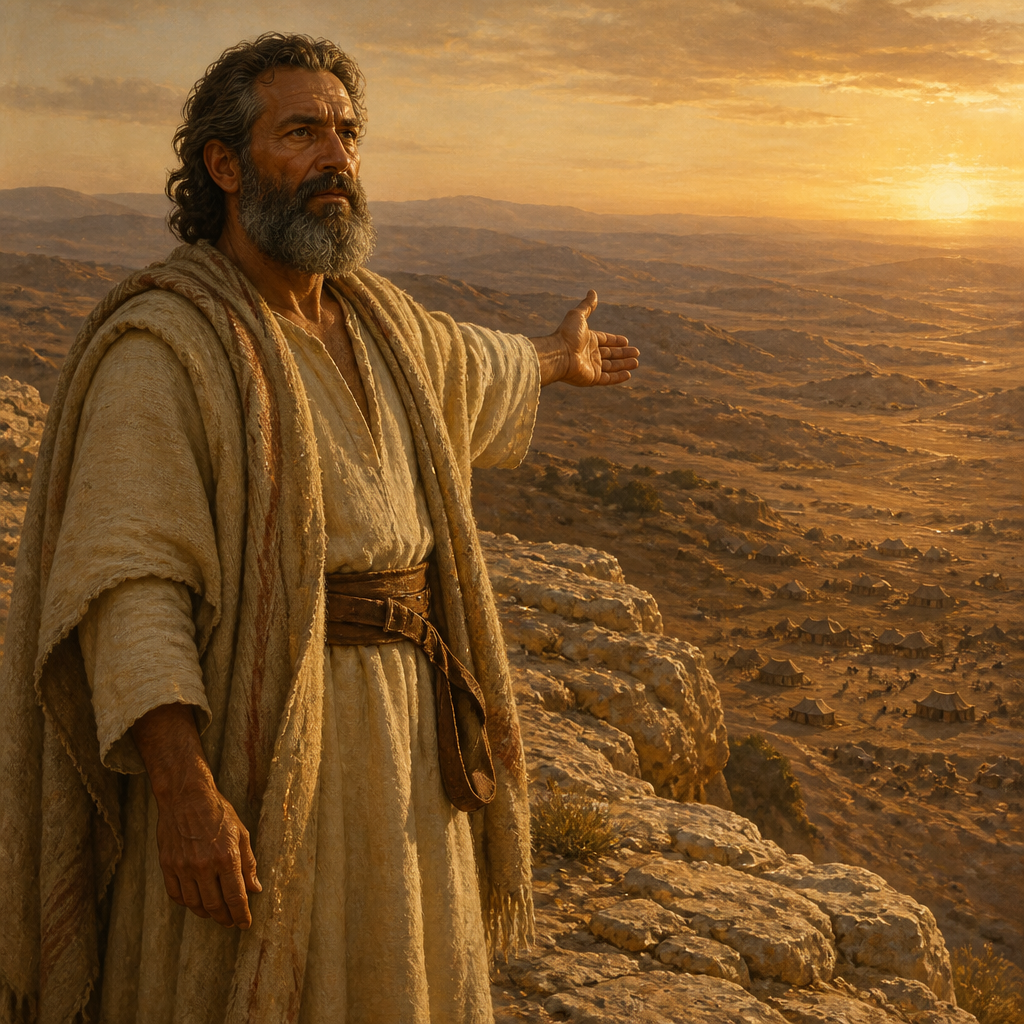
Scholars and theologians have debated the nature of this "division" for centuries. One primary interpretation is that it refers to the linguistic and geographic dispersion of humanity following the failure of the Tower of Babel (Genesis 11:1–9). In this view, the "division" is the fracturing of the single human language into many, leading to the scattering of tribes across the globe. Another interpretation, though less common in traditional biblical scholarship and more associated with modern geological speculation, suggests a physical parting of landmasses. However, the context of the Table of Nations strongly supports a sociocultural and linguistic division of the human population as they fulfilled the mandate to fill the earth.
Relationship to Other Biblical Figures
Peleg occupies a crucial position in the biblical "bridge" between the immediate post-flood world and the call of Abraham. As the son of Eber, he is a direct descendant of Shelah, Arphaxad, and Shem. His brother, Joktan, represents a branch of the family that moved eastward, while Peleg’s line—through his son Reu, grandson Serug, and great-grandson Nahor—led directly to Terah, the father of Abraham.
In the New Testament, Peleg (referred to as Phalec in some Greek translations) is explicitly included in the genealogy of Jesus Christ recorded in the Gospel of Luke (Luke 3:35). This inclusion underscores his importance not just as a historical figure, but as a legal and biological link in the messianic promise. By appearing in the Lukan genealogy, Peleg is affirmed as part of the chosen line that God preserved from the time of Adam through the Flood and into the establishment of the Covenant.
Spiritual Significance
While Peleg himself is not depicted performing miracles or delivering prophecies, his name and life serve as a memorial to divine sovereignty over human history. The naming of Peleg indicates that the people of his time were keenly aware of the shifts occurring in the world’s order. If the division refers to the Babel event, Peleg stands as a witness to the consequences of human pride and the subsequent redirection of history by God.
Furthermore, Peleg’s life illustrates the faithfulness of God in maintaining a specific lineage. Despite the chaos of the dispersion at Babel and the cultural fracturing that defined his era, the genealogical record remains unbroken. Peleg’s inclusion in the sacred text ensures that the transition from the general history of mankind to the specific history of the people of Israel is documented and grounded in a historical timeline.
Spiritual Significance
Peleg serves as a vital genealogical link between the sons of Noah and the patriarch Abraham. His primary significance lies in his name, which commemorates a pivotal moment in human history—the 'division of the earth.' Whether this division refers to the linguistic scattering at the Tower of Babel or a geographic distribution of tribes, it marks the end of the unified post-flood civilization and the beginning of the era of distinct nations.
In a theological context, Peleg's inclusion in the genealogy of Jesus in Luke 3:35 affirms his role in the redemptive history of humanity. He represents the survival and continuation of the godly line during a period of massive global transition. His life reflects the decreasing human lifespan after the flood, yet his 239 years were sufficient to father the next generation of the line that would eventually produce the Savior.
Frequently Asked Questions
What does the name 'Peleg' mean?
The name Peleg comes from the Hebrew word 'palag,' which means 'division' or 'stream.' The Bible explicitly states he was named this because the earth was divided during his lifetime.
What happened during the 'division' mentioned in Peleg's day?
Most biblical scholars believe this refers to the division of languages and the scattering of people at the Tower of Babel, described in Genesis 11. It signifies the transition from one unified group to many distinct nations and tribes.
How long did Peleg live?
According to Genesis 11:18–19, Peleg lived to be 239 years old. He fathered his son Reu at age 30 and lived for another 209 years afterward.
Is Peleg related to Abraham?
Yes, Peleg is the great-great-great-great-grandfather of Abraham. He is a direct ancestor in the line of Shem that leads to the Hebrew patriarchs.
Where is Peleg mentioned in the New Testament?
Peleg is mentioned in Luke 3:35 (often rendered as 'Phalec' in older translations) as part of the genealogy of Jesus Christ, tracing the lineage back to Adam.
Connected Figures
Categories
Mentions by Book
- Genesis5
- 1 Chronicles2
- Luke1
Family & Relationships
Child
Genesis 10:25
Sibling
Genesis 10:25
Parent
Genesis 10:21
Sibling
Genesis 10:25