Shechem, Son of Hamor
A Hivite prince and son of Hamor whose violation of Dinah led to a violent conflict between his city and the sons of Jacob.
Shechem was a prominent Hivite figure during the Patriarchal Period, identified as the son of Hamor. As a member of the local nobility in the land of Canaan, he held the title of 'prince of the region.' His life and death are central to a pivotal and tragic narrative in the Book of Genesis, which details the first major violent conflict between the family of Jacob and the indigenous inhabitants of Canaan. Shechem is primarily remembered for his encounter with Dinah, the daughter of Jacob and Leah, an event that sparked a sequence of negotiation, deception, and eventual massacre.
Historically, Shechem represents the complexities of early intercultural relations in the Levant. While he sought to integrate his house with the burgeoning Israelite tribe through marriage and economic alliance, his initial actions created an irreparable breach. His willingness to undergo physical rites and persuade his fellow citizens to do the same demonstrates his influence within his community, yet his story concludes with the total destruction of his household and city at the hands of Simeon and Levi.
Background and Family
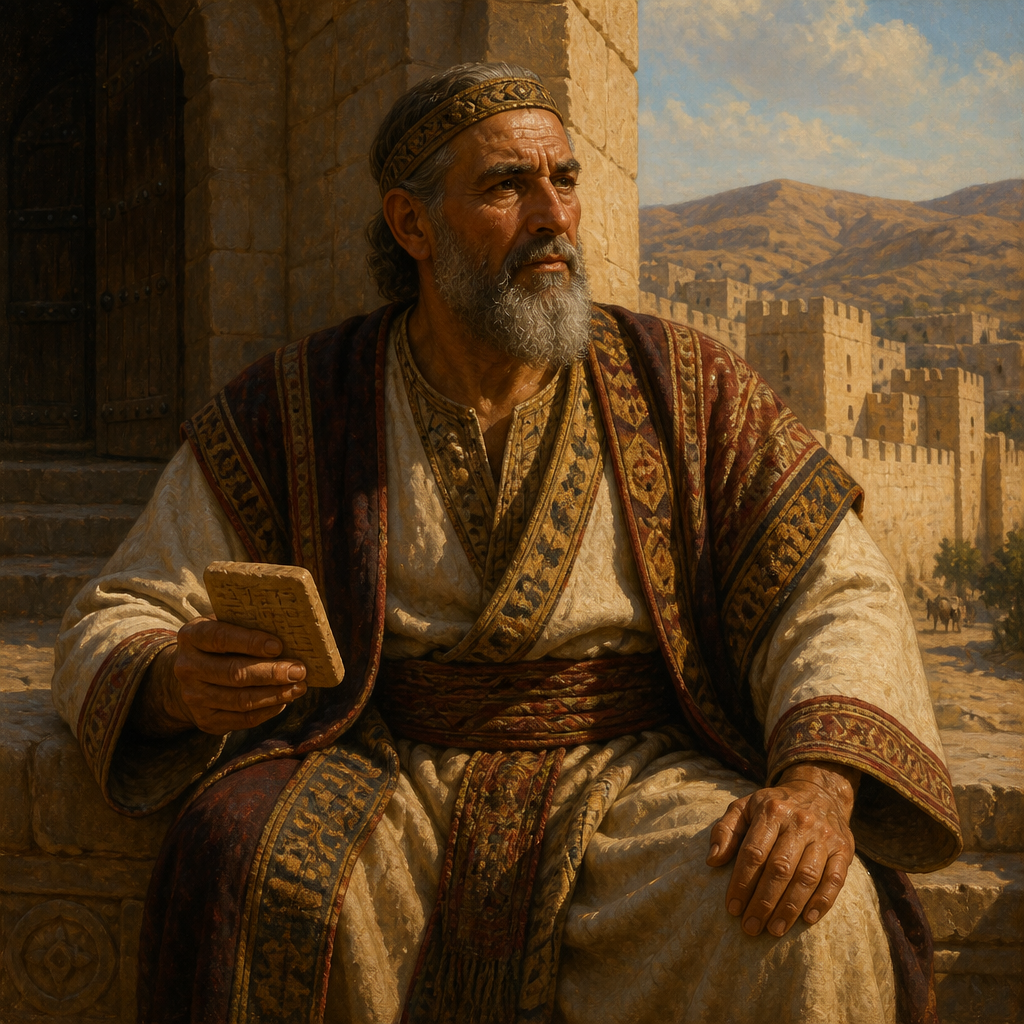
Shechem was a Hivite, a group identified in the Table of Nations as descendants of Canaan. His father, Hamor, was a man of significant stature, often referred to as the leader or 'father' of the city that bore the same name as his son. This overlapping of the personal name Shechem with the geographical location suggests that the family was the founding or ruling dynasty of the area. The Hivites were one of the various ethnic groups inhabiting the land before the Israelite conquest, and at the time of the Patriarchs, they functioned as a localized city-state.
Shechem is described as being 'more honored than all the household of his father' (Genesis 34:19), indicating he was the preferred heir or a particularly charismatic leader among his kin. His family appears to have been wealthy and open to commerce, as evidenced by Hamor’s willingness to sell land to Jacob and his desire to 'trade and acquire property' alongside the Hebrews.
Major Life Events
The Encounter with Dinah
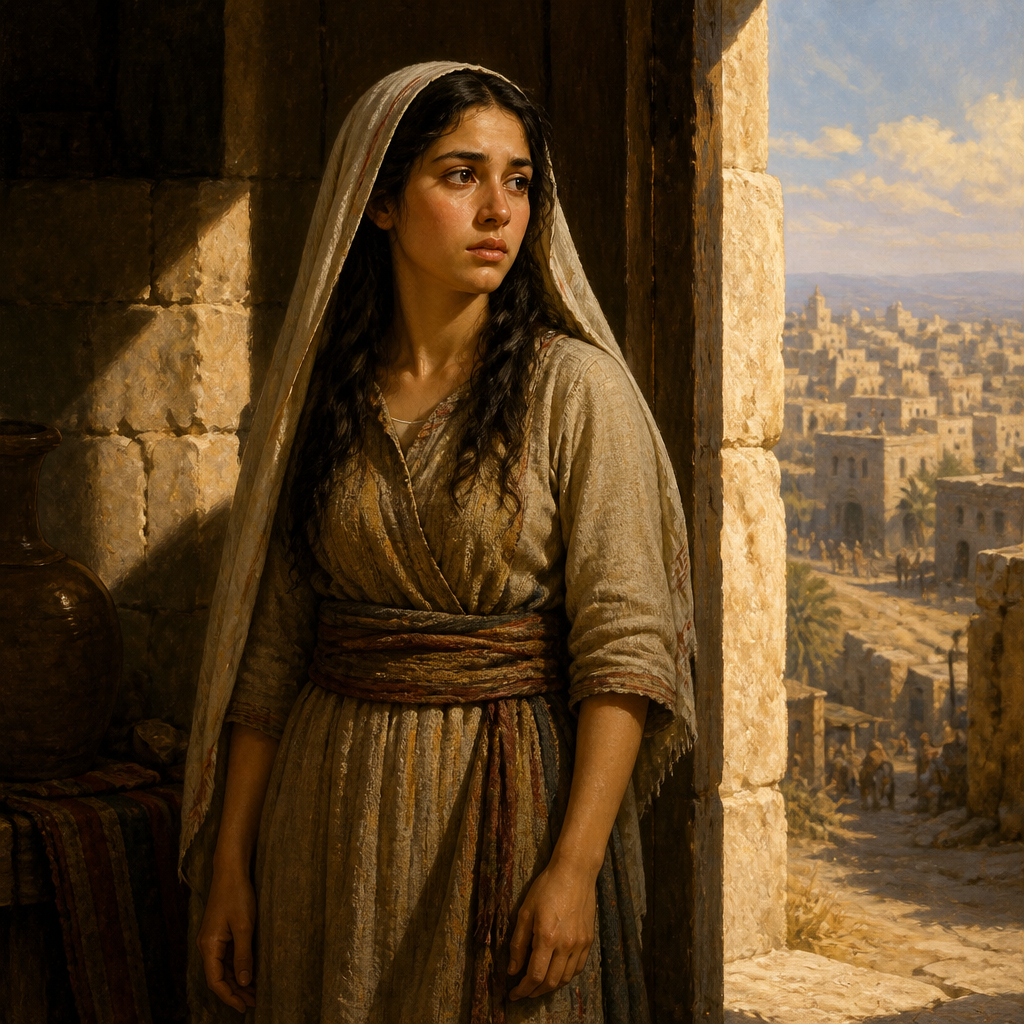
The biblical narrative involving Shechem begins in Genesis 34. When Jacob settled near the city of Shechem, Dinah went out to visit the women of the land. Shechem, seeing her, took her by force. The text uses the Hebrew term for 'defiled' or 'humbled' to describe the act. However, the narrative adds a layer of complexity by stating that Shechem’s 'soul was drawn to Dinah' and he 'loved the young woman,' speaking tenderly to her (Genesis 34:3). Unlike many ancient narratives of conquest, Shechem did not merely discard his victim but sought to formalize the union.
Negotiations and Deception
Following the incident, Shechem appealed to his father, Hamor, to secure Dinah as his wife. Hamor approached Jacob to propose a marriage alliance, offering the Israelites the freedom to settle, trade, and intermarry with the Hivites. Shechem himself appeared before Jacob and his sons, offering any bride-price they demanded: 'Grant me this favor, and I will give you whatever you ask' (Genesis 34:11).
Jacob’s sons, particularly Simeon and Levi, were incensed by the 'disgraceful thing' Shechem had done. They responded with deceit, stating they could not give their sister to an uncircumcised man. They demanded that every male in Shechem’s city be circumcised as a condition for the alliance. Eager to win Dinah and seeing the potential for economic gain, Shechem and Hamor persuaded the men of their city to agree to the terms at the city gate.
Death and Destruction
While the men of the city were in pain recovering from their circumcisions, Simeon and Levi entered the city and put every male to the sword. The biblical record specifies that they 'killed Hamor and his son Shechem' and retrieved Dinah from Shechem’s house. The event ended in the plundering of the city, an act that Jacob later rebuked his sons for, fearing it would make his family 'a stench' to the surrounding Canaanites.
Relationship to Other Biblical Figures
Shechem’s primary relationship was with his father, Hamor, with whom he acted in concert during the negotiations with Jacob. His relationship with Dinah was the catalyst for the entire narrative; while the Bible characterizes his initial act as one of violence, it also records his subsequent genuine affection for her. His interaction with Jacob was one of a petitioner seeking to make amends through dowry and alliance, while his relationship with Simeon and Levi was one of mutual antagonism, culminating in his execution at their hands.
Spiritual Significance
In the context of the Genesis narrative, Shechem serves as a cautionary figure regarding the dangers of syncretism and the violation of the sanctity of the patriarchal family. While Shechem showed a degree of repentance and a desire for reconciliation, the 'folly' he committed in Israel (Genesis 34:7) was viewed as an unforgivable breach of covenantal purity by Jacob’s sons. The story highlights the tension between the peaceful coexistence sought by Jacob and the militant zeal for honor displayed by his sons. Shechem’s death marks the first recorded instance of the Israelites using violence to maintain their distinct identity within the land of Canaan, a theme that would recur throughout the Old Testament.
Spiritual Significance
Shechem’s role in the Bible is primarily as a catalyst for the first violent conflict between the house of Jacob and the peoples of Canaan. His actions forced the patriarchal family to confront the realities of living among foreign nations and the internal tensions regarding how to respond to external threats. The incident underscores the theme of 'defilement' and the high value placed on the integrity of the family unit in the early Israelite tradition.
Furthermore, the destruction of Shechem’s household serves as a grim prelude to the later conquest of Canaan. It illustrates the biblical perspective that even well-intentioned social integration (as proposed by Hamor and Shechem) could not overlook violations of moral and covenantal boundaries. The narrative remains one of the most difficult and controversial in the Pentateuch, reflecting the raw and often violent nature of the Patriarchal era.
Frequently Asked Questions
Who was Shechem's father?
Shechem was the son of Hamor the Hivite, who was a prince or ruler in the region of the city of Shechem.
What did Shechem do to Dinah?
According to Genesis 34:2, Shechem took Dinah, the daughter of Jacob, by force and lay with her, which the text describes as defiling her.
How did Shechem die?
Shechem was killed by Simeon and Levi, the brothers of Dinah, while he was recovering from circumcision. They attacked the city and killed him and his father with the sword.
Why did Shechem agree to be circumcised?
He agreed to the rite of circumcision because he was deeply in love with Dinah and was willing to fulfill any requirement set by her brothers to marry her.
What was Shechem's nationality?
Shechem was a Hivite, one of the groups that inhabited the land of Canaan during the time of the Patriarchs.
Connected Figures
Hamor
Father
Dinah
Object of his affection/Victim
Simeon
Killer/Adversary
Levi
Killer/Adversary
Jacob
Negotiation Partner/Dinah's Father
Categories
Mentions by Book
- Genesis11
Family & Relationships
Parent
Genesis 33:19
Others Named Shechem
Shechem, Son of Shemida1 Chronicles 7:19
Shechem was a descendant of the tribe of Manasseh during the Egyptian Sojourn and Wilderness era, recorded as a son of Shemida.
Shechem, Son of GileadNumbers 26:31
A descendant of Manasseh and the eponymous founder of the Shechemite clan during the Egyptian Sojourn and Wilderness era.