Bedad
Who was Bedad in the Bible?
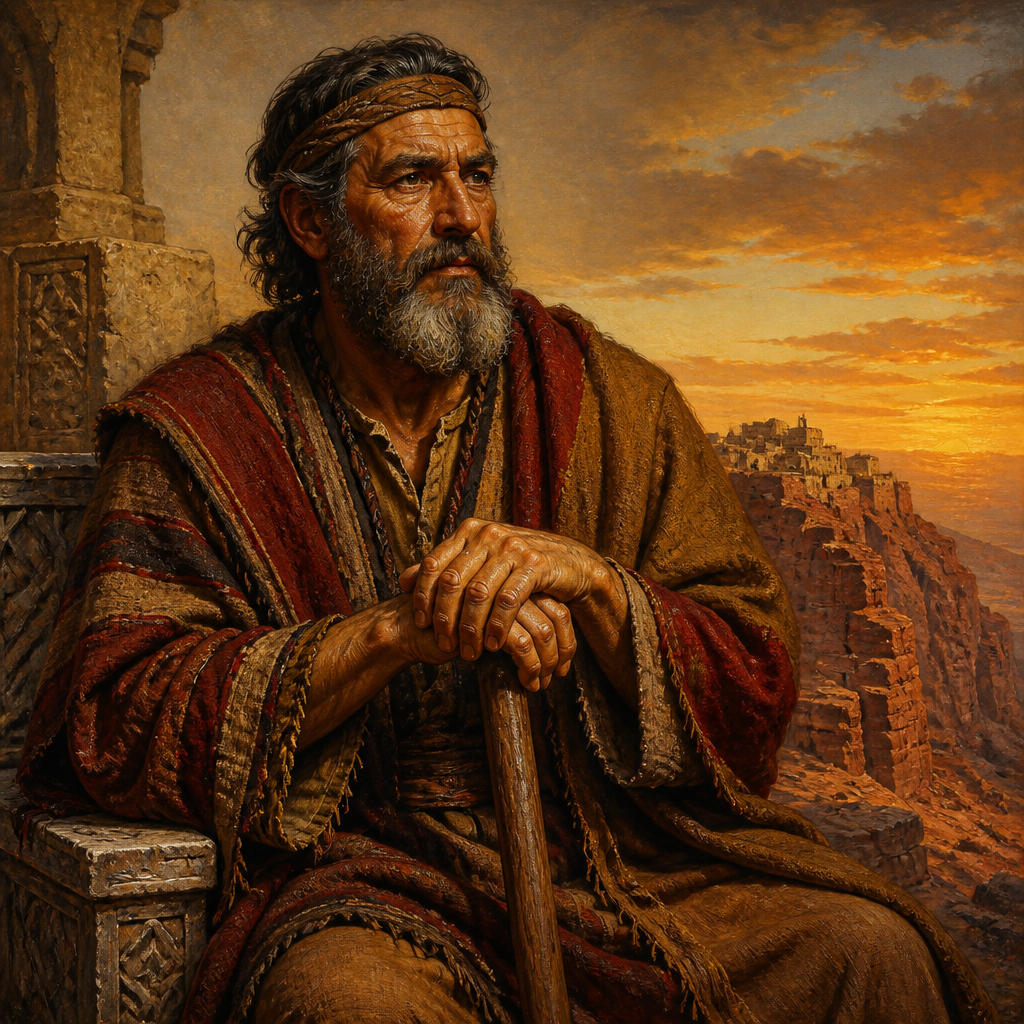
Bedad was an Edomite patriarch and the father of King Hadad, a ruler of Edom during the pre-Israelite monarchy.
Bedad is a figure mentioned in the genealogical records of the Edomites, specifically within the lineage of the early kings who reigned in the land of Edom before any king ruled over the Israelites. His primary significance in the biblical narrative is as the father of Hadad, a prominent military leader and monarch. Bedad's existence is documented in the context of the transition of power within the Edomite regency.
While Bedad himself is not described as a king, his placement within the royal lists of Genesis and 1 Chronicles establishes him as a patriarch of a significant Edomite line. His name, which may be related to the Semitic root for 'alone' or 'solitary', appears in the transition between the reign of Husham and the rise of his son, Hadad. His role reflects the fragmented and shifting political landscape of the Seir region during the Patriarchal era.
Background and Family
Bedad appears in the biblical record within the 'Table of Nations' and the specific genealogy of Esau, the father of the Edomites. Bedad is identified exclusively as the father of Hadad, who became the fourth recorded king of Edom.
According to the lists in Genesis 36 and 1 Chronicles 1, the Edomite kingship did not appear to be strictly hereditary in its early stages, as the kings often hailed from different cities and families. However, Bedad represents a patriarchal link to one of the most successful of these early rulers. His family belonged to the descendants of Esau, who had settled in the rugged mountainous region of Seir.
Major Life Events
The biblical text does not record the specific deeds of Bedad himself, focusing instead on the accomplishments of his son. It is through his son, Hadad, that we glean the context of Bedad's life and times. Hadad is credited with defeating the Midianites in the territory of Moab. This suggests that during Bedad's lifetime and the subsequent rise of his son, the family was involved in the regional power struggles between the Edomites, Midianites, and Moabites.
Bedad lived in an era of tribal consolidation. As the Edomites moved from a collection of clans (led by chiefs or 'dukes') to a centralized monarchy, Bedad occupied a position of sufficient influence to see his son ascended to the throne in the city of Avith. The mention of Bedad serves to validate the legitimacy and lineage of Hadad’s reign.
Relationship to Other Biblical Figures
Bedad is directly linked to his son, Hadad son of Bedad. He is also chronologically situated following the death of Husham, the previous king from the land of the Temanites. Although Bedad is not listed as a king, he is the pivotal link between the Temanite administration of Husham and the new administration established by his son in Avith.
As a descendant of Esau, Bedad is part of the broader familial relationship between the nations of Edom and Israel. While the biblical text focuses on the line of Jacob, Bedad’s inclusion in the records highlights the parallel development of the Edomite nation, which achieved statehood and monarchical structure significantly earlier than the descendants of Israel.
Spiritual Significance
The presence of Bedad in the scriptures, though brief, underscores the historical reliability and meticulous record-keeping of the biblical authors regarding Israel’s neighbors. Theologically, the inclusion of Bedad in the chronicles of Edom serves to fulfill the promises made to Esau in Genesis 25 and 27, ensuring that his descendants would become a great nation and possess their own land and rulers.
Bedad serves as a reminder that the biblical narrative acknowledges the sovereignty and histories of nations outside of the covenant line of Abraham, Isaac, and Jacob. His name is preserved as a testament to the complex tribal histories that shaped the ancient Near East during the time of the Patriarchs.
Bedad's significance lies in his role as a patriarchal anchor for the Edomite royal line. By naming the father of King Hadad, the biblical text provides a historical framework for the rise of Edomite power, demonstrating that the 'sons of Esau' were flourishing as a structured society while the 'sons of Israel' were still a nomadic family or in Egyptian sojourn.
His mention in both Genesis and 1 Chronicles highlights the importance of lineage in ancient Near Eastern culture. Bedad represents the genealogical bridge that allows the reader to track the fulfillment of God's secondary promises to the non-chosen line of Esau, illustrating that the history of Edom was preserved as a witness to the unfolding of regional events.
Frequently Asked Questions
Was Bedad a king of Edom?
No, the Bible identifies his son, Hadad, as the king. Bedad is mentioned as the father of the king, but there is no record of Bedad himself holding the throne.
Which tribe or nation did Bedad belong to?
Bedad belonged to the nation of Edom, the descendants of Esau.
Where can I find Bedad in the Bible?
Bedad is mentioned in two places: Genesis 36:35 and 1 Chronicles 1:46.
What does the name Bedad mean?
The name Bedad (בְּדַד) is thought to mean 'solitary' or 'alone' in Hebrew.
Family & Relationships
 BedadThis page
Children
 Hadad son of Bedad, King of EdomSonGenesis 36:35Stated
Extended family
 EsauAncestorGenesis 25:25
Inferred
No verse names Esau and Bedad together; the descendant link is carried from the surrounding genealogy and is not stated in Scripture.Evidence: Genesis 25:25
Connected Figures
Family
Son · Genesis 36:35
An early Edomite king who gained prominence by defeating the Midianites in the territory of Moab before the establishment of the Israelite monarchy.
PatriarchsFirst: Genesis 36:354 versesKing of Edom
Ancestor · Genesis 25:25
The firstborn son of Isaac and Rebekah, a skillful hunter and the progenitor of the Edomites, known for selling his birthright for a bowl of stew.
PatriarchsFirst: Genesis 25:2573 versesSkillful hunter, man of the field, Chief
Categories
Mentions by Book
- Genesis2
- 1 Chronicles1
Scripture References
All 3 indexed verses, in canonical order, from the Berean Standard Bible.
Genesis · 2
- Genesis 25:25Partial
The first one came out red, covered with hair like a fur coat; so they named him Esau.
Cited as evidence on a family card; added so References, Key Verses and Mentions by Book share one index.
- Genesis 36:35
When Husham died, Hadad son of Bedad, who defeated Midian in the country of Moab, reigned in his place. And the name of his city was Avith.
1 Chronicles · 1
- 1 Chronicles 1:46
When Husham died, Hadad son of Bedad, who defeated Midian in the country of Moab, reigned in his place. And the name of his city was Avith.