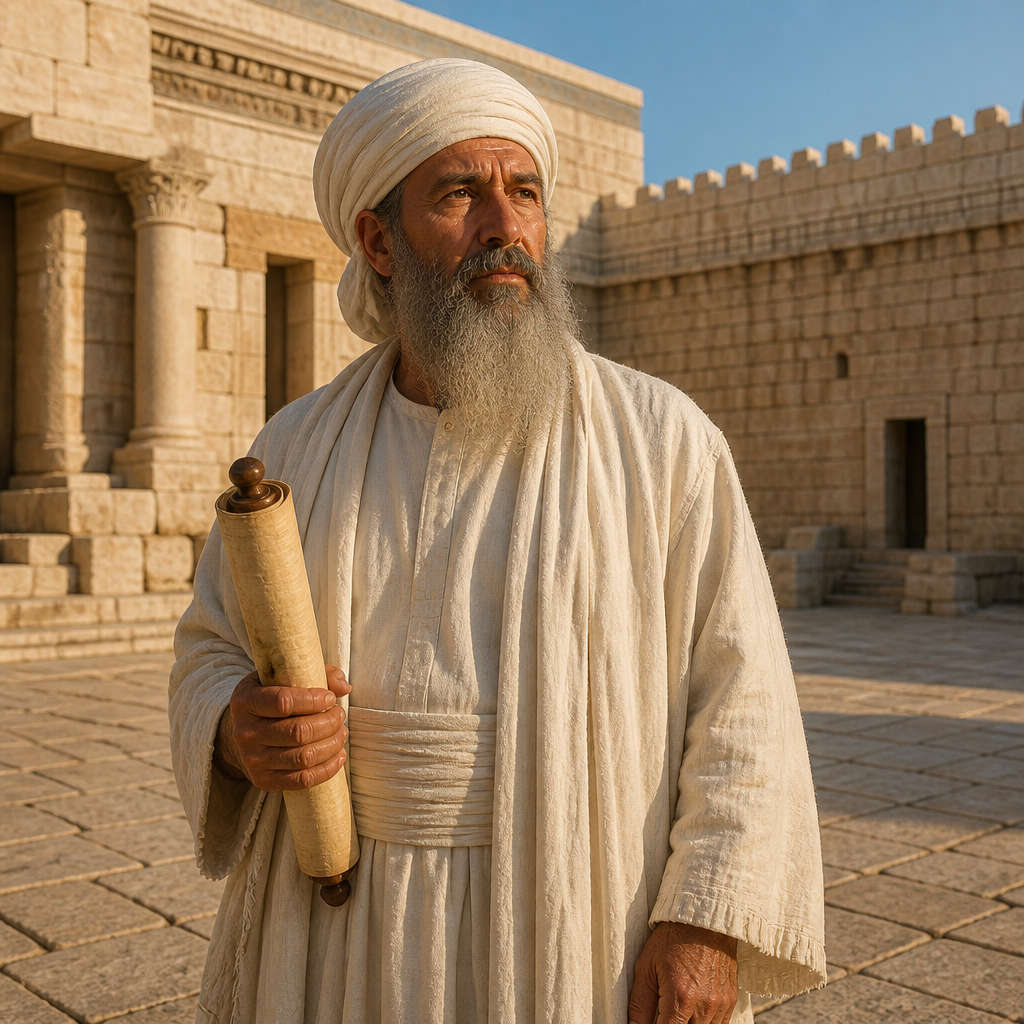
Uzzi, Priest of Jedaiah
A Jewish priest and descendant of Jedaiah who served during the tenure of High Priest Joiakim in the Post-Exilic period.
Uzzi, Priest of Jedaiah, was a religious official active during the Post-Exilic period, specifically during the generation following the first return of Jewish exiles from Babylon. His name appears in the records of the priestly and Levite families that were maintained during the high priesthood of Joiakim, the son of Jeshua. Uzzi's inclusion in these records signifies his status as a head of a priestly house, a position of significant communal and liturgical responsibility within the reconstructed religious life of Jerusalem.
While the biblical record of Uzzi is concise, his presence in the book of Nehemiah serves a specific genealogical and historical purpose. He represents the continuity of the Aaronic priesthood through the Babylonian exile and back into the land of Judah. As the head of the house of Jedaiah, Uzzi was part of the structured hierarchy that ensured the proper administration of the Temple services and the preservation of the covenantal identity of the Jewish people after decades of displacement.
Background and Family
Uzzi appears in the biblical record within the context of the Post-Exilic community in Jerusalem. Following the decree of Cyrus the Great and the subsequent returns of the Jewish people from Babylon, the leadership focused heavily on re-establishing the Temple worship. Central to this restoration was the organization of the priests and Levites into their traditional ancestral houses. Uzzi is identified as a member of the family of Jedaiah.
In the era of the High Priest Joiakim (the son of Jeshua and grandson of Jozadak), the heads of the priestly families were recorded to ensure administrative order. Uzzi is explicitly named as the leader of the house of Jedaiah during this specific generation. This placement suggests he was active in the early-to-mid 5th century BC, serving as a contemporary to the transition between the initial return under Zerubbabel and the later administrative reforms of Ezra and Nehemiah.
Major Life Events
The primary event associated with Uzzi is his formal recognition and recording as a head of a priestly household in Nehemiah 12:19. This chapter functions as an official register of the clergy who served the Second Temple. The act of being listed in such a register was not merely a matter of genealogy but a validation of legitimacy for service in the sanctuary.
During Uzzi's tenure, the community was in a state of fragile reconstruction. As a leader of his house, Uzzi would have been responsible for overseeing the specific duties assigned to the family of Jedaiah, which may have included sacrificial rites, the teaching of the Law, or the maintenance of the Temple precincts. The period of High Priest Joiakim was one of consolidation, bridging the gap between the completion of the Second Temple and the arrival of Nehemiah to rebuild the city walls.
Relationship to Other Biblical Figures
Uzzi’s identity is defined by his relationship to his ancestral line and the presiding High Priest. He is listed as serving under Joiakim, who was a pivotal figure in the post-exilic religious leadership. The text in Nehemiah 12:12-21 lists Uzzi alongside other heads of houses, such as Mattenai (of the house of Joiarib) and Meshullam (of the house of Ezra). These men formed the religious aristocracy of the time, working together to maintain the sanctity of the Jewish faith in a land still surrounded by hostile neighbors and undergoing economic hardship.
Spiritual Significance
The inclusion of Uzzi in the Holy Scriptures, despite the brevity of his mention, highlights the biblical theme of God’s faithfulness to the remnant. The exile in Babylon was intended to be a period of refinement, and the survival of the priestly lines like that of Jedaiah, represented by Uzzi, proved that the promise of an enduring priesthood remained intact.
For the original readers of Nehemiah, Uzzi’s name served as a link to their heritage. It affirmed that despite the trauma of the exile, the structure of the community remained rooted in the divine appointments given at Sinai. Uzzi stands as a representative of the many dedicated individuals who worked quietly and faithfully to restore the spiritual foundations of Israel, ensuring that the light of the Temple would continue to burn for future generations.
Spiritual Significance
Uzzi’s significance lies in his role as a bridge between the pre-exilic traditions and the post-exilic restoration. As a head of a priestly family, he ensured the continuity of the Jedaiah line, which was essential for the legal and ritual functioning of the Second Temple. His name in the registers of Nehemiah provides historical evidence of the meticulous record-keeping used to verify the purity and legitimacy of the Aaronic priesthood after the return from Babylon.
Theologically, Uzzi represents the 'unnamed' or 'minor' servants of God who fulfill essential roles without receiving widespread acclaim. His presence in the canon validates the importance of every individual within the communal structure of the people of God, illustrating that every office, no matter how briefly recorded, is vital to the fulfillment of the divine plan.
Frequently Asked Questions
Which Uzzi is mentioned in Nehemiah 12:19?
This Uzzi was a priest and the head of the ancestral house of Jedaiah during the time of High Priest Joiakim in the Post-Exilic period.
What tribe did Uzzi belong to?
As a priest (of the house of Jedaiah), Uzzi was a member of the tribe of Levi and a descendant of Aaron.
When did Uzzi live?
Uzzi lived during the Post-Exilic period (Exile and Return), specifically during the generation of the High Priest Joiakim, likely in the early-to-mid 5th century BC.
What were Uzzi's responsibilities?
As the head of a priestly house, he was responsible for leading his family in their Temple duties, maintaining genealogical records, and assisting in the liturgical life of the Second Temple.
Is Uzzi related to the High Priest Jeshua?
He served under Joiakim, who was the son of Jeshua, but Uzzi himself was the head of the separate priestly house of Jedaiah.
Connected Figures
Joiakim
High Priest under whom Uzzi served
Mattenai
Contemporary head of the house of Joiarib
Jedaiah
Ancestral head of Uzzi's priestly house
Categories
Mentions by Book
- Nehemiah1
Others Named Uzzi
Uzzi, Son of Tola1 Chronicles 7:2
Uzzi was the firstborn son of Tola and a prominent ancestral leader within the tribe of Issachar during the Egyptian sojourn and the early formation of the nation of Israel.
Uzzi, Levite of the Divided Monarchy1 Chronicles 6:5
A high-ranking Levite of the Kohathite line who served in the priestly succession during the era of the Divided Monarchy.
Uzzi, Son of Bela1 Chronicles 7:7
A prominent Benjamite leader and head of his family known for being a mighty man of valor during the Israelite sojourn.
Uzzi, Participant in the Dedication of the WallNehemiah 12:42
A prominent individual who participated in the joyous musical dedication of Jerusalem's rebuilt wall under Nehemiah.
Uzzi, Overseer of the LevitesNehemiah 11:22
A prominent Levite and descendant of Asaph who served as the overseer of the Levites in Jerusalem during the Post-Exilic reconstruction.
Uzzi, Son of Michri1 Chronicles 9:8
A descendant of Benjamin and the father of Elah, Uzzi was among the first group of Israelites to resettle Jerusalem following the Babylonian exile.