Sherebiah, Levite of the Sealed Covenant
A prominent Levite leader who participated in the sealing of the covenant and led liturgical songs of thanksgiving during the post-exilic reconstruction of Jerusalem.
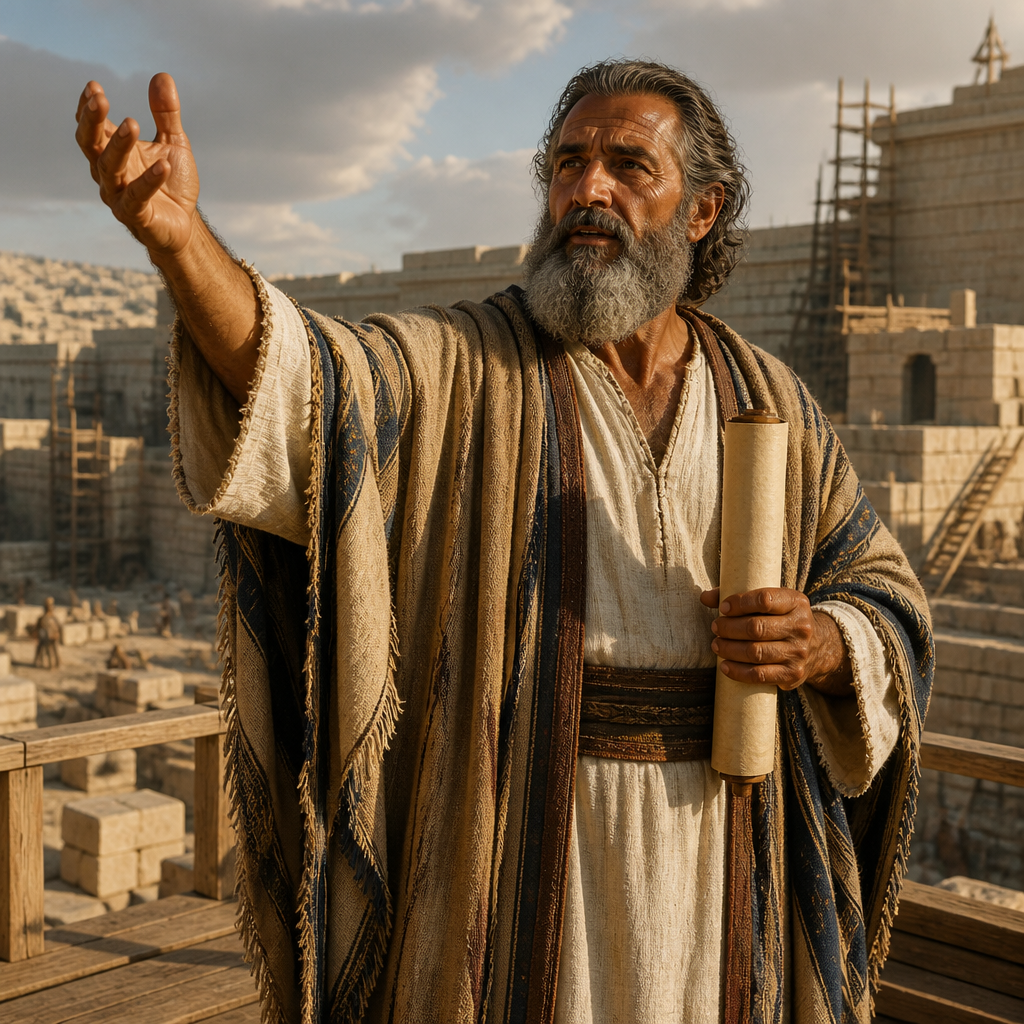
Sherebiah was a member of the tribe of Levi who served as a religious leader during the era of the Return from Exile. His ministry is documented within the book of Nehemiah, where he is identified as one of the influential figures assisting in the spiritual reorganization of the Jewish community after their return from Babylon to Jerusalem. He is specifically noted for his official capacity as a signatory to the national covenant and for his leadership in the temple liturgy.
As a Levite, Sherebiah belonged to the class of temple servants responsible for the maintenance of the Law and the execution of public worship. His presence in the historical record highlights the organized effort by the post-exilic leadership—including Nehemiah and the high priest—to restore the musical and sacrificial traditions established centuries earlier by King David. Though his personal biography is sparse, his recurring appearance in lists of leaders suggests he was a man of significant ecclesiastical standing.
Background and Family
The biblical record regarding this specific Sherebiah is centered entirely on his public ministry in Jerusalem during the mid-to-late 5th century BC. While the text does not provide his parentage or specific lineage within the Levitical branches, his classification as a Levite confirms his descent from the tribe of Levi, set apart for divine service. He appears in the context of the returnees who were rebuilding the religious life of Judah under the Persian administration.
Major Life Events
Sherebiah is first introduced in the biblical narrative in the context of Nehemiah 10. Following the completion of the walls of Jerusalem and the public reading of the Law, the people entered into a formal, written agreement to separate themselves from the surrounding pagan nations and to observe the commandments of God. Sherebiah is explicitly named as one of the Levites who sealed this document (Nehemiah 10:12). This act was a profound legal and spiritual commitment, indicating that he was a representative head of a ministerial house or a leader with the authority to bind the community to the Mosaic Law.
Furthermore, Sherebiah played a vital role in the liturgical restoration of the temple. In Nehemiah 12:8, he is listed among the Levites responsible for leading "the songs of thanksgiving." This was not merely a secondary role but a central component of the Second Temple service. The Levites were tasked with ensuring that the joy of the Lord was expressed through structured, high-quality music and praise.
In Nehemiah 12:24, Sherebiah is identified as a "leader of the Levites." In this capacity, he functioned alongside Hashabiah and Jeshua son of Kadmiel. The text describes him leading a section of the choir that stood opposite another section to give praise and thanksgiving. This "alternating" or antiphonal style of worship was explicitly modeled after the prescriptions given by "David the man of God," signaling that Sherebiah was instrumental in reclaiming the ancient liturgical glory of the United Monarchy for the post-exilic generation.
Relationship to Other Biblical Figures
Sherebiah’s primary associations are professional rather than familial. He worked closely with other prominent Levites of the era, most notably Jeshua, Binnui, and Kadmiel. These men formed a collective leadership that bridged the gap between the civil administration of Nehemiah and the spiritual needs of the people. His service occurred during the high priesthood of Eliashib and continued through the tenures of Joiakim and Eliashib’s successors, as noted in the genealogical registers of Nehemiah 12.
Spiritual Significance
The significance of Sherebiah lies in his role as a restorer of order. His participation in the sealing of the covenant in Nehemiah 10 demonstrates a commitment to the sanctity of the community and the preservation of the Law. In the context of the songs of thanksgiving, Sherebiah represents the theological priority of gratitude in the life of the believer. By leading the people in praise "as prescribed by David," he helped reconnect the weary exiles to their historical identity as the people of God’s presence. His life serves as a testament to the importance of institutional faithfulness and the power of corporate worship in times of national rebuilding.
Spiritual Significance
Sherebiah’s theological importance is found in his role as a covenant-sealer and a leader of liturgical praise. By signing the covenant in Nehemiah 10, he became a legal guarantor of Israel's renewed commitment to God, emphasizing the necessity of formal obedience and separation from worldly influences. His leadership in the songs of thanksgiving highlights the essential role of music and corporate gratitude in sustaining the spiritual morale of a community undergoing hardship and transition.
Frequently Asked Questions
What was Sherebiah's primary role in Jerusalem?
He was a leader of the Levites who specialized in leading songs of thanksgiving and was one of the officials who signed the written covenant under Nehemiah.
In which book of the Bible is this Sherebiah found?
This specific Sherebiah is mentioned exclusively in the book of Nehemiah, appearing in chapters 10 and 12.
What tribe did Sherebiah belong to?
He was a Levite, belonging to the tribe of Levi, which was responsible for temple service and religious instruction.
How did Sherebiah influence worship in the Second Temple?
He led a section of the Levitical choir in antiphonal praise, following the ancient musical traditions established by King David.
Did Sherebiah hold a position of authority?
Yes, Nehemiah 12:24 explicitly identifies him as one of the 'leaders of the Levites'.
Connected Figures
Nehemiah
Governor under whom he served
Jeshua
Fellow Levitical leader
Hashabiah
Fellow Levitical leader
Kadmiel
Fellow Levitical associate
Categories
Mentions by Book
- Nehemiah3
Others Named Sherebiah
Sherebiah, Levite of the Return from BabylonEzra 8:18
A prominent Levite and man of insight who assisted Ezra in the return to Jerusalem and led the people in public worship and instruction in the Law.