Nethanel, Head of the Clan of Jedaiah
Nethanel was a post-exilic priest and head of the ancestral house of Jedaiah during the high priesthood of Joiakim.
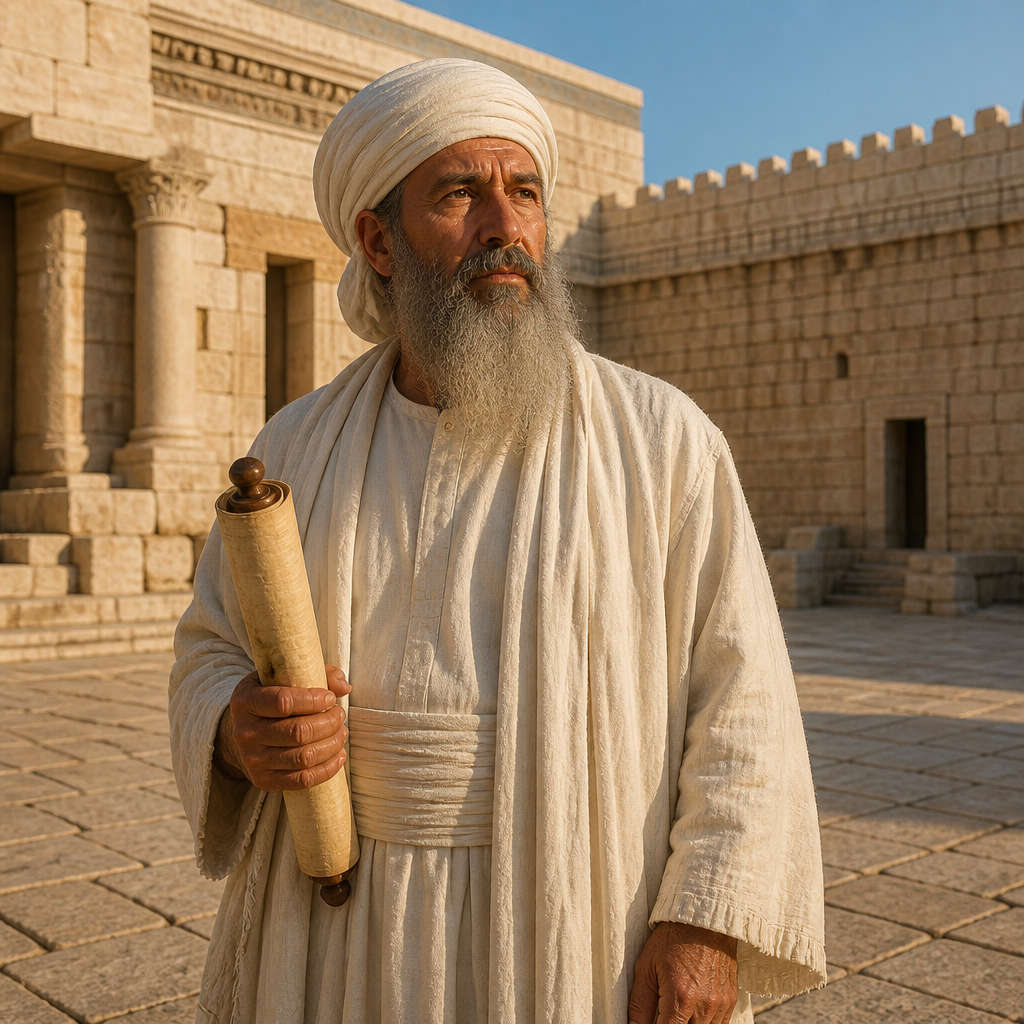
Nethanel (sometimes spelled Nathaneel) was a Jewish priest who lived during the period of the Return from Exile. He is documented in the book of Nehemiah as a leading figure among the ecclesiastical community in Jerusalem, specifically representing the family line of Jedaiah. His service occurred during the tenure of the High Priest Joiakim, placing him in the critical window of reconstruction and religious reorganization following the Babylonian captivity.
As a head of a priestly house, Nethanel occupied a position of significant administrative and spiritual authority. The post-exilic period was characterized by the re-establishment of the Temple cult and the rigorous cataloging of genealogies to ensure the purity and legitimacy of the priesthood. Nethanel’s inclusion in the official registers signifies his status as a legitimate heir to the office of the priesthood and a key participant in the restoration of the covenant community in Judah.
Background and Family
Nethanel emerged during the era of the Return, a time when the Jewish people were transitioning from the displacement of Babylon back to the ancestral lands of Judah. The biblical record identifies him within a list of the "heads of the fathers’ houses" (Nehemiah 12:12). This organizational structure was vital for the governance of the Second Temple period.
Nethanel belonged to the priestly house of Jedaiah. In the organized divisions of the priesthood, Jedaiah was one of the most prominent families, having been listed among the four priestly groups that returned with Zerubbabel (Ezra 2:36). By the time of Nethanel, the family had grown, and he was selected to lead this specific branch of the lineage. The text does not provide the names of his parents or children, focusing instead on his institutional role as a representative of his clan.
Major Life Events
The primary historical context for Nethanel is the high priesthood of Joiakim, the son of Jeshua. This period (roughly the mid-5th century BC) was essential for the stabilization of the Jewish state under Persian rule. Nethanel’s inclusion in Nehemiah 12:21 is part of a formal registry intended to document the continuity of the Aaronic priesthood.
Of Hilkiah, Hashabiah; and of Jedaiah, Nethanel.
This specific mention occurs in a list that mirrors the original list of priests who came up with Zerubbabel and Jeshua. By recording Nethanel’s name, the chronicler demonstrates that the religious leadership remained intact through the generations. His work would have involved the oversight of Temple duties, the management of tithes, and the maintenance of the ritual purity required for the restoration of the daily sacrifices in Jerusalem.
Relationship to Other Biblical Figures
Nethanel’s historical coordinate is defined by his contemporary, Joiakim the High Priest. While Nethanel served as a head of a father's house, he functioned under the spiritual and civil jurisdiction of Joiakim. His peers included other clan heads like Hashabiah and Helkai.
Though Nethanel is not described in personal interaction with Nehemiah or Ezra, his leadership within the house of Jedaiah implies he was part of the group of "chief of the priests" who assisted in the religious reforms and the physical rebuilding of Jerusalem’s identity. His placement in the records alongside the descendants of Hilkiah and other notable priestly lines suggests he was part of the upper echelon of the Jerusalemite aristocracy.
Spiritual Significance
The presence of Nethanel in the biblical record underscores the theme of God’s faithfulness to the covenant of the priesthood (Numbers 25:13). The survival of his name through the tumultuous years of the exile and the subsequent return serves as a testimony to the preservation of the tribe of Levi.
For the post-exilic community, figures like Nethanel were living links to the pre-exilic glory of Solomon’s Temple. By maintaining their genealogical purity and their dedication to the Temple service, Nethanel and his contemporaries ensured that the worship of Yahweh continued in accordance with the Mosaic Law. His life represents the quiet, administrative faithfulness necessary to sustain a religious community during a time of fragile national rebuilding.
Spiritual Significance
Nethanel’s significance lies in the preservation of the priestly succession. During the Return from Exile, the legitimacy of the priesthood was under constant scrutiny; those who could not prove their lineage were excluded from service. Nethanel’s inclusion in the Book of Nehemiah serves as a formal verification of the house of Jedaiah, ensuring that the Temple rituals remained in the hands of authorized descendants of Aaron.
Theologically, Nethanel represents the 'remnant' theology of the Old Testament. His existence and service in Jerusalem are evidence that the Babylonian Exile did not extinguish the religious infrastructure of Israel. He is a symbol of the transition from a monarchical society to a community centered on the Law and the Temple, where the heads of priestly houses provided the social and spiritual framework for the people.
Frequently Asked Questions
Who was Nethanel in the book of Nehemiah?
Nethanel was a priest and the head of the priestly family of Jedaiah during the high priesthood of Joiakim, shortly after the return from the Babylonian exile.
What tribe did Nethanel belong to?
As a priest and member of the house of Jedaiah, Nethanel was a member of the tribe of Levi, specifically the lineage of Aaron.
When did Nethanel live?
He lived during the Post-Exilic Period, specifically during the generation of the High Priest Joiakim, which occurred in the mid-5th century BC.
What were Nethanel's primary responsibilities?
As the head of a father's house (a clan leader), he was responsible for leading his family division in Temple service, managing priestly affairs, and maintaining the genealogical records of his house.
Connected Figures
Joiakim
High Priest under whom Nethanel served
Jedaiah
Ancestral head of Nethanel's priestly house
Hashabiah
Contemporary priestly head of the house of Hilkiah
Categories
Mentions by Book
- Nehemiah1
Others Named Nethanel
Nethanel, Son of Obed-edom1 Chronicles 26:4
Nethanel was a Levite and the fifth son of Obed-edom, serving as a gatekeeper for the Tabernacle during the reign of King David.
Nethanel, Trumpeter of the Divided Monarchy1 Chronicles 15:24
A priest during the Divided Monarchy who was appointed to blow the trumpet before the Ark of God during its transport to Jerusalem.
Nethanel, Musician of the Post-Exilic PeriodNehemiah 12:36
Nethanel was a post-exilic musician who participated in the joyous dedication of the rebuilt walls of Jerusalem under Nehemiah and Ezra.
Nethanel, Father of Shemaiah1 Chronicles 24:6
A Levite during the Divided Monarchy whose son, Shemaiah, served as a royal scribe responsible for recording the priestly divisions under King David.
Nethanel, Leader of IssacharNumbers 1:8
Nethanel son of Zuar was the tribal chief and military leader of Issachar during the Israelites' wilderness wanderings after the Exodus from Egypt.
Nethanel, Brother of David1 Chronicles 2:14
Nethanel was the fourth son of Jesse and an elder brother of King David during the era of the United Monarchy.
Nethanel, Officer of the Levites2 Chronicles 35:9
An officer of the Levites who donated livestock for King Josiah’s historic Passover celebration during the Divided Monarchy.
Nethanel, Descendant of PashhurEzra 10:22
Nethanel was a descendant of Pashhur who was among the priests required to divorce their foreign wives following the return from the Babylonian exile.
Nethanel, Official of Jehoshaphat2 Chronicles 17:7
An official of King Jehoshaphat who was sent to teach the Law of the Lord throughout the cities of Judah.