Mordecai, Cousin of Queen Esther
A Jewish official in the Persian citadel of Susa who saved King Xerxes from assassination and orchestrated the deliverance of the Jewish people from Haman’s genocidal plot.
Mordecai was a prominent Jewish figure living in the Persian capital of Susa during the Post-Exilic Period. A descendant of the tribe of Benjamin, he served as a gate official in the court of King Xerxes (Ahasuerus). Mordecai is best known for his role as the adoptive father and mentor of Hadassah, better known as Queen Esther, whom he raised after the death of her parents. His life is defined by a steadfast refusal to compromise his religious convictions and his strategic wisdom in navigating the complexities of the Persian imperial court.
Throughout the narrative of the Book of Esther, Mordecai emerges as a pivotal statesman whose vigilance saved the king’s life and whose courage challenged a decree of total annihilation against the Jewish people. Following the downfall of his antagonist, Haman the Agagite, Mordecai was elevated to the position of second-in-command under King Xerxes. His legacy is immortalized in the Jewish festival of Purim, which he helped establish to commemorate the survival of his people.
Background and Family
Mordecai was the son of Jair, a descendant of Shimei and Kish from the tribe of Benjamin (Esther 2:5). The biblical record places his family within the context of the Babylonian captivity, noting their connection to the exiles carried away from Jerusalem by Nebuchadnezzar. By the time of the events in Susa, Mordecai was established as a resident of the Persian citadel.
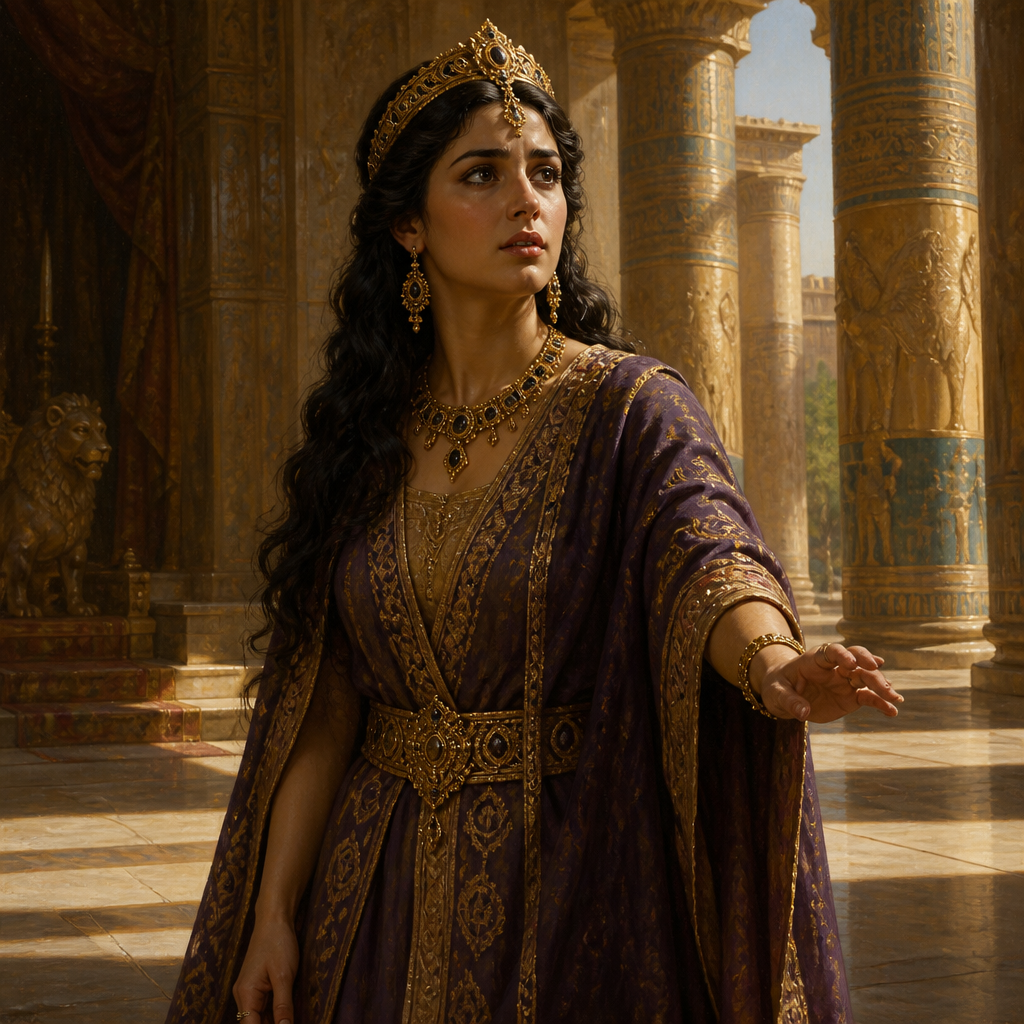
Mordecai’s most significant familial contribution was the adoption of his orphaned cousin, Hadassah. The text notes that she was "lovely in form and appearance," and upon the death of her parents, Mordecai took her in as his own daughter (Esther 2:7). Even after she was taken into the king’s harem and eventually crowned queen, Mordecai maintained a close, protective relationship with her, walking daily before the court of the harem to inquire after her welfare (Esther 2:11). Under his counsel, Esther initially kept her Jewish identity a secret from the Persian court.
Major Life Events
The narrative arc of Mordecai’s life involves two primary conflicts: a palace conspiracy and a personal rivalry that became a national crisis. While sitting at the king’s gate, Mordecai overheard a plot by two royal eunuchs, Bigthan and Teresh, to assassinate King Xerxes. He reported the conspiracy to Esther, who informed the king in Mordecai’s name. The plot was thwarted, and the event was recorded in the royal chronicles, though Mordecai initially received no reward (Esther 2:21-23).
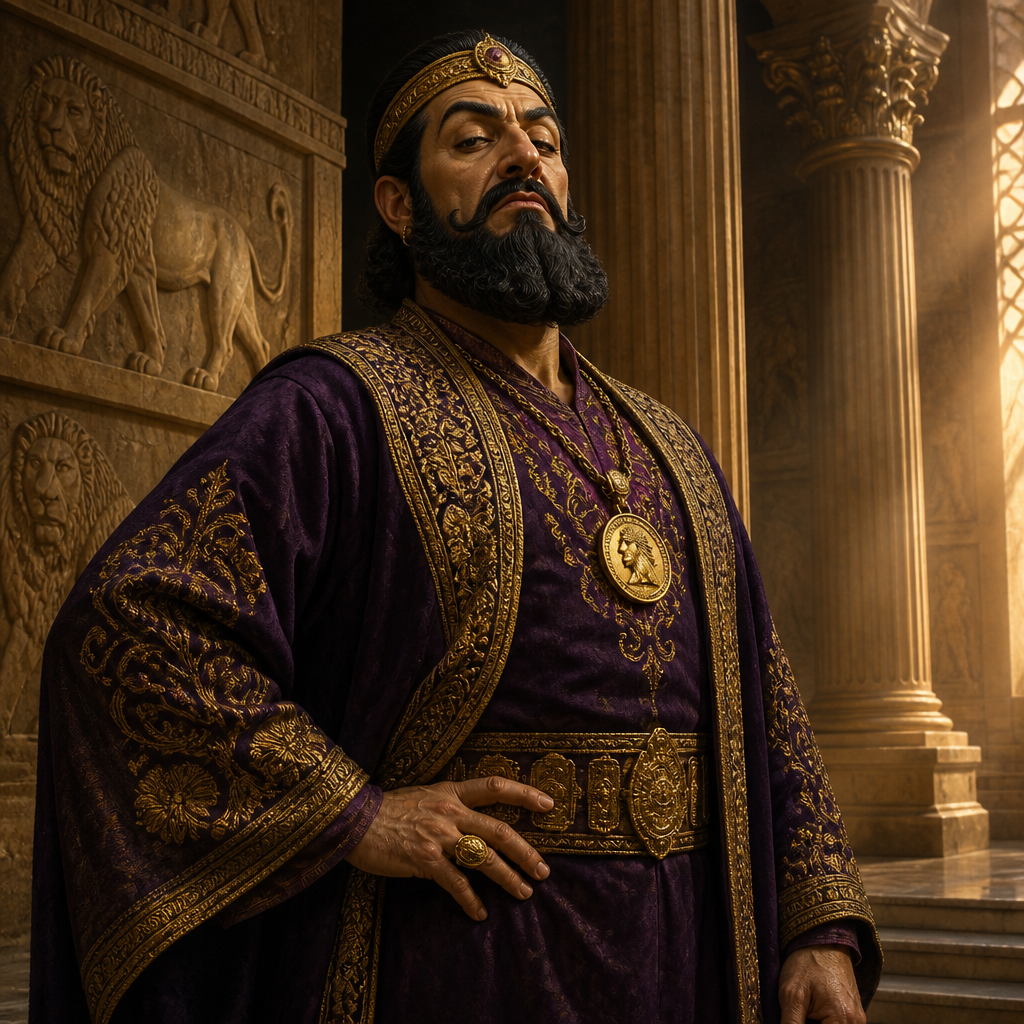
The central tension of his life arose when Xerxes promoted Haman the Agagite to the highest position among the nobles. While all other royal servants bowed to Haman by the king's command, Mordecai refused to do so (Esther 3:2). This refusal, rooted in his identity as a Jew, enraged Haman. Instead of targeting Mordecai alone, Haman leveraged his influence to issue a decree for the systematic execution of all Jews throughout the 127 provinces of the Persian Empire.
Upon learning of the decree, Mordecai engaged in public mourning, wearing sackcloth and ashes. He challenged Esther to intervene, famously telling her, "Do not imagine that because you are in the king’s palace you alone will escape... And who knows but that you have come to your royal position for such a time as this?" (Esther 4:13-14).
The tide turned when the king, suffering from insomnia, had the royal chronicles read to him and discovered Mordecai’s forgotten service in saving his life. In a moment of supreme irony, the king forced Haman to publicly honor Mordecai by parading him through Susa in royal robes on the king's own horse (Esther 6:10-11).
Relationship to Other Biblical Figures
Mordecai’s relationship with Esther is one of the most unique partnerships in the Bible, characterized by mutual trust and shifting roles. Initially, Esther is the submissive ward obeying Mordecai’s commands (Esther 2:20). However, as the crisis unfolds, the dynamic evolves into a partnership of equals where Esther eventually issues instructions that Mordecai carries out (Esther 4:17).
His relationship with Haman serves as a literary and historical bookend to the ancient rivalry between Israel and the Amalekites (as Haman is an Agagite, a descendant of the Amalekite king Agag). While Haman represented the threat of extinction, Mordecai represented the resilience of the Jewish remnant.
Spiritual Significance
Mordecai serves as a model of the "wise courtier" in the Diaspora, demonstrating how to remain faithful to one's heritage while serving in a foreign, often hostile, government. His refusal to bow to Haman is frequently interpreted as a refusal to give divine honor to a man or as an act of national loyalty to God over a traditional enemy of Israel.
Theological themes of providence are heavily tied to Mordecai. Though the name of God is not explicitly mentioned in the Book of Esther, Mordecai’s actions and his confidence that "relief and deliverance for the Jews will arise from another place" (Esther 4:14) reflect a deep-seated belief in divine protection. By the end of his life, Mordecai was not only a savior of his people but a high-ranking official who used his power to seek the "good of his people" and speak "peace to all his countrymen" (Esther 10:3).
Spiritual Significance
Mordecai is a singular figure in the Old Testament who embodies the survival and success of the Jewish people during the Dispersion. Unlike the prophets who called for a return to Jerusalem, Mordecai’s story focuses on the preservation of the Jewish identity and safety within the heart of a Gentile empire. His elevation to the rank of vizier (second only to the King) mirrors the life of Joseph in Egypt and Daniel in Babylon, establishing a paradigm for Jewish leadership in foreign lands.
Furthermore, Mordecai is significant as the co-architect of the festival of Purim. By writing letters to all the provinces to confirm the celebration, he ensured that the memory of the Jewish deliverance would be passed down through generations. The Book of Esther concludes by celebrating his greatness, not as a king of Israel, but as a righteous Jewish statesman whose influence brought security and prosperity to his kin under the Persian crown.
Frequently Asked Questions
Why did Mordecai refuse to bow to Haman?
While the text does not give a specific theological reason, it notes that he refused because he was a 'Jew.' This suggests his refusal was tied to his religious convictions or his knowledge of Haman's ancestry as an Agagite (Amalekite), a people traditionally considered enemies of God and Israel.
Was Mordecai a prophet?
Mordecai is not explicitly called a prophet in the Bible. He is described as a government official, a guardian, and a leader. However, his statement to Esther regarding 'relief and deliverance' arising from another place is often viewed as a prophetic expression of faith.
What happened to Mordecai at the end of the Book of Esther?
Mordecai was promoted to the position previously held by Haman. He was given the king's signet ring, wore royal garments and a gold crown, and became the second-in-command to King Xerxes, using his power to protect and advocate for the Jews.
How were Mordecai and Esther related?
They were cousins. Esther was the daughter of Abihail, who was the uncle of Mordecai. When Esther's parents died, Mordecai adopted her and raised her as his own daughter.
What is the 'Book of the Chronicles of the Kings of Media and Persia' mentioned in relation to Mordecai?
This refers to the official state records of the Persian Empire. The author of Esther notes that Mordecai’s great deeds and his elevation by the king were documented in these historical annals, emphasizing his status as a historical figure of high rank.
Connected Figures
Esther
Cousin and adopted daughter
Haman
Antagonist and rival in the Persian court
Xerxes I
King of Persia to whom Mordecai served as second-in-command
Jair
Father
Categories
Mentions by Book
- Esther50
Family & Relationships
Parent
Esther 2:5
Others Named Mordecai
Mordecai, Leader of the ReturnEzra 2:2
A prominent leader who returned to Jerusalem from the Babylonian exile alongside Zerubbabel and Nehemiah during the early Restoration period.