Mattenai, Priest of the Post-Exilic Period
A priest during the high priesthood of Joiakim who served as the ancestral head of the house of Joiarib after the return from Babylon.
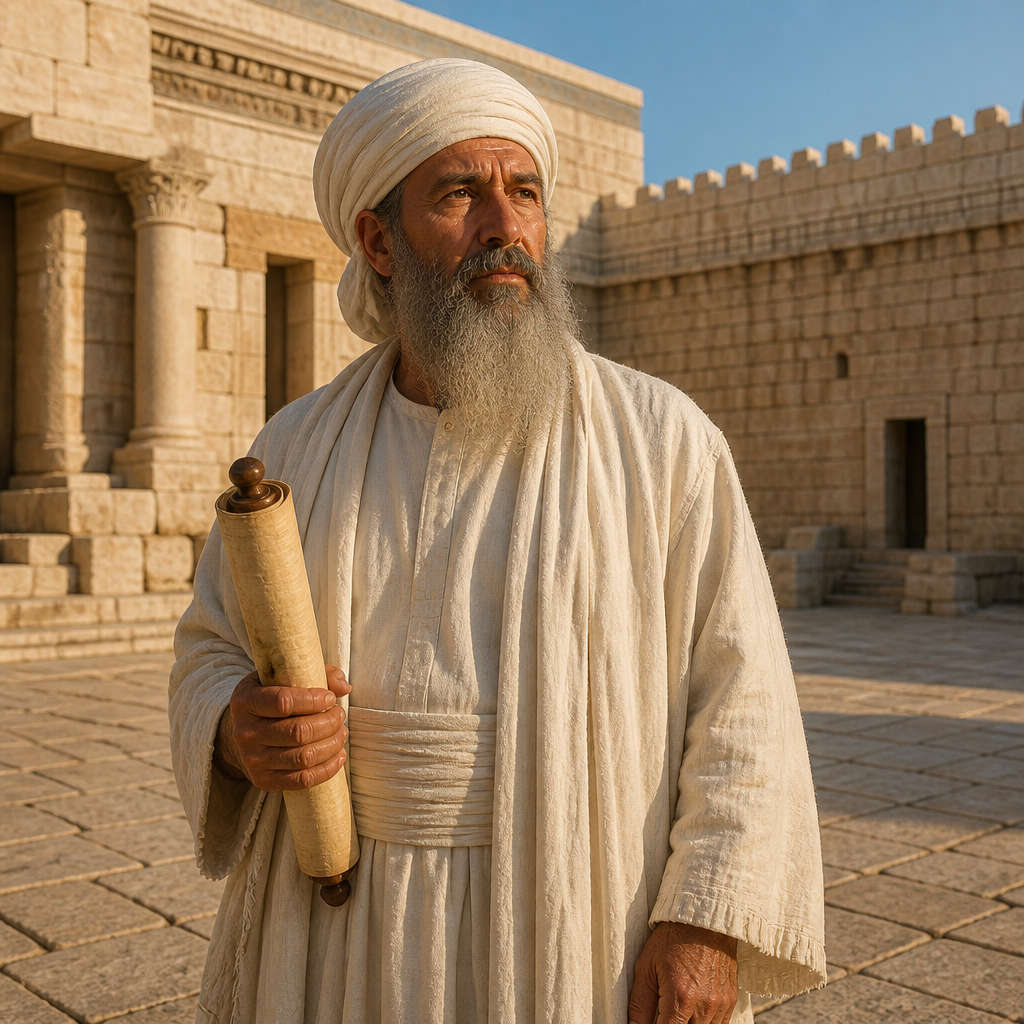
Mattenai was a prominent priest in the generation following the initial return of the Jewish exiles from Babylon to Jerusalem. He is documented in the book of Nehemiah as a leader among the priestly families during the tenure of Joiakim, the son of Jeshua, the high priest. As the head of a paternal house, Mattenai occupied a position of administrative and spiritual authority within the reorganized religious life of the Second Temple period.
His mention in the biblical record is found within a genealogical list intended to establish the continuity of the Aaronic priesthood. This period was marked by the restoration of temple rituals and the careful documentation of lineage to ensure the ritual purity and legitimacy of the officiating clergy. Mattenai’s inclusion signifies his family’s standing among the clerical elite of the post-exilic community.
Background and Family
Mattenai lived during the Post-Exilic Period, a time of reconstruction for the people of Judah. The biblical text identifies him as a member of the house of Joiarib, one of the most prestigious priestly divisions. The house of Joiarib was historically significant, recognized as the first of the twenty-four priestly courses established during the time of King David (1 Chronicles 24:7). Mattenai served as the representative head of this family during the high priesthood of Joiakim, who was the successor to Jeshua (or Joshua), the high priest who had returned with Zerubbabel in 538 BC.
Major Life Events
The primary recorded event involving Mattenai is his formal recognition as the head of his father’s house. In Nehemiah 12, the author provides a ledger of the priests and Levites who lived in the days of Joiakim. This census serves to bridge the gap between the first generation of returnees and the era of Ezra and Nehemiah. Mattenai was part of a select group of men chosen to lead their respective ancestral divisions, ensuring that the service of the temple was maintained according to the established traditions of Israel.
Relationship to Other Biblical Figures
While the text does not record specific personal interactions, Mattenai is directly linked to the high priest Joiakim by chronology. He is also mentioned alongside Uzzi, who was the head of the house of Jedaiah. As the head of the house of Joiarib, Mattenai would have been a peer to other heads of priestly houses listed in Nehemiah 12:12–21, such as Meraiah, Hananiah, and Meshullam. His position suggests a collaborative role in the governance of the temple alongside these other ancestral leaders.
Spiritual Significance
The inclusion of Mattenai in the biblical record underscores the priority the post-exilic community placed on legitimacy and order. By documenting Mattenai as the head of Joiarib, the chronicler demonstrates that the interruption of the Babylonian Exile had not severed the sacred chain of the priesthood. For the readers of Nehemiah, Mattenai represents the faithfulness of God in preserving the line of Aaron and the institutional stability of the temple worship system. His role as a leader during a time of rebuilding highlights the importance of institutional memory and the preservation of religious heritage.
Spiritual Significance
Mattenai’s significance lies in his role as a link in the chain of priestly succession during the sensitive period of the Second Temple's early history. His presence in the record validates the continuity of the house of Joiarib, which was central to the ritual life of Israel. For scholars, Mattenai represents the structured reorganization of the post-exilic community, where lineage served as the bedrock for civil and religious identity.
Frequently Asked Questions
What does the name Mattenai mean?
The name Mattenai is a shortened form of Mattaniah, meaning 'gift of Yahweh' or 'liberal' in Hebrew.
Which priestly house did Mattenai lead?
He was the head of the house of Joiarib, which was the first of the priestly divisions.
When did Mattenai live?
He lived during the Post-Exilic Period, specifically during the high priesthood of Joiakim, roughly in the late 6th or early 5th century BC.
In which book of the Bible is Mattenai mentioned?
This specific Mattenai is mentioned exclusively in the Book of Nehemiah, chapter 12.
Connected Figures
Joiakim
Contemporary High Priest
Uzzi
Contemporary Priestly Leader
Jedaiah
Head of a parallel priestly house
Categories
Mentions by Book
- Nehemiah1
Others Named Mattenai
Mattenai, Descendant of HashumEzra 10:33
Mattenai was a returnee from the Babylonian Exile who, as a descendant of Hashum, was identified among those who had taken foreign wives in violation of the Mosaic Law.
Mattenai, Son of BaniEzra 10:37
Mattenai was a descendant of Bani who returned to Jerusalem from the Babylonian exile and was listed among those who married foreign women.