Mattaniah, Levite of the Return
A Levite and descendant of Asaph who served as a leader of song, thanksgiving, and prayer in post-exilic Jerusalem during the time of Nehemiah.
Mattaniah was a prominent Levite who returned to Jerusalem during the post-exilic period, an era defined by the restoration of the Jewish community after the Babylonian captivity. As a member of the tribe of Levi, Mattaniah held a significant hereditary role in the liturgical life of the Second Temple. He is specifically identified as a descendant of Asaph, placing him within the esteemed lineage of temple musicians established centuries earlier by King David.
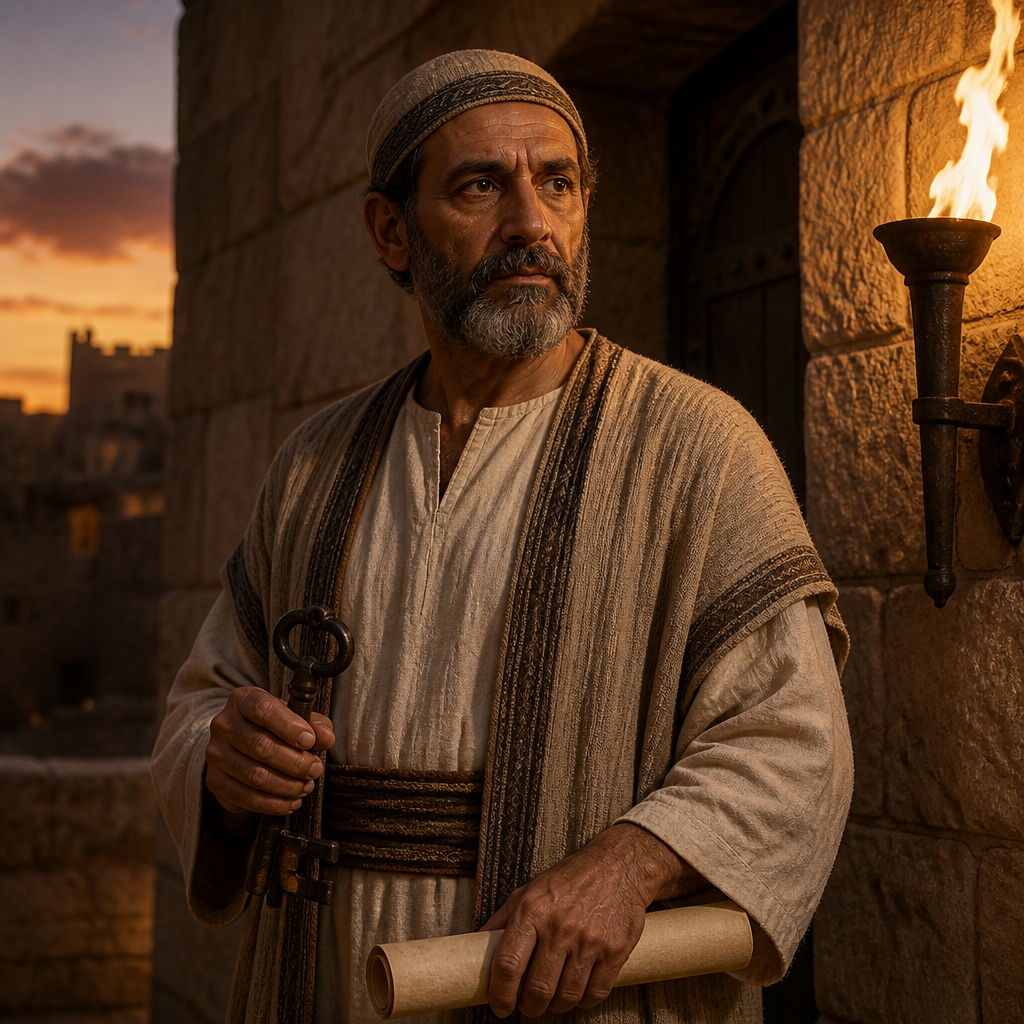
His primary contribution to the community in Jerusalem was the leadership of corporate worship. According to the biblical record, Mattaniah was responsible for leading the songs of thanksgiving and presiding over times of prayer. His role was not merely functional but spiritual, ensuring that the returning exiles maintained their covenantal identity through the praise of Yahweh. He also served in a secondary capacity as a gatekeeper, illustrating the multifaceted responsibilities required of the Levites during the reconstruction of Jerusalem's social and religious order.
Background and Family
Mattaniah was the son of Mica (also rendered as Micah) and a descendant of Zichri (referred to as Zabdi in Nehemiah 11:17) and Asaph. His lineage is of critical importance to his role in the post-exilic community. As a descendant of Asaph, Mattaniah belonged to the guild of temple singers who had historically been responsible for the musical ministry of the Tabernacle and the First Temple.
Following the return from the Babylonian Exile, the genealogical records were meticulously kept to ensure that only those with proven levitical descent served in the sacred offices. Mattaniah’s inclusion in the lists of 1 Chronicles 9 and Nehemiah 11 serves as a validation of his authority and his family's continuity through the upheaval of the exile. He lived during the era of the Return, a time characterized by the leadership of figures such as Nehemiah and the high priest Jeshua.
Major Life Events
The biblical record highlights Mattaniah’s leadership in the liturgical restoration of Jerusalem. In Nehemiah 11:17, he is described as the leader who "led in thanksgiving and prayer." This suggests he was the precentor or the primary director of the choral responses during public worship. In the fragile social environment of post-exilic Judah, the re-establishment of these rituals was essential for the spiritual morale of the people.
Furthermore, Mattaniah is listed among those who participated in the reorganization of the city under Nehemiah’s governorship. Nehemiah 12:8 identifies him as one of the Levites who "led the songs of thanksgiving," working alongside associates such as Bakbukiah and Uzzi. His duties also extended to the physical security and administration of the Temple complex; Nehemiah 12:25 notes that he served as a gatekeeper, specifically guarding the storerooms at the gates. This dual role of musician and guardian highlights the high level of trust placed in him.
Relationship to Other Biblical Figures
Mattaniah worked closely with other prominent Levites of the return, including Jeshua, Binnui, Kadmiel, and Sherebiah. He was a contemporary of Nehemiah, the governor who rebuilt the walls of Jerusalem. His immediate family ties include his father Mica and his son Hashabiah (implied by later genealogical successions in the same period). He is frequently mentioned alongside Bakbukiah, who was considered "second among his associates," suggesting a structured hierarchy within the levitical choirs.
Spiritual Significance
Mattaniah represents the preservation of the Davidic worship tradition through the dark years of the Babylonian Exile. His life demonstrates that the "songs of the Lord" were not lost in a foreign land but were brought back to the land of promise to be sung once again. Theologically, Mattaniah’s role in leading thanksgiving (Hebrew hodot) emphasizes the priority of gratitude in the life of the redeemed community. By guarding the storerooms and leading the prayers, he unified the practical and the spiritual needs of the people, showing that service to God encompasses both the protection of His house and the proclamation of His praise.
Spiritual Significance
Mattaniah's significance lies in his role as a bridge between the pre-exilic worship traditions of David and the post-exilic restoration. As an Asaphite, he ensured that the specific liturgical style and musical heritage of the First Temple were accurately transmitted to the Second Temple period. His leadership in 'thanksgiving and prayer' was foundational to the spiritual identity of the returning remnant, providing a liturgical structure that helped re-center the nation on Yahweh.
Furthermore, his mention in the genealogical records of both 1 Chronicles and Nehemiah underscores the biblical theme of faithfulness. Despite the displacement of the exile, Mattaniah and his family maintained their identity and their calling. He stands as a model of the levitical servant who is willing to perform both the visible tasks of leading worship and the humble tasks of guarding storerooms for the sake of the community's holiness.
Frequently Asked Questions
What was Mattaniah's specific job in Jerusalem?
Mattaniah held two primary roles: he was a leader of the levitical choir who directed songs of thanksgiving and prayer, and he also served as a gatekeeper guarding the Temple storerooms.
Who was Mattaniah's famous ancestor?
Mattaniah was a descendant of Asaph, one of the three great musicians appointed by King David to lead worship in the Tabernacle.
When did Mattaniah live?
He lived during the Post-Exilic Period (Exile and Return), specifically during the time when Nehemiah was governor of Judah (c. 5th century BC).
Who was Mattaniah's father?
According to 1 Chronicles 9:15 and Nehemiah 11:17, his father was Mica (the son of Zichri or Zabdi).
Which tribe did Mattaniah belong to?
Mattaniah belonged to the Tribe of Levi, the tribe set apart for the service of God and the maintenance of the Temple.
Connected Figures
Categories
Mentions by Book
- Nehemiah3
- 1 Chronicles1
Family & Relationships
Parent
1 Chronicles 9:15
Others Named Mattaniah
Mattaniah, Ancestor of UzziNehemiah 11:22
A descendant of Asaph who served as a vital link in the Levitical musical lineages during the post-exilic return to Jerusalem.
Mattaniah, Asaphite of Hezekiah’s Reform2 Chronicles 29:13
A Levite of the Asaphite clan who assisted King Hezekiah in the ritual purification of the Temple in Jerusalem.
Mattaniah, Ancestor of Jahaziel2 Chronicles 20:14
A Levite descendant of Asaph who lived during the Divided Monarchy and served as a foundational ancestor in the lineage of the prophet Jahaziel.
Mattaniah, Son of ElamEzra 10:26
A descendant of Elam who lived during the return from the Babylonian Exile and was among those who divorced their foreign wives at Ezra's command.
Mattaniah, Descendant of BaniEzra 10:37
A Jewish returnee from the Babylonian Exile who was identified by Ezra as having married a foreign woman in violation of the Mosaic Law.
Mattaniah, Son of Heman the Singer1 Chronicles 25:4
A Levite musician and son of Heman the King's Seer, Mattaniah served in the sanctuary as a leader of the ninth musical division during the Divided Monarchy.
Mattaniah, Grandfather of HananNehemiah 13:13
A Levite during the post-exilic period whose grandson Hanan was appointed by Nehemiah as a trusted treasury assistant.
Mattaniah, Descendant of ZattuEzra 10:27
A descendant of Zattu who lived during the post-exilic return and was listed among those required to divorce foreign wives in the reforms of Ezra.
Mattaniah, Descendant of Pahath-moabEzra 10:30
A returnee from the Babylonian Exile who was identified by Ezra as having married a foreign woman in violation of the Mosaic Law.