Joseph, Priest of Shebaniah
A prominent priest and head of a paternal house who served in Jerusalem during the generation following the return from the Babylonian exile.
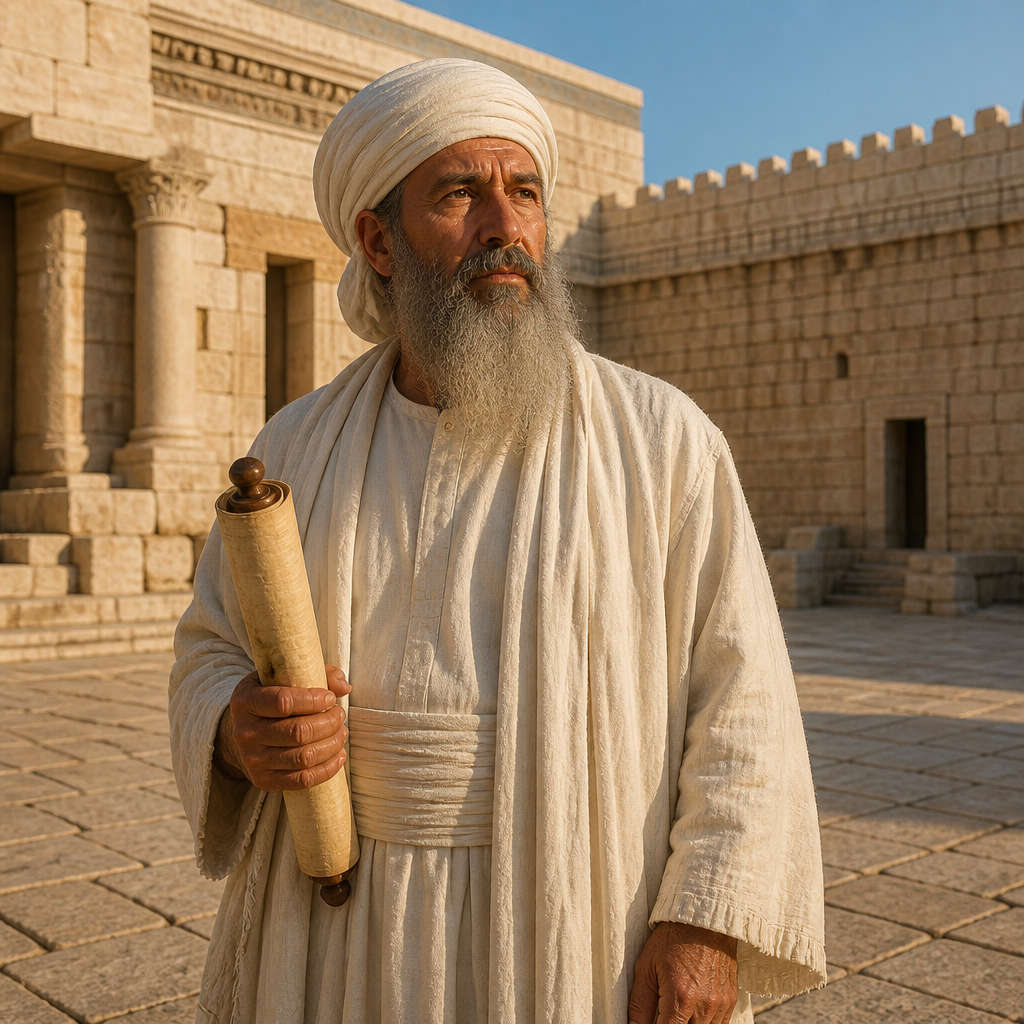
Joseph was a Jewish priest of the post-exilic period, serving during the time of the high priest Joiakim. As the head of the priestly family of Shebaniah, Joseph played a crucial role in the ecclesiastical restoration of Jerusalem. His leadership occurred during a pivotal era of reconstruction, following the initial return of the exiles under Zerubbabel but preceding the major reforms of Nehemiah and Ezra.
His primary mention in the biblical record is found in the genealogical and functional lists of Nehemiah 12. These lists were vital to the community of the 'Return,' as they established the legitimacy of the sacrificial system and the continuity of the covenantal worship between pre-exilic Israel and the newly restored community in the province of Yehud.
Background and Family
Joseph appears in the biblical record during the era of the 'Exile and Return,' specifically noted in the lists preserved by the historian Nehemiah. He belonged to the priestly class, identifying him as a descendant of Aaron through the line of Shebaniah. During the tenure of Joiakim the high priest (son of Jeshua), the priestly families were organized by their paternal houses to ensure the proper rotation and administration of Temple duties. Joseph is explicitly identified as the leader or 'chief' of the house of Shebaniah (Nehemiah 12:14).
While his specific tribal affiliation is not explicitly stated in the verse, his status as a priest inherently places him within the Tribe of Levi. The house of Shebaniah was one of the many priestly lines that had returned from Babylon, representing the continuity of the Jewish liturgical tradition despite decades of foreign captivity.
Major Life Events
The most significant recorded aspect of Joseph’s life was his leadership during the generation of Joiakim. This period (roughly the late 6th to early 5th century BC) was characterized by the stabilization of the Second Temple’s operations. As the head of a paternal house, Joseph was responsible for the spiritual and administrative oversight of his kin who served in the Temple.
His role involved the preservation of the sacred laws and the execution of the daily sacrifices. The inclusion of his name in the official records of the province suggests he was a man of significant social and religious standing, recognized by both the local priesthood and the Persian-appointed administration as a legitimate representative of the Aaronic line.
Relationship to Other Biblical Figures
Joseph’s primary biblical connection is his association with the high priest Joiakim, who served as the bridge between the first returnees under Jeshua and the later arrival of Ezra. Joseph is listed alongside other heads of houses, such as Jonathan (of the house of Malluchi). These men were the contemporaries who laid the groundwork for the religious revitalization that would eventually be championed by Nehemiah. His relationship to his predecessor Shebaniah is one of lineage, signifying his authority was derived from his ancestral connection to the ancient orders established during the monarchy.
Spiritual Significance
The inclusion of Joseph in the Book of Nehemiah serves a specific theological purpose: the validation of the Second Temple. By recording the names of the priests and their houses, the biblical text emphasizes that the God of Israel had not abandoned His people during the exile. Joseph represents the 'remnant'—a physical manifestation of God’s promise to maintain a lamp for Israel. His service ensured that the 'holy seed' remained distinct and that the worship of Yahweh continued according to the prescriptions of the Mosaic Law during a time of great political and social vulnerability.
Spiritual Significance
Joseph’s presence in the Nehemiah genealogies underscores the theme of continuity and legitimacy. In the post-exilic community, proving one’s lineage was not merely a matter of pride but a requirement for service in the sanctuary; Joseph stands as a verified link to the ancient priestly orders, ensuring that the restored worship was scripturally valid. His role as a head of a paternal house highlights the importance of institutional stability during the fragile years of the Jewish return to the Levant.
Frequently Asked Questions
Which biblical book mentions this Joseph?
This Joseph is mentioned exclusively in the Book of Nehemiah, specifically in chapter 12, verse 14.
What was Joseph's occupation?
Joseph was a priest and the head of the paternal house of Shebaniah.
When did Joseph live?
Joseph lived during the Post-Exilic Period (Exile and Return), specifically during the days of the high priest Joiakim in the late 6th or early 5th century BC.
What was the significance of the house of Shebaniah?
The house of Shebaniah was one of the registered priestly families that returned from the Babylonian exile to serve in the Second Temple in Jerusalem.
Connected Figures
Joiakim
High Priest under whom Joseph served
Shebaniah
Ancestral head of his priestly house
Jonathan
Contemporary priest of the house of Malluchi
Categories
Mentions by Book
- Nehemiah1
Others Named Joseph
Joseph, Son of JacobGenesis 30:24
The favored son of Jacob who, after being sold into slavery by his brothers, rose to become the Grand Vizier of Egypt and preserved the lineage of Israel during a regional famine.
Joseph, Husband of MaryMatthew 1:16
A righteous descendant of David who served as the legal father of Jesus and the husband of the Virgin Mary during the early 1st century AD.
Joseph, Son of Asaph1 Chronicles 25:2
A Levite musician and son of Asaph who served as a leader of the temple worship singers during the reign of King David and the Divided Monarchy.
Joseph, Father of IgalNumbers 13:7
A man from the tribe of Issachar during the Exodus, known as the father of Igal, one of the twelve spies sent by Moses to scout the land of Canaan.
Joseph called BarsabbasActs 1:23
A prominent early disciple nominated alongside Matthias to replace Judas Iscariot among the twelve apostles following the ascension of Jesus Christ.
Joseph, Son of JonamLuke 3:30
A member of the tribe of Judah and an ancestor of Jesus Christ, positioned within the Davidic line as recorded in the Lucan genealogy.
Joseph, Son of BaniEzra 10:42
A descendant of Bani who, during the return from the Babylonian exile, was identified as one of the Israelites who had married a foreign woman and subsequently repented.
Joseph, Son of MattathiasLuke 3:24
A member of the tribe of Judah and an ancestor of Jesus Christ recorded in the Lucan genealogy between the Divided Monarchy and the First Century AD.