Jehozadak
Who was Jehozadak in the Bible?
A high-ranking priest of the line of Zadok who was carried into Babylonian captivity and served as the link between the first and second temple priesthoods.
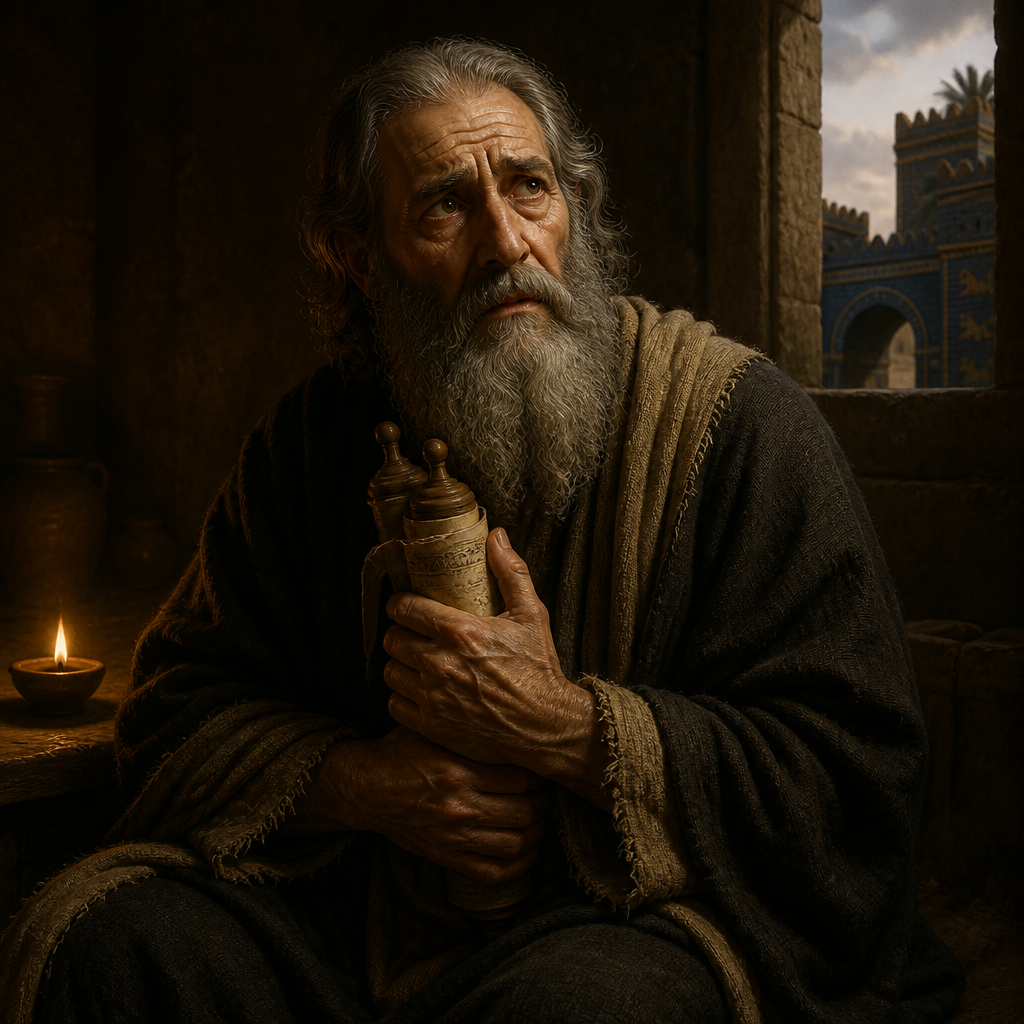
Jehozadak (also rendered as Jozadak) was a prominent priest of the tribe of Levi during the pivotal transition between the Divided Monarchy and the Post-Exilic Period. As the son of Seraiah, the last High Priest to serve in Solomon’s Temple before its destruction, Jehozadak represents the continuity of the Aaronic priesthood through the trauma of the Babylonian Exile. His life was defined by the transition from national sovereignty to foreign subjugation, as he was among the captive elite taken to Babylon by Nebuchadnezzar II.
While the biblical record does not explicitly state that Jehozadak served as High Priest in Jerusalem himself, his genealogical placement is critical. He is the bridge between the pre-exilic priesthood and the restoration community. He is most frequently identified in the prophetic and historical books as the father of Joshua (or Jeshua), the High Priest who returned to Jerusalem with Zerubbabel to rebuild the altar and the Temple. Through Jehozadak, the legitimate line of the priesthood was preserved during the seventy years of captivity in Babylon.
Background and Family
The lineage of Jehozadak is established in the genealogical records of 1 Chronicles 6. He was a member of the tribe of Levi and specifically the line of Zadok, the priestly family that held the exclusive right to the high priesthood in Jerusalem. His father was Seraiah, who served as High Priest during the reign of King Zedekiah. According to 2 Kings 25:18-21, Seraiah was executed by Nebuchadnezzar at Riblah after the fall of Jerusalem in 586 BC. This left Jehozadak as the primary heir to the high-priestly office.
Jehozadak was also the brother of Ezra the Scribe, a central figure in the later restoration of the Law in Jerusalem. This familial connection underscores the immense religious influence of his household during the exilic period. The name Jehozadak, meaning "YHWH is righteous," reflects the theological hope of his family even as the kingdom of Judah collapsed under divine judgment.
Major Life Events
The defining moment of Jehozadak’s life recorded in Scripture is his deportation. 1 Chronicles 6:15 states, "Jehozadak went into captivity when the LORD sent Judah and Jerusalem into exile by the hand of Nebuchadnezzar." Unlike his father who met a violent end, Jehozadak was spared to live in Babylon. His life in exile is not detailed in terms of specific actions, but his presence there ensured that the priestly traditions and the genealogical records were maintained.
Though he did not live to see the completion of the Second Temple, his legacy was realized through his son, Joshua (Jeshua). Following the decree of Cyrus the Great in 538 BC, Joshua became one of the primary leaders of the first wave of returning exiles. The frequent biblical refrain "Joshua son of Jehozadak" emphasizes that the authority of the new High Priest rested upon the legitimate lineage of his father, the captive priest.
Relationship to Other Biblical Figures
Jehozadak’s identity in the Bible is almost inseparable from his son, Joshua. In the books of Haggai and Zechariah, the mention of Jehozadak serves as a credential for Joshua’s authority. When the prophet Haggai urged the people to resume building the Temple in the second year of Darius (c. 520 BC), he addressed Joshua specifically as the "son of Jehozadak" (Haggai 1:1, 1:12). This title validated Joshua's standing alongside Zerubbabel, the Davidic governor.
Additionally, the book of Ezra identifies Joshua as "Jeshua son of Jozadak" (Ezra 3:2, 5:2). In these accounts, the name of the father provides the legal and religious foundation for the re-establishment of the altar and the sacrificial system. The collaboration between the prophets Haggai and Zechariah and Jehozadak's son highlights the restoration of the covenantal structure of Israel—prophet, prince, and priest—following the long silence of the exile.
Spiritual Significance
Theologically, Jehozadak represents the endurance of God’s promises during times of judgment. The exile was a period of profound spiritual crisis where the Temple was gone and the Davidic throne was vacant. However, the survival of Jehozadak in Babylon signifies that the "righteousness of YHWH" (the meaning of his name) remained active. The priesthood was not abolished by the Babylonian conquest; it was merely displaced.
In the visionary literature of Zechariah, Jehozadak’s son is crowned as a symbolic type of the coming Messiah. While Jehozadak himself lived and likely died in a foreign land, his role as the progenitor of the restoration priesthood makes him a vital link in the redemptive history of Israel. He stands as a witness to the fact that even when the people are under the "hand of Nebuchadnezzar," the providential line of the priesthood remains intact for a future day of restoration.
Jehozadak serves as the essential genealogical link that preserves the continuity of the Aaronic priesthood from the First Temple to the Second Temple. His inclusion in the chronicles of the exile demonstrates that God maintained the structure of the covenant community even during the judgment of the Babylonian captivity. By surviving the fall of Jerusalem, Jehozadak ensured that the 'sons of Zadok' would be available to lead the spiritual restoration under Zerubbabel and Cyrus.
Furthermore, he is significant because his name and lineage are used by the prophets Haggai and Zechariah to validate the ministry of his son, Joshua. In the post-exilic community, legitimacy was proven through ancestry, and Jehozadak’s pedigree provided the necessary evidence that the new Temple's worship was a valid continuation of the ancient faith. He is the quiet anchor of the exilic period, representing the survival of the holy line in a pagan land.
Frequently Asked Questions
Did Jehozadak ever serve as High Priest in Jerusalem?
The Bible does not explicitly record Jehozadak performing the duties of High Priest in the Temple. His father, Seraiah, was the last to serve before the destruction of the First Temple, and his son, Joshua, was the first to serve in the Second Temple era. Jehozadak’s primary role was as the captive heir in Babylon.
Why is he sometimes called Jozadak?
Jozadak is a contracted or shortened form of the name Jehozadak. Both names mean 'YHWH is righteous.' The books of Ezra and Nehemiah typically use the shorter form (Jozadak), while the prophetic books and Chronicles use the full form (Jehozadak).
Who was Jehozadak’s father?
His father was Seraiah, the High Priest who was captured and executed by the Babylonians at the fall of Jerusalem (1 Chronicles 6:14; 2 Kings 25:18).
What happened to Jehozadak during the Babylonian invasion?
According to 1 Chronicles 6:15, he was taken into captivity by Nebuchadnezzar. Unlike many of the officials who were executed, he was deported to Babylon as part of the Jewish exile.
Was Jehozadak related to Ezra the Scribe?
Yes. Ezra 7:1 lists Ezra's genealogy, and comparing it with 1 Chronicles 6 shows that both Jehozadak and Ezra were descendants of Seraiah, making them brothers.
Family & Relationships
Parents
 Seraiah the Chief PriestFather1 Chronicles 6:14Stated
 JehozadakThis page
Children
 Joshua, High Priest of the ReturnSonHaggai 1:1Stated
Extended family
 Azariah, High Priest of the Divided MonarchyGrandfather1 Chronicles 6:14
Inferred
1 Chronicles 6:14 names Azariah and Jehozadak in the same verse but does not state a grandson tie between them; the link rests on the surrounding narrative.Evidence: 1 Chronicles 6:14; Ezra 7:1
Connected Figures
Family
Father · 1 Chronicles 6:14
Seraiah was the final high priest of Solomon’s Temple in Jerusalem before its destruction by the Babylonians and the father of Ezra the Scribe.
Divided MonarchyFirst: 2 Kings 25:185 versesHigh PriestLevi
Son · Haggai 1:1
Joshua, son of Jehozadak, was the first High Priest of the Jewish community that returned from the Babylonian exile to rebuild the Temple in Jerusalem.
Exile and ReturnFirst: Ezra 2:222 versesHigh PriestLevi
Grandfather · 1 Chronicles 6:14
Azariah was a high official in the Temple of Jerusalem and a key link in the Aaronic priesthood during the late Divided Monarchy, serving as the father of the Chief Priest Seraiah.
Divided MonarchyFirst: 1 Chronicles 6:135 versesHigh Priest / Chief Official of the TempleLevi
Categories
Mentions by Book
- 1 Chronicles2
- Ezra2
- Haggai5
- Zechariah1
Scripture References
All 10 indexed verses, in canonical order, from the Berean Standard Bible.
1 Chronicles · 2
- 1 Chronicles 6:14
Azariah was the father of Seraiah, and Seraiah was the father of Jehozadak.
- 1 Chronicles 6:15
Jehozadak went into captivity when the LORD sent Judah and Jerusalem into exile by the hand of Nebuchadnezzar.
Ezra · 2
- Ezra 3:2Partial
Then Jeshua son of Jozadak and his fellow priests, along with Zerubbabel son of Shealtiel and his associates, began to build the altar of the God of Israel to sacrifice burnt offerings on it, as it is written in the Law of Moses the man of God.
Cited as a key verse; added so References, Key Verses and Mentions by Book share one index.
- Ezra 7:1Partial
Many years later, during the reign of Artaxerxes king of Persia, Ezra son of Seraiah, the son of Azariah, the son of Hilkiah,
Cited as evidence on a family card; added so References, Key Verses and Mentions by Book share one index.
Haggai · 5
- Haggai 1:1
In the second year of the reign of Darius, on the first day of the sixth month, the word of the LORD came through Haggai the prophet to Zerubbabel son of Shealtiel, governor of Judah, and to Joshua son of Jehozadak, the high priest, stating
- Haggai 1:12
Then Zerubbabel son of Shealtiel and Joshua son of Jehozadak, the high priest, as well as all the remnant of the people, obeyed the voice of the LORD their God and the words of the prophet Haggai, because the LORD their God had sent him. So the people feared the LORD.
- Haggai 1:14
So the LORD stirred the spirit of Zerubbabel son of Shealtiel, governor of Judah, and the spirit of Joshua son of Jehozadak, the high priest, as well as the spirit of all the remnant of the people. And they came and began the work on the house of the LORD of Hosts, their God,
- Haggai 2:2
“Speak to Zerubbabel son of Shealtiel, governor of Judah, and to Joshua son of Jehozadak, the high priest, and also to the remnant of the people. Ask them,
- Haggai 2:4
But now be strong, O Zerubbabel, declares the LORD. Be strong, O Joshua son of Jehozadak, the high priest. And be strong, all you people of the land, declares the LORD. Work! For I am with you, declares the LORD of Hosts.
Zechariah · 1
- Zechariah 6:11
Take silver and gold, make an ornate crown, and set it on the head of the high priest, Joshua son of Jehozadak.