Jehohanan, Choir Member of the Restoration
A participant in the musical procession and dedication of the rebuilt walls of Jerusalem under Nehemiah's leadership.
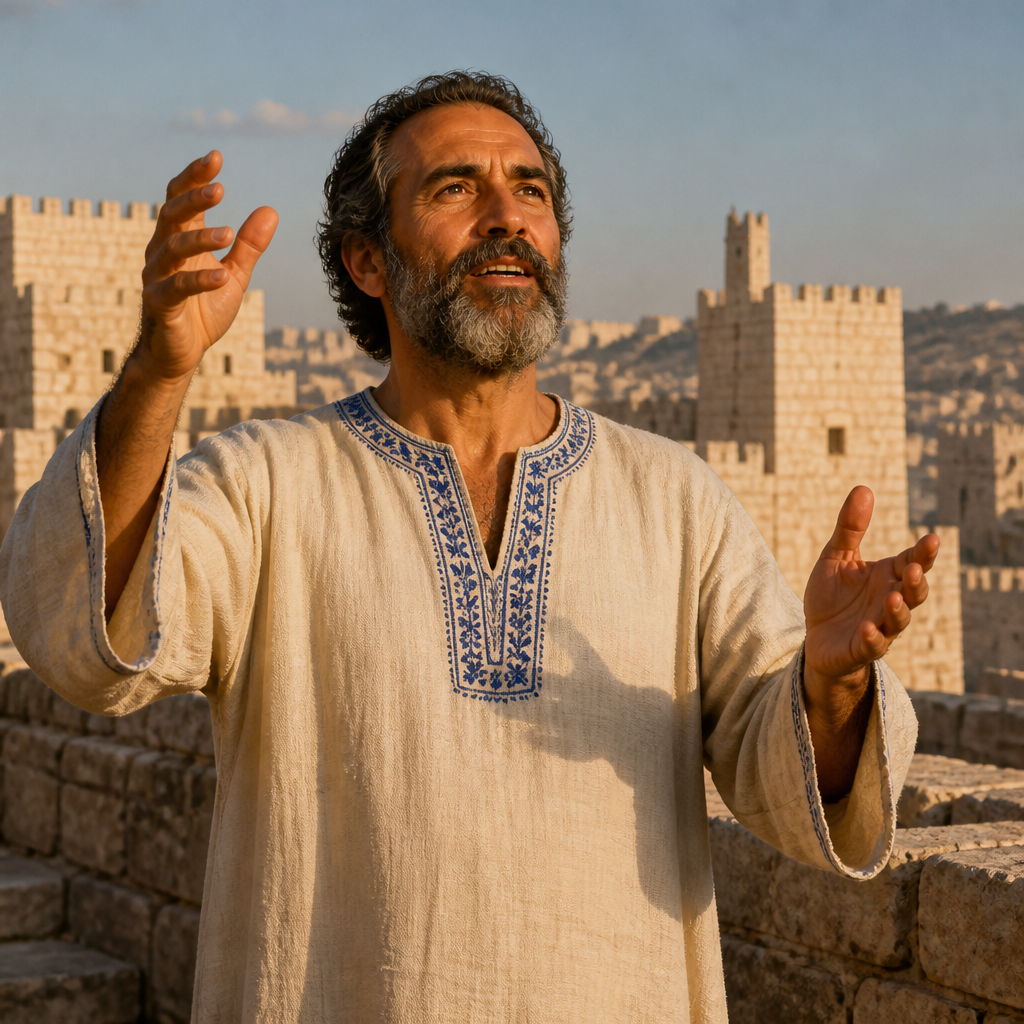
Jehohanan was a Judean individual who participated in one of the most significant liturgical and civic events of the post-exilic period: the dedication of the walls of Jerusalem. Following the return from Babylonian captivity and the successful completion of the city's defenses, the Jewish community organized a massive celebratory procession to consecrate the fortifications. Jehohanan is listed as one of the individuals who formed part of this ceremonial gathering.
His role is specifically mentioned within the context of the musical and ritualistic celebration led by Nehemiah and the religious leaders. In the biblical record, Jehohanan appears alongside other notable figures such as Maaseiah, Shemaiah, and Eleazar, all of whom contributed to the vocal and instrumental worship that marked the restoration of Jerusalem's security and status as the center of Jewish life.
Background and Family
The biblical record for this specific Jehohanan is found exclusively in the book of Nehemiah, which chronicles the third wave of returns from the Babylonian exile. While the text does not provide his specific tribal affiliation or lineage, the context of Nehemiah 12:42 suggests he was either a member of the priestly class or a Levite involved in the musical liturgy of the Temple. His presence among the leaders and musicians during a formal religious procession indicates he held a recognized status within the community of the restoration.
Major Life Events
The defining moment of Jehohanan's recorded life occurred during the dedication of the Jerusalem wall. After Nehemiah had overseen the rapid reconstruction of the city's defenses despite intense local opposition, he organized a grand ceremony to dedicate the structure to God.
According to the biblical narrative, two large choirs were appointed to give thanks. One group proceeded to the right on the wall toward the Dung Gate, while the second group went in the opposite direction. Jehohanan is named as part of the assembly that participated in this ritual. The climax of the event saw both choirs taking their places in the house of God. Nehemiah 12:42 notes that the choirs sang out under the direction of Jezrahiah. The joy of the occasion was so great that the "rejoicing in Jerusalem could be heard from far away."
Relationship to Other Biblical Figures
Jehohanan is mentioned in immediate proximity to Maaseiah, Shemaiah, Eleazar, Uzzi, Malchijah, Elam, and Ezer. This group served under the leadership of Jezrahiah the director. He functioned within the larger administrative and spiritual framework established by Nehemiah the governor and Ezra the scribe. His cooperation with these men signifies the unity of the post-exilic community in their efforts to re-establish the sanctity of Jerusalem.
Spiritual Significance
Although Jehohanan’s mention is brief, his inclusion in the sacred text highlights the importance of collective worship and the role of every individual in the restoration of a community. His participation in the choir demonstrates that the physical rebuilding of Jerusalem was not merely a construction project, but a spiritual endeavor that required a response of praise and dedication. He represents the "rank and file" of the faithful whose names are preserved because they stood for the restoration of God's city during a pivotal era of redemptive history.
Spiritual Significance
Jehohanan serves as a testament to the community-wide effort required to restore Jerusalem after the exile. His role in the choir during the dedication of the walls underscores the biblical theme that physical labor (building) and spiritual devotion (singing/worship) are inextricably linked. By being named in the official registers of Nehemiah, he occupies a place in the documented history of those who returned to the Promised Land to revive the covenantal life of Israel.
Furthermore, his presence in the procession illustrates the liturgical organization of the Post-Exilic Period. It shows that even after decades of displacement, the people of Judah maintained their musical traditions and their commitment to the formal consecration of their civic achievements to the Lord.
Frequently Asked Questions
When did Jehohanan live?
He lived during the Post-Exilic Period, specifically during the mid-5th century BC, coinciding with the governorship of Nehemiah.
What was Jehohanan’s primary contribution to the Bible?
He is recorded as a participant in the dedication ceremony of the rebuilt walls of Jerusalem, serving as one of the singers or leaders in the musical procession.
In which book of the Bible is this Jehohanan found?
He is mentioned only in the book of Nehemiah, specifically in chapter 12, verse 42.
Was Jehohanan a priest?
While the Bible does not explicitly label him a priest in Nehemiah 12:42, he is grouped with other leaders and musicians in a context that strongly suggests he was either a priest or a Levite.
Connected Figures
Nehemiah
Governor and leader of the restoration
Jezrahiah
Musical director of the choir
Maaseiah
Associate in the choir procession
Uzzi
Associate in the choir procession
Categories
Mentions by Book
- Nehemiah1
Others Named Jehohanan
Jehohanan, Son of EliashibEzra 10:6
A contemporary of Ezra who provided a private chamber within the temple complex where the scribe could mourn and fast over the sins of the returned exiles.
Jehohanan, Father of Ishmael2 Chronicles 23:1
A man of Judah whose son, Ishmael, served as a military commander and played a pivotal role in the restoration of the Davidic line by overthrowing Queen Athaliah.
Jehohanan, Descendant of BebaiEzra 10:28
A member of the family of Bebai who was listed among the returned exiles required to separate from foreign wives during the reforms of Ezra.
Jehohanan, Levite of the Divided Monarchy1 Chronicles 26:3
A Korahite Levite and gatekeeper appointed to serve in the Tabernacle during the Davidic organization of the Divided Monarchy period.
Jehohanan, Commander under Jehoshaphat2 Chronicles 17:15
A high-ranking military official and commander of 280,000 troops serving King Jehoshaphat of Judah during the Divided Monarchy.
Jehohanan, Priestly Descendant of AmariahNehemiah 12:13
Jehohanan was a priest and head of a father's house who served during the post-exilic restoration in Jerusalem.
Jehohanan, Son of TobiahNehemiah 6:18
An Ammonite-Judahite noble whose marriage into a prominent Jewish family facilitated his father's subversive influence in Jerusalem during the time of Nehemiah.