Iddo, Priest of the Post-Exilic Period
A prominent priest who returned from the Babylonian exile to Jerusalem and served as a head of a priestly house.
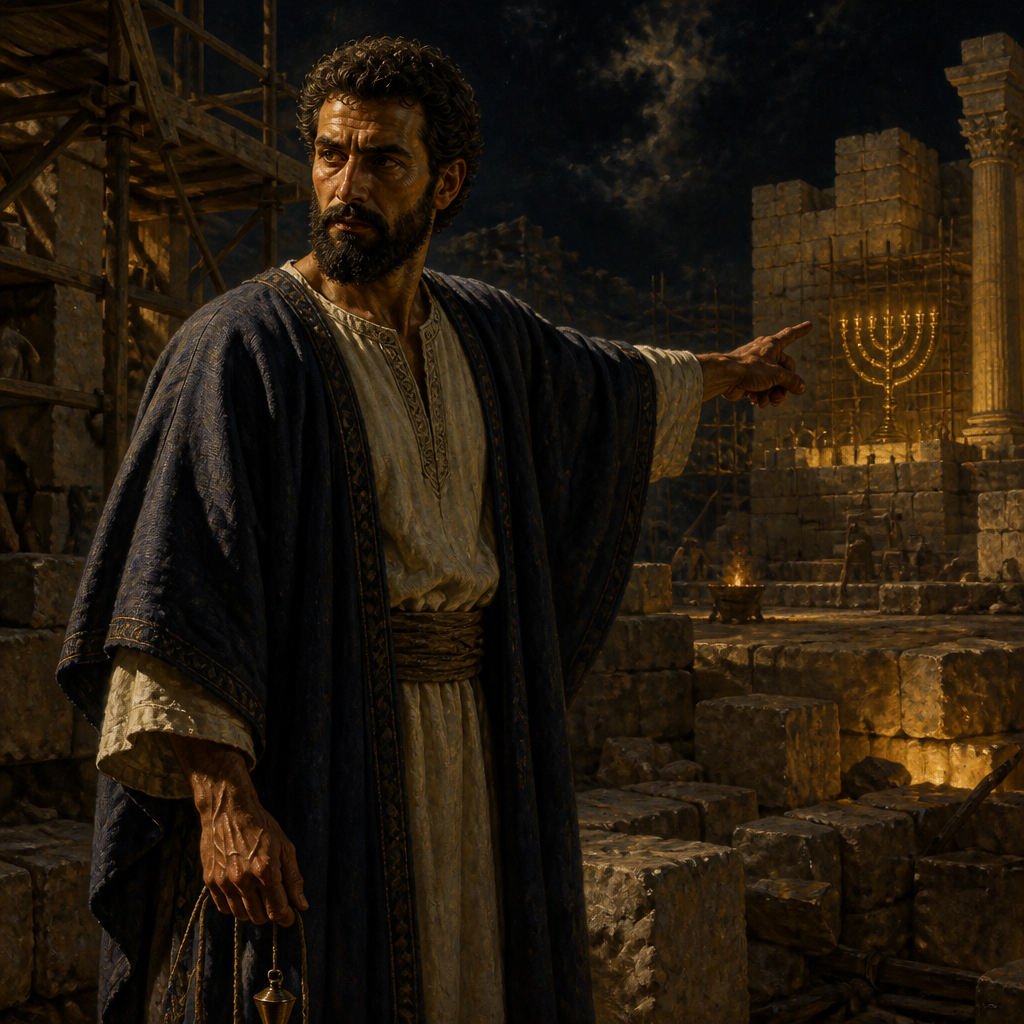
Iddo was a Jewish priest of the post-exilic period, identified as one of the religious leaders who returned from the Babylonian captivity to the land of Judah. His presence in the biblical record is situated during the critical era of restoration, specifically associated with the wave of returnees led by Zerubbabel and the high priest Jeshua.
Though his personal actions are not detailed in narrative form, Iddo represents one of the foundational priestly lineages tasked with re-establishing the sacrificial system and temple worship in Jerusalem. His role was hereditary and administrative, ensuring the continuity of the covenantal duties of the house of Aaron following decades of displacement in Babylon.
Background and Family
Iddo appears in the administrative and genealogical records of the book of Nehemiah, specifically within the lists detailing the priests and Levites who returned from exile. The biblical text places him among the leaders who came up with Zerubbabel, the grandson of King Jehoiachin, and Jeshua (Joshua), the high priest, during the initial return authorized by the Persian Empire around 538 BC. While the specific tribe is not explicitly stated in the dataset, his identification as a priest confirms his lineage within the tribe of Levi and the house of Aaron.
Major Life Events
The primary mention of Iddo occurs in Nehemiah 12:4, where he is listed alongside other priests such as Ginnethon and Abijah. This list documents the heads of the priestly families who participated in the restoration of the Jewish community in Jerusalem. His life was defined by the transition from the Babylonian Exile to the Return, a period marked by the arduous task of rebuilding the city walls and the Second Temple.
In the subsequent generation, as recorded in Nehemiah 12:16, the leadership of Iddo’s priestly house passed to Zechariah. This record indicates that Iddo’s name was preserved as a patriarchal identifier for his family line (the "house of Iddo"). During the days of Joiakim (the son of Jeshua), Iddo’s descendants continued to perform the sacred duties essential to the religious life of the post-exilic community.
Relationship to Other Biblical Figures
Iddo functioned as a peer to other significant figures in the early restoration movement. He is grouped with Ginnethon and Abijah, the latter of whom is notable as the ancestor of the priestly division to which John the Baptist’s father, Zechariah, would later belong (Luke 1:5). Within his own family line, Iddo is directly associated with Zechariah (Nehemiah 12:16), who served as the head of the house of Iddo in the generation following the initial return.
Spiritual Significance
The presence of Iddo in the Nehemiah genealogies underscores the biblical theme of divine faithfulness and the preservation of the priesthood. Despite the trauma of the exile and the destruction of the first temple, the survival of Iddo’s lineage demonstrated that the sacrificial and mediatory roles of the priesthood remained intact. By maintaining their genealogical records and returning to their ancestral duties, Iddo and his contemporaries provided the necessary structural and spiritual continuity for the Jewish people to remain a distinct nation dedicated to the worship of Yahweh. His inclusion in the text serves as a witness to the orderly restoration of the cultic life of Israel, ensuring that every division of the priesthood was accounted for in the new era of the Second Temple.
Spiritual Significance
Iddo serves as a symbol of institutional continuity during one of Israel's most disruptive historical periods. His inclusion in the priestly registers of Nehemiah 12 highlights the importance of liturgical order and the preservation of the Aaronic priesthood through the Babylonian captivity.
Theological emphasis is placed on the fact that Iddo and his peers did not lose their identity in a foreign land. By returning to Jerusalem, they fulfilled the prophetic expectations of a restored Zion. Iddo’s legacy is carried forward through his descendants, ensuring that the service of the sanctuary remained unbroken for future generations.
Frequently Asked Questions
When did Iddo live?
Iddo lived during the Post-Exilic Period, specifically around the time of the first return of Jews from Babylon under Zerubbabel in 538 BC.
What was Iddo's occupation?
He was a priest and a head of a priestly house among the Jewish returnees.
Which book of the Bible mentions this Iddo?
This specific Iddo is mentioned exclusively in the book of Nehemiah, chapters 12:4 and 12:16.
Who succeeded Iddo as the head of his priestly family?
According to Nehemiah 12:16, Zechariah was the head of the priestly house of Iddo in the generation following him.
Was Iddo a leader in the community?
Yes, he was considered one of the 'heads of the priests' who returned to Jerusalem to re-establish religious life.
Connected Figures
Zerubbabel
Leader of the return from exile
Jeshua
High Priest during Iddo's time
Zechariah
Successor and head of Iddo's priestly house
Categories
Mentions by Book
- Nehemiah2
Others Named Iddo
Iddo, son of Zechariah1 Chronicles 27:21
A tribal leader of the half-tribe of Manasseh in Gilead who served as an administrative head during the reign of King David.
Iddo the Seer2 Chronicles 12:15
A prophet and chronicler of the Divided Monarchy whose writings served as primary sources for the histories of Solomon, Rehoboam, and Abijah.
Iddo, Levite of the Divided Monarchy1 Chronicles 6:21
A Levite of the Gershonite line who served during the period of the Divided Monarchy as a link in the ancestral genealogy of the temple servants.
Iddo, Leader at CasiphiaEzra 8:17
A high-ranking Jewish leader residing in Casiphia who provided Ezra with skilled Levites and temple servants for the return to Jerusalem.
Iddo, Father of Ahinadab1 Kings 4:14
A high-ranking official's father during the reign of King Solomon who resided in the strategically significant region of Mahanaim.
Iddo, Grandfather of ZechariahEzra 5:1
Iddo was the grandfather of the prophet Zechariah and a key figure in the lineage of the leadership that oversaw the rebuilding of the Second Temple.