Iddo, Father of Ahinadab
Who was Iddo, Father of Ahinadab, in the Bible?
A high-ranking official's father during the reign of King Solomon who resided in the strategically significant region of Mahanaim.
This is one of 7 people named Iddo in the Bible. See all 7 →
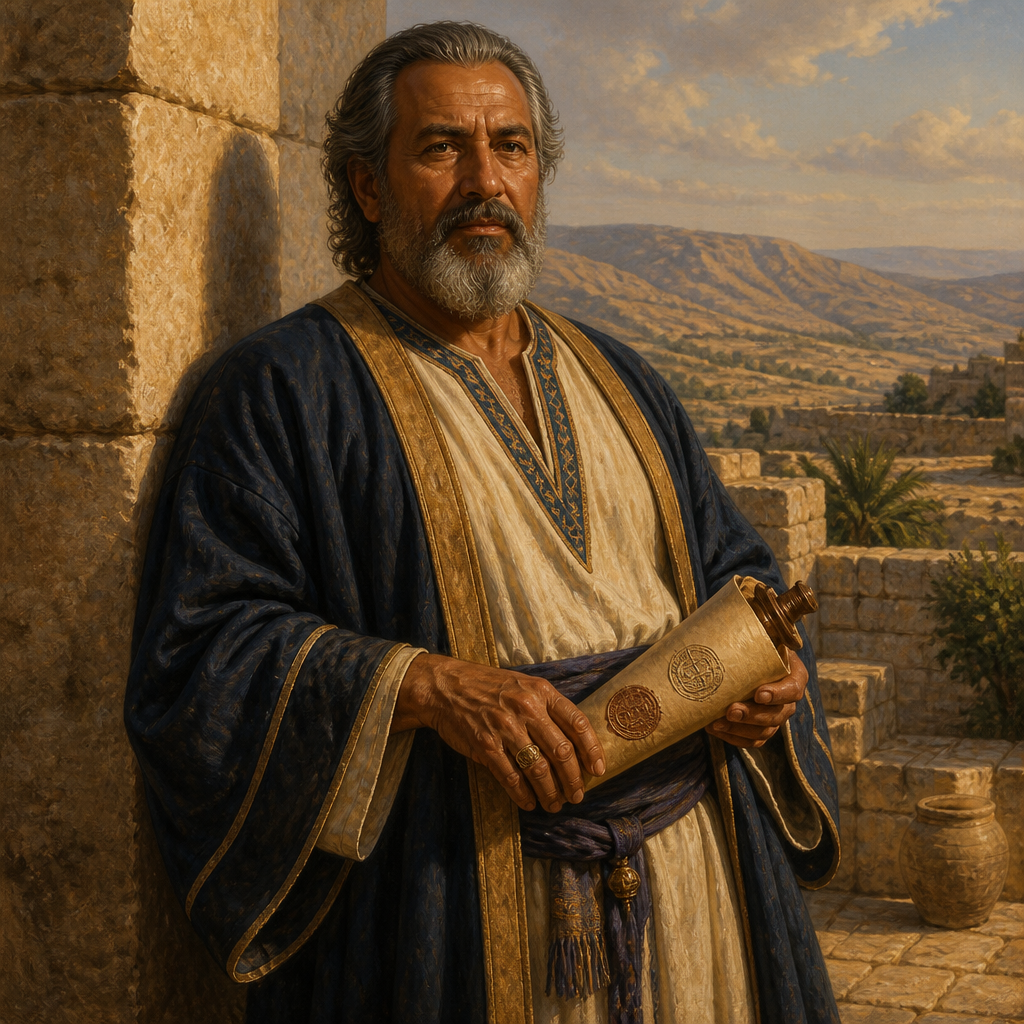
Iddo was a figure within the administrative framework of the United Monarchy during the 10th century BC. He is specifically identified in the biblical record as the father of Ahinadab, one of the twelve district governors appointed by King Solomon to oversee the provision of the royal household. This administrative structure was a hallmark of Solomon’s centralized government, reflecting the peak of Israelite bureaucratic organization.
Living during the United Monarchy, Iddo’s family line was entrusted with the governance of Mahanaim. This location was a vital administrative and military center in the Transjordan region, situated north of the Jabbok River. While Iddo himself is not listed as the primary office holder, his mention serves to establish the lineage and status of his son, Ahinadab, within the Solomonic court.
Background and Family
The historical footprint of Iddo is preserved within the administrative lists of 1 Kings 4. This chapter details the zenith of King Solomon’s reign, focusing on the internal organization that sustained the lavish expenses of the United Monarchy. Iddo is mentioned exclusively as the father of Ahinadab. While his own tribe is not explicitly stated in the text of 1 Kings 4:14, the geographical placement of his son’s jurisdiction suggests deep ties to the territories east of the Jordan River, specifically within the regions historically allotted to the tribes of Gad or Manasseh.
In the ancient Near Eastern context, the naming of a father in a governmental list served two primary purposes: to distinguish the individual from others with similar names and to certify the noble or trustworthy lineage of the appointee. As the father of a district governor, Iddo would have belonged to the landed elite or the emerging class of royal servants who flourished under the Davidic and Solomonic dynasties.
Major Life Events
Iddo’s primary significance in the biblical narrative is his role as a progenitor during the consolidation of the United Monarchy. His son, Ahinadab, was tasked with providing food for the king and his household for one month of the year. This was not merely a logistical role but a position of immense political trust and power. The fact that Iddo’s son was stationed in Mahanaim is particularly noteworthy.
Mahanaim was a city of refuge and a former capital for Ish-bosheth, son of Saul. By the time of Solomon, it remained a crucial hub for controlling the Transjordanian trade routes and ensuring the loyalty of the eastern tribes. Iddo’s presence or family influence in this region would have been essential for the stability of Solomon’s borders. Although the text does not record Iddo’s specific deeds, his status is implied by the high-level appointment of his immediate kin.
Relationship to Other Biblical Figures
The only recorded relationship for this specific Iddo is his fatherhood of Ahinadab. Within the list provided in 1 Kings 4, his son is grouped with other "sons of" prominent men (such as the sons of Hur, Dekar, Hesed, and Abinadab). This suggests that Iddo was part of a specific generation of Israelites who lived through the transition from the turbulent reign of King David to the peaceful, organized era of King Solomon.
Spiritual Significance
The administrative lists in which he appears are intended to show the fulfillment of the Abrahamic covenant regarding the vastness and prosperity of the nation. Iddo represents the thousands of families who moved from the tribal fringes into the organized life of the covenant kingdom, contributing to the support of the Temple and the throne through their service and lineage.
Iddo’s significance lies in his contribution to the administrative stability of the United Monarchy. By fathering a governor who managed the vital district of Mahanaim, Iddo’s lineage helped facilitate the logistical requirements of King Solomon’s reign, which the Bible portrays as a period of unprecedented national peace and divine blessing. His name in the text validates the historical reality of Solomon's bureaucratic systems.
Theologically, the mention of Iddo in the genealogical and administrative records of 1 Kings serves to ground the narrative in history. It demonstrates that the flourishing of Israel was not an abstract concept but was supported by specific individuals and families dedicated to the service of the king appointed by God.
Frequently Asked Questions
Who was Iddo during the United Monarchy?
Iddo was the father of Ahinadab, one of King Solomon's twelve district governors who oversaw the region of Mahanaim.
What does the name Iddo mean?
The name Iddo (עִדּוֹ) is often translated as 'timely' or 'favorite,' though its specific meaning can vary based on its root.
In which book of the Bible is this Iddo mentioned?
This specific Iddo is mentioned only in the book of 1 Kings, specifically in chapter 4, verse 14.
What was the role of Iddo's son, Ahinadab?
Ahinadab was responsible for providing food and supplies for King Solomon's palace for one month out of every year, representing the district of Mahanaim.
Which tribe did Iddo belong to?
The Bible does not explicitly name Iddo's tribe, though his family's association with Mahanaim suggests a connection to the tribes of Gad or Manasseh in the Transjordan.
Family & Relationships
 Iddo, Father of AhinadabThis page
Children
 AhinadabSon1 Kings 4:14Stated
Connected Figures
Family
Son · 1 Kings 4:14
Ahinadab was a high-ranking official under King Solomon who served as the district governor overseeing the region of Mahanaim.
United MonarchyFirst: 1 Kings 4:141 versesDistrict Governor
Categories
Mentions by Book
- 1 Kings1
Scripture References
All 1 indexed verse, in canonical order, from the Berean Standard Bible.
1 Kings · 1
- 1 Kings 4:14
Ahinadab son of Iddo in Mahanaim;
Others Named Iddo
Compare all 7 bearers →Iddo, son of Zechariah1 Chronicles 27:21
A tribal leader of the half-tribe of Manasseh in Gilead who served as an administrative head during the reign of King David.
Iddo the Seer2 Chronicles 9:29
A prophet and chronicler of the Divided Monarchy whose writings served as primary sources for the histories of Solomon, Rehoboam, and Abijah.
Iddo, Levite of the Ancestral Line1 Chronicles 6:21
A Levite of the Gershonite line who served as a link in the ancestral genealogy of the temple servants.
Iddo, Leader at CasiphiaEzra 8:17
A high-ranking Jewish leader residing in Casiphia who provided Ezra with skilled Levites and temple servants for the return to Jerusalem.
Iddo, Grandfather of ZechariahEzra 5:1
Iddo was the grandfather of the prophet Zechariah and a key figure in the lineage of the leadership that oversaw the rebuilding of the Second Temple.
Iddo, Priest of the Post-Exilic PeriodNehemiah 12:4
A prominent priest who returned from the Babylonian exile to Jerusalem and served as a head of a priestly house.