Hanan, Levite of the Restoration
A Levite during the return from Babylonian exile who assisted Ezra in teaching the Law and joined Nehemiah in the formal sealing of the covenant.
Hanan was a Levite who lived during the fifth century BC, an era defined by the return of the Jewish people from the Babylonian exile and the reconstruction of Jerusalem’s religious and social identity. He appears in the biblical record as a dedicated servant of the Law, working alongside prominent leaders such as Ezra and Nehemiah to ensure the spiritual restoration of the community.
Hanan’s primary role was that of a teacher and facilitator of divine instruction. He was part of an elite group of Levites chosen to bridge the gap between the formal reading of the Torah and the practical understanding of the assembly. Later, he solidified his standing as a communal leader by serving as a signatory to the solemn oath of faithfulness to God, known as the 'Firm Covenant.'
Background and Family
The biblical record does not provide the specific genealogy or parentage of this Hanan. He is identified strictly by his tribal affiliation as a Levite and his functional role within the post-exilic community. His activity is dated to the mid-400s BC, specifically during the governorship of Nehemiah and the priestly reforms of Ezra.
As a Levite, Hanan belonged to the tribe set apart for the service of the Tabernacle and later the Temple. In the period following the return from Babylon, the Levites were tasked not only with liturgical duties but also with the intellectual and spiritual preservation of the Mosaic Law among a population that had been culturally displaced for seventy years.
Major Life Events
The Public Reading of the Law
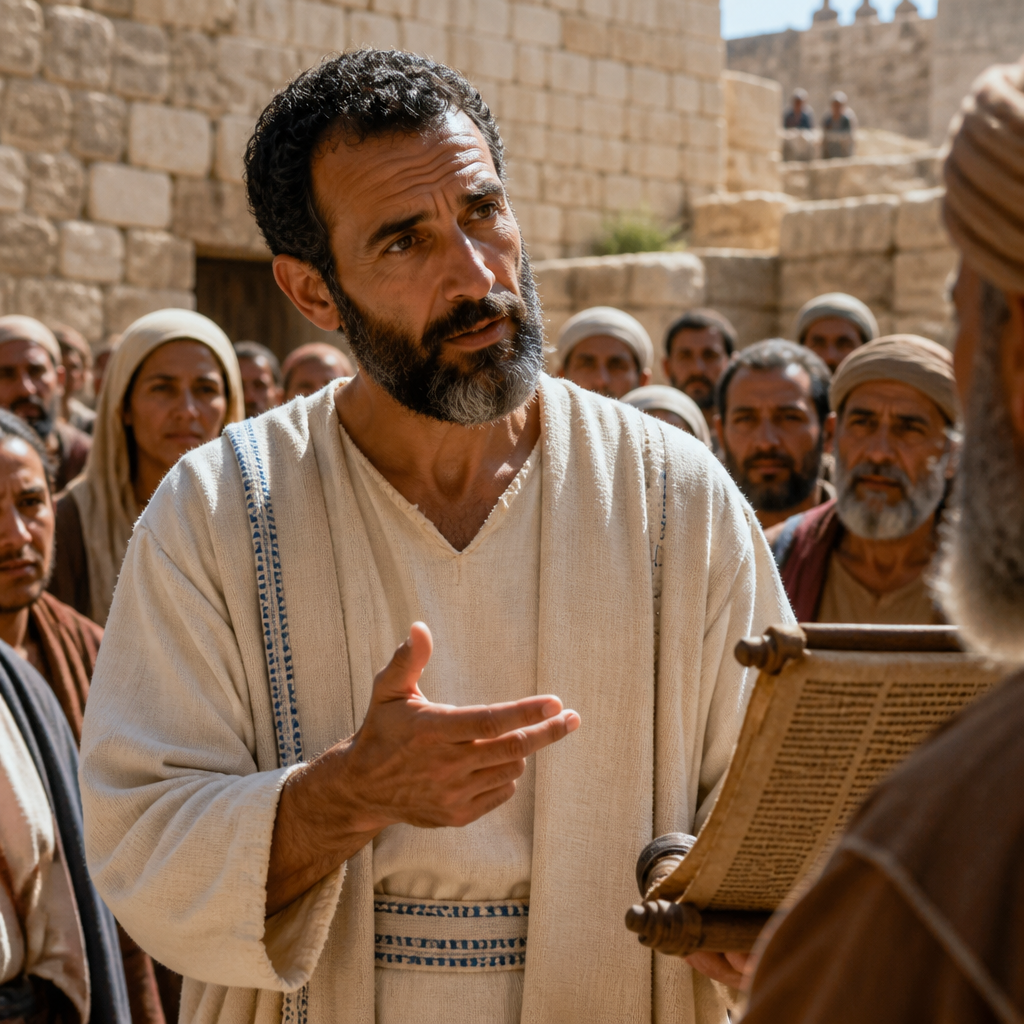
Hanan’s most significant recorded action occurred during the public assembly at the Water Gate in Jerusalem, described in Nehemiah 8. Following the completion of the city walls, Ezra the Scribe brought the Book of the Law of Moses to the people. While Ezra read from a wooden podium, Hanan was one of thirteen Levites specifically named who "instructed the people in the Law as they stood in their places" (Nehemiah 8:7).
Scholars suggest that Hanan and his colleagues performed a vital translational and exegetical task. Because many of the returnees were more fluent in Aramaic than the ancient Hebrew of the Torah, Hanan likely translated the text and provided a "midrash" or explanation of the meaning, ensuring that every man, woman, and child present could internalize the commands of God.
The Sealing of the Covenant
Following the conviction brought about by the reading of the Law, the community entered a period of confession and fasting. This culminated in the drafting of a written document—a binding agreement to walk in God’s Law and to avoid intermarriage with neighboring pagan nations. Hanan appears in Nehemiah 10:10 as one of the Levites who appended their seal to this document. This act designated him as a representative of his tribe and a witness to the nation’s renewed commitment to monotheism and ritual purity.
Relationship to Other Biblical Figures
Hanan operated in close proximity to the two most influential figures of the Restoration: Ezra and Nehemiah. In Nehemiah 8:7, he is listed alongside other prominent Levites such as Jeshua, Bani, and Sherebiah. These men formed a cohesive teaching body that supported Ezra’s ecclesiastical reforms. In the sealing of the covenant (Nehemiah 10), he is specifically grouped with Shebaniah, Hodiah, Kelita, and Pelaiah, suggesting a possible sub-group or fraternity within the Levite ranks who worked together on administrative and spiritual tasks.
Spiritual Significance
Hanan represents the shift in Israelite religion from a system primarily focused on sacrificial ritual to one centered on the study and application of the Written Word. His role as an instructor emphasizes the biblical principle that the Law was intended to be understood by the common person, not just the priestly elite. By participating in the covenant sealing, Hanan exemplifies the transition from personal faith to communal accountability, showing that spiritual restoration requires both an understanding of truth and a formal commitment to live by it.
Spiritual Significance
Hanan serves as a model for the teaching ministry within the post-exilic community. His presence indicates that the restoration of Jerusalem was not merely a construction project involving stone and mortar, but a pedagogical project involving the hearts and minds of the people. Through his work, the 'dead' letters of the Law became a living guide for a nation seeking to avoid the mistakes that led to their previous exile.
Theologically, Hanan’s inclusion in the list of covenant sealers highlights the importance of institutional leadership in maintaining spiritual reforms. He represents the Levites who transitioned from being Temple assistants to being the primary educators of the Jewish people, a role that would eventually pave the way for the development of the synagogue system.
Frequently Asked Questions
What was Hanan’s specific role during Ezra’s reading of the Law?
Hanan was one of the Levites who explained the Law to the people, helping them understand the meaning of the scriptures as they were being read aloud by Ezra.
Did Hanan sign the covenant in Nehemiah 10?
Yes, Hanan was among the Levite leaders who placed their seal on the 'Firm Covenant,' pledging to follow God's commands and separate from foreign influences.
Was Hanan a priest?
No, the biblical text specifically identifies him as a Levite, which was a distinct class from the Kohanim (priests), though both were from the tribe of Levi.
In what year did Hanan live?
He lived during the mid-5th century BC, specifically around 444 BC, which is the traditional dating for Nehemiah's arrival in Jerusalem.
Connected Figures
Ezra
Leader and Scribe whom Hanan assisted in teaching the Law
Nehemiah
Governor under whose administration Hanan signed the covenant
Kelita
Fellow Levite and associate in teaching and covenant sealing
Pelaiah
Fellow Levite mentioned alongside Hanan in both teaching and sealing
Categories
Mentions by Book
- Nehemiah2
Others Named Hanan
Hanan, Leader of the RestorationNehemiah 10:22
A prominent Jewish leader and signatory who sealed the formal covenant with God under Nehemiah following the return from Babylonian exile.
Hanan, son of IgdaliahJeremiah 35:4
Hanan was a man of God in the Divided Monarchy whose sons maintained a private chamber within the Temple in Jerusalem.
Hanan, Nethinim Head of a Returning ClanEzra 2:46
A head of a family of temple servants (Nethinim) who returned to Jerusalem from the Babylonian exile during the restoration under Zerubbabel.
Hanan, Son of Azel1 Chronicles 8:38
A Benjamite descendant of King Saul who lived during the Divided Monarchy and was one of the six sons of Azel.
Hanan, Son of Shashak1 Chronicles 8:23
Hanan was a member of the Tribe of Benjamin and a son of Shashak, listed in the genealogical records of the Divided Monarchy.
Hanan, son of Maacah1 Chronicles 11:43
A distinguished warrior and member of King David's elite military corps known as the 'Mighty Men.'
Hanan, son of ZaccurNehemiah 13:13
An assistant treasurer appointed by Nehemiah to manage the distribution of supplies to the Levites during the post-exilic restoration.
Hanan, Signatory of the CovenantNehemiah 10:26
A leader in post-exilic Jerusalem who signed the binding covenant to follow the Law of God under Nehemiah.