Hanan, son of Igdaliah
Hanan was a man of God in the Divided Monarchy whose sons maintained a private chamber within the Temple in Jerusalem.
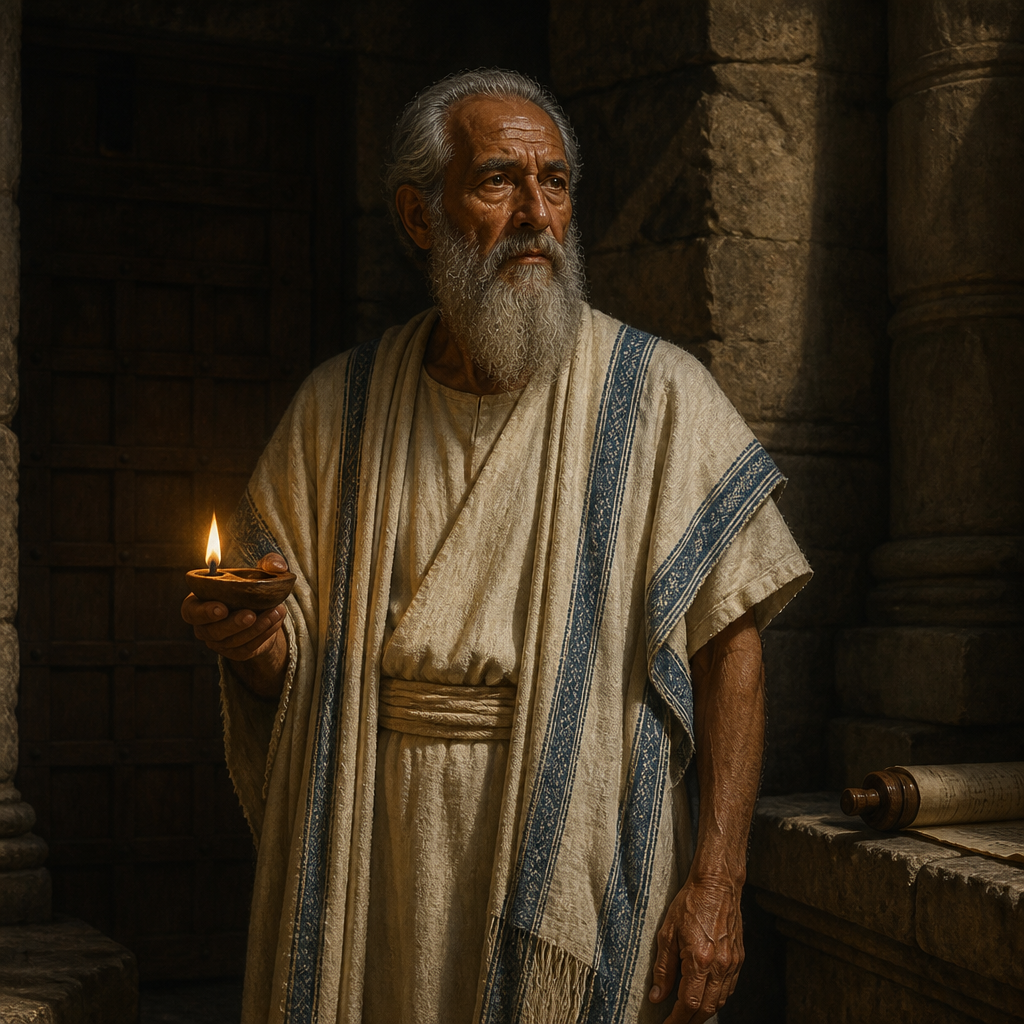
Hanan, the son of Igdaliah, was a notable religious figure during the late Divided Monarchy in Judah. He is specifically identified in the biblical record as a "man of God," a title of high spiritual distinction often reserved for prophets or individuals who exhibited extraordinary faithfulness to the Lord. His presence in the historical narrative is established during the ministry of the prophet Jeremiah.
While Hanan himself is not recorded as performing public miracles or delivering written oracles, his legacy is preserved through his descendants and their standing within the Temple complex. His sons occupied a chamber in the House of the LORD, situated in a location of significant administrative and spiritual importance, indicating that Hanan's lineage held a respected and official status in Jerusalem’s religious hierarchy during the reign of King Jehoiakim.
Background and Family
Hanan was the son of Igdaliah. The biblical text provides no further genealogical details regarding his tribe or his ancestry beyond his father. However, the descriptor attached to him in Jeremiah 35:4—"a man of God" (ish ha-Elohim)—is highly significant. In the Hebrew Bible, this phrase is a technical term used for figures like Moses, Elijah, Elisha, and various unnamed prophets. The application of this title to Hanan suggests he was a recognized prophetic figure or a man of exceptional holiness during the late 7th century BC.
Hanan’s influence extended to his sons, who are mentioned collectively. They were granted a specific chamber within the Temple precincts, which serves as a testament to the family's prestige. Given the restricted nature of Temple space, particularly areas adjacent to the chambers of high-ranking officials, Hanan’s family likely functioned in a priestly or prophetic capacity that required a permanent presence within the sanctuary.
Major Life Events
The primary mention of Hanan occurs during a symbolic test orchestrated by God through the prophet Jeremiah. In the days of Jehoiakim son of Josiah, king of Judah (c. 609–598 BC), Jeremiah was commanded to bring the Recabite family into one of the Temple chambers to offer them wine as a test of their obedience to their ancestral vows.
Jeremiah brought the Recabites into the "chamber of the sons of Hanan son of Igdaliah." The location of this room is described with topographical precision: it was near the chamber of the officials and situated above the chamber of Maaseiah son of Shallum, the doorkeeper. This placement highlights Hanan’s social and religious standing. The fact that Jeremiah chose this specific chamber for a divinely mandated object lesson suggests that Hanan and his sons were likely sympathetic to Jeremiah’s message or were at least recognized as pillars of the spiritual community in a time of increasing national apostasy.
Relationship to Other Biblical Figures
Hanan is directly linked to his father, Igdaliah, and his unnamed sons. His historical context places him as a contemporary of the prophet Jeremiah and the high-ranking official Maaseiah. The proximity of his family's chamber to the "officials" (sarim) suggests he moved in the upper echelons of Jerusalem’s society. While he is not recorded as interacting directly with King Jehoiakim, his life and the legacy of his sons intersected with the pivotal moments of Jeremiah’s warnings to the house of Judah before the Babylonian exile.
Spiritual Significance
The spiritual significance of Hanan lies primarily in his title as a "man of God." In an era marked by the spiritual decline of the Divided Monarchy, Hanan stands as a representative of the faithful remnant. The inclusion of his name in the record of the Recabite trial serves to ground the event in a specific, verifiable location within the Temple.
Furthermore, the "sons of Hanan" represent the transmission of spiritual status across generations. Though Hanan himself may have passed away or was an elder by the time of Jeremiah’s specific action, the respect accorded to his name ensured his family maintained a place of honor within the holy site. He serves as a reminder that even in periods of national judgment, God preserved individuals and families who were dedicated to His service and recognized for their integrity by their contemporaries.
Spiritual Significance
Hanan is significant as one of the few individuals specifically designated as a 'man of God' during the late Divided Monarchy. This title suggests he served a prophetic or exceptionally holy role in Jerusalem. His legacy is tied to the Temple's internal administration, as his descendants were permitted a private chamber near the high officials, indicating a high level of trust and religious authority.
His inclusion in Jeremiah 35 provides a geographical anchor for the story of the Recabites. By identifying the specific chamber of the 'sons of Hanan,' the biblical text reinforces the historical reality of the Temple's layout and the existence of a faithful priestly or prophetic class that persisted even as the kingdom of Judah approached its final years before the Babylonian captivity.
Frequently Asked Questions
Who was Hanan's father?
Hanan was the son of Igdaliah, who is also associated with the title 'man of God.'
What does the title 'man of God' mean in Hanan's context?
The title 'man of God' (ish ha-Elohim) usually refers to a prophet or someone with a special divine commission, suggesting Hanan was a respected spiritual leader.
Where was the chamber of the sons of Hanan located?
It was located in the House of the LORD (the Temple), near the chamber of the officials and above the chamber of Maaseiah the doorkeeper.
In which book of the Bible is this Hanan mentioned?
This specific Hanan is mentioned only in the book of Jeremiah, specifically in Jeremiah 35:4.
When did Hanan live?
Hanan lived during the Divided Monarchy, specifically during the time of the prophet Jeremiah and the reign of King Jehoiakim (late 7th century BC).
Connected Figures
Igdaliah
Father
Jeremiah
Contemporary prophet who used his sons' chamber
Maaseiah son of Shallum
Neighboring Temple official (doorkeeper)
Categories
Mentions by Book
- Jeremiah1
Family & Relationships
Parent
Jeremiah 35:4
Others Named Hanan
Hanan, Levite of the RestorationNehemiah 8:7
A Levite during the return from Babylonian exile who assisted Ezra in teaching the Law and joined Nehemiah in the formal sealing of the covenant.
Hanan, Leader of the RestorationNehemiah 10:22
A prominent Jewish leader and signatory who sealed the formal covenant with God under Nehemiah following the return from Babylonian exile.
Hanan, Nethinim Head of a Returning ClanEzra 2:46
A head of a family of temple servants (Nethinim) who returned to Jerusalem from the Babylonian exile during the restoration under Zerubbabel.
Hanan, Son of Azel1 Chronicles 8:38
A Benjamite descendant of King Saul who lived during the Divided Monarchy and was one of the six sons of Azel.
Hanan, Son of Shashak1 Chronicles 8:23
Hanan was a member of the Tribe of Benjamin and a son of Shashak, listed in the genealogical records of the Divided Monarchy.
Hanan, son of Maacah1 Chronicles 11:43
A distinguished warrior and member of King David's elite military corps known as the 'Mighty Men.'
Hanan, son of ZaccurNehemiah 13:13
An assistant treasurer appointed by Nehemiah to manage the distribution of supplies to the Levites during the post-exilic restoration.
Hanan, Signatory of the CovenantNehemiah 10:26
A leader in post-exilic Jerusalem who signed the binding covenant to follow the Law of God under Nehemiah.