Hanan, Son of Azel
Who was Hanan, Son of Azel, in the Bible?
A Benjamite descendant of King Saul who lived during the Divided Monarchy and was one of the six sons of Azel.
This is one of 9 people named Hanan in the Bible. See all 9 →
Hanan, Son of Azel, was a member of the Tribe of Benjamin and a direct descendant of the royal line of Saul, the first king of Israel. He lived during the era of the Divided Monarchy, a period marked by the split of the United Kingdom into Israel in the north and Judah in the south. As a descendant of the house of Saul, Hanan represented the enduring lineage of a family that, despite losing the throne to the Davidic line, maintained its genealogical records and tribal identity within the territory of Benjamin.
Hanan is specifically identified as one of the six sons of Azel. His inclusion in the chronicler's records serves to emphasize the continuity of the Benjamite families and their preservation through the tumultuous centuries of the monarchy. While he is not credited with military or political exploits, his presence in the sacred text underscores the importance of heritage and covenantal belonging in the post-exilic memory of Israel's history.
Background and Family
Hanan was born into the Tribe of Benjamin, the youngest of the six sons of Azel. His lineage is of significant historical interest because it traces back through Jonathan to King Saul. The chronicler provides a detailed record of this family to demonstrate that the line of Saul was not extinguished after the rise of David, but rather continued to flourish within the tribal boundaries of Benjamin.
Hanan’s brothers—Azrikam, Bocheru, Ishmael, Sheariah, and Obadiah—are listed alongside him in two separate genealogical records in the Book of Chronicles. This duplication (1 Chronicles 8:38 and 1 Chronicles 9:44) indicates the high value placed on this specific branch of the family tree by the biblical authors. His father, Azel, was a descendant of Eleasah, continuing a line that had remained distinct for generations since the death of Saul on Mount Gilboa.
Major Life Events
There are no specific biographical anecdotes or historical actions recorded for Hanan in the biblical text. His primary function in the narrative is genealogical. He represents a generation of Benjamites living during the Divided Monarchy who maintained their tribal identity. During this era, the Tribe of Benjamin was often caught between the shifting loyalties of the northern and southern kingdoms, eventually aligning largely with the Kingdom of Judah and the city of Jerusalem.
The repetition of Hanan’s name and his brothers' names in chapters 8 and 9 of 1 Chronicles suggests that his family was among the prominent households of Benjamin. These lists were often preserved to validate land claims, social standing, and purity of descent during the period of the Divided Monarchy and into the subsequent return from exile.
Relationship to Other Biblical Figures
Hanan’s most significant relationship is to his father, Azel, and his five brothers. The text presents them as a unified sibling group: "Azel had six sons, and these were their names: Azrikam, Bocheru, Ishmael, Sheariah, Obadiah, and Hanan" (1 Chronicles 8:38). Through his ancestry, he is also linked to the famous figures of King Saul and his son Jonathan.
Because the Tribe of Benjamin remained loyal to the house of David during the Divided Monarchy, Hanan would have been a subject of the Davidic kings reigning in Jerusalem. His life would have been shaped by the cultic reforms and political tensions that characterized the reigns of kings such as Asa, Jehoshaphat, or Hezekiah, depending on the specific century of his birth within the broader monarchical period.
Spiritual Significance
The inclusion of Hanan in the holy scriptures, despite the lack of recorded deeds, highlights a fundamental biblical theme: the importance of the individual within the collective covenant. To the chronicler, every name in the genealogy of Israel represented a living link in the chain of God's promises. Hanan’s name, which means "gracious" or "he has been merciful," reflects a common Hebrew sentiment of gratitude toward God.
Furthermore, Hanan serves as a testament to the survival of the Benjamite identity. Even though the kingship had passed from Saul to David, the family of Saul—represented here by Hanan—remained part of the covenant people, preserved by God's providence through the rise and fall of kingdoms. His entry in the Bible ensures that the specific legacy of the house of Saul was not forgotten by the community of faith.
Hanan’s significance lies primarily in the preservation of the Saulide lineage within the Tribe of Benjamin. By documenting Hanan and his brothers twice, the chronicler emphasizes that the line of Israel's first king remained a recognized and intact part of the nation's social fabric during the Divided Monarchy. This serves the broader theological purpose of showing God's preservation of all twelve tribes.
Theologically, Hanan represents the 'unnamed' faithful—those who did not lead armies or write prophecies but whose existence and heritage were vital to the integrity of the nation. His presence in the genealogies reinforces the biblical concept that God remembers individuals by name, placing them within the specific historical and tribal context of His redemptive plan.
Frequently Asked Questions
Who was Hanan's father?
Hanan was the son of Azel, a descendant of King Saul's family through the line of Jonathan.
Which tribe did Hanan belong to?
Hanan belonged to the Tribe of Benjamin.
How many brothers did Hanan have?
Hanan had five brothers: Azrikam, Bocheru, Ishmael, Sheariah, and Obadiah.
In which books of the Bible is this Hanan mentioned?
This Hanan is mentioned in the book of 1 Chronicles, specifically in chapters 8 and 9.
What does the name Hanan mean?
The name Hanan is derived from a Hebrew root meaning 'gracious' or 'merciful.'
Family & Relationships
Parents
 AzelFather1 Chronicles 8:38Stated
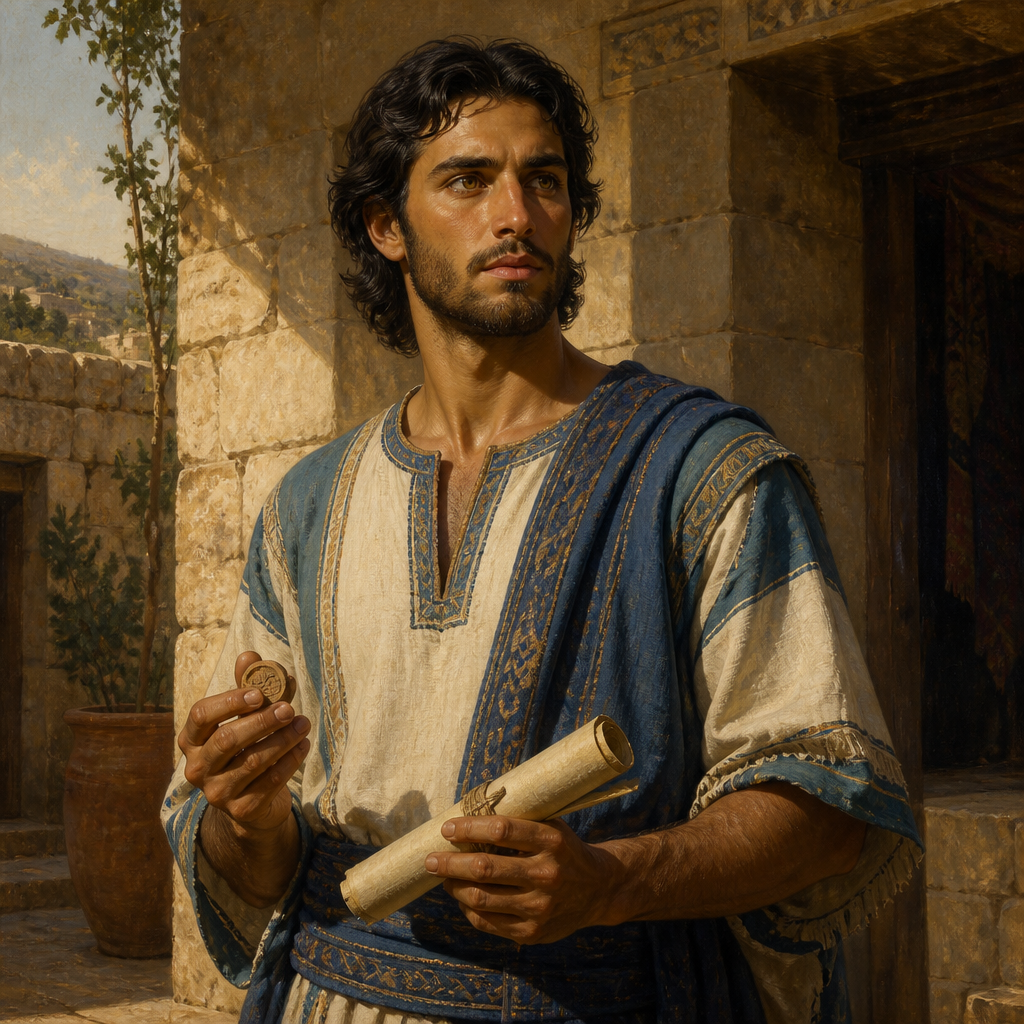 Hanan, Son of AzelThis page
 Azrikam, Son of AzelBrother1 Chronicles 8:38Stated
 BocheruBrother1 Chronicles 8:38Stated
 Ishmael, Son of AzelBrother1 Chronicles 8:38Stated
 Obadiah, Son of AzelBrother1 Chronicles 8:38Stated
 SheariahBrother1 Chronicles 8:38Stated
Connected Figures
Family
Father · 1 Chronicles 8:38
Azel was a noble descendant of Saul within the tribe of Benjamin, noted during the Divided Monarchy for his six sons and preservation of the royal lineage.
Divided MonarchyFirst: 1 Chronicles 8:374 versesTribal NoblemanBenjamin
Brother · 1 Chronicles 8:38
A Benjamite descendant of King Saul through Jonathan, recorded in the genealogical records of the Divided Monarchy period.
Divided MonarchyFirst: 1 Chronicles 8:387 versesBenjamite NobleBenjamin
Brother · 1 Chronicles 8:38
A Benjamite nobleman and one of the six sons of Azel, belonging to the royal lineage of King Saul during the Divided Monarchy.
Divided MonarchyFirst: 1 Chronicles 8:387 versesTribal noblemanBenjamin
Brother · 1 Chronicles 8:38
A Benjamite descendant of King Saul and one of the six sons of Azel, listed in the genealogical records of the Divided Monarchy.
Brother · 1 Chronicles 8:38
A Benjamite descendant of King Saul and one of the six sons of Azel, listed in the genealogical records of the Divided Monarchy.
Brother · 1 Chronicles 8:38
Sheariah was a descendant of King Saul within the tribe of Benjamin during the period of the Divided Monarchy.
Categories
Mentions by Book
- 1 Chronicles2
Scripture References
All 2 indexed verses, in canonical order, from the Berean Standard Bible.
1 Chronicles · 2
- 1 Chronicles 8:38
Azel had six sons, and these were their names: Azrikam, Bocheru, Ishmael, Sheariah, Obadiah, and Hanan. All these were the sons of Azel.
- 1 Chronicles 9:44
And Azel had six sons, and these were their names: Azrikam, Bocheru, Ishmael, Sheariah, Obadiah, and Hanan. These were the sons of Azel.
Others Named Hanan
Compare all 9 bearers →Hanan, Levite of the RestorationNehemiah 8:7
A Levite during the return from Babylonian exile who assisted Ezra in teaching the Law and joined Nehemiah in the formal sealing of the covenant.
Hanan, Leader of the RestorationNehemiah 10:22
A prominent Jewish leader and signatory who sealed the formal covenant with God under Nehemiah following the return from Babylonian exile.
Hanan, son of IgdaliahJeremiah 35:4
Hanan was a man of God in the Divided Monarchy whose sons maintained a private chamber within the Temple in Jerusalem.
Hanan, Nethinim Head of a Returning ClanEzra 2:46
A head of a family of temple servants (Nethinim) who returned to Jerusalem from the Babylonian exile during the restoration under Zerubbabel.
Hanan, Son of Shashak1 Chronicles 8:23
Hanan was a member of the Tribe of Benjamin and a son of Shashak, listed in the genealogical records of the Divided Monarchy.
Hanan, son of Maacah1 Chronicles 11:43
A distinguished warrior and member of King David's elite military corps known as the 'Mighty Men.'
Hanan, son of ZaccurNehemiah 13:13
An assistant treasurer appointed by Nehemiah to manage the distribution of supplies to the Levites during the post-exilic restoration.
Hanan, Signatory of the CovenantNehemiah 10:26
A leader in post-exilic Jerusalem who signed the binding covenant to follow the Law of God under Nehemiah.